

Mumbai Train Stabbing: 5 Shocking Details in Accused’s Bail Plea
Roshan Suvarna, accused of killing 22-year-old Mayank Lohar inside a moving Mumbai local train, claims he was only trying to stop a fight. The victim’s family disputes his account and has opposed his bail plea, which is scheduled for a November 20 hearing.


Mumbai Train Stabbing: Accused Makes Shocking Bystander Claim as Victim’s Family Opposes Bail
Roshan Suvarna, accused of fatally stabbing 22-year-old Mayank Lohar inside a moving Mumbai local train, has claimed that he was only trying to stop a fight and that the actual attacker escaped. The victim’s family has challenged his version, citing witness accounts and other evidence as the bail plea comes up for hearing on November 20.
Mumbai Train Stabbing Case: Accused Claims He Was Only a Bystander
The Mumbai train stabbing case has taken a fresh turn after Roshan Suvarna, the 30-year-old man accused of killing 22-year-old Mayank Lohar inside a moving local train, approached a court seeking bail.
In his bail plea, Suvarna has reportedly claimed that he was not the person who attacked Lohar. Instead, he has argued that he was merely a bystander who tried to intervene in a fight between Lohar and an unidentified man.
According to the accused’s version, he sustained injuries while attempting to stop the altercation. He has alleged that the actual attacker fled from the train and that he was subsequently implicated in the case.
The claim has brought renewed attention to the Mumbai train stabbing investigation, which began after Lohar was fatally injured inside a first-class compartment of a suburban local train on June 23, 2026.
The victim’s family has strongly opposed the bail application. In its intervention plea, the family has questioned the accused’s account and argued that releasing him could affect the safety of the family and witnesses.
The family has also referred to evidence collected during the investigation, including witness statements, technical evidence and forensic findings.
The bail plea is scheduled to be heard on November 20, 2026. The court will consider the arguments from both sides before deciding the application.
At this stage, Suvarna’s claim is his defence in the case. The prosecution’s allegations and the accused’s version will have to be assessed through the legal proceedings.
Who Are the Accused and the Victim?
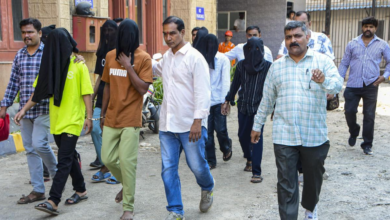
The accused has been identified as Roshan Suvarna, aged 30. He was arrested by the Government Railway Police (GRP) following the fatal incident.
The victim was 22-year-old Mayank Lohar, who was travelling home when the altercation allegedly took place inside the local train.
Lohar was reportedly returning from work when an argument broke out between passengers near the door of the compartment.
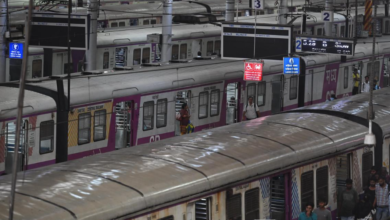
The incident occurred on a Nalasopara-bound local train travelling through Mumbai’s western suburban railway network.
The Mumbai train stabbing incident shocked commuters because it took place inside a public transport vehicle carrying passengers. What reportedly began as a disagreement over the train compartment door ended in a fatal attack.
The victim’s family has since sought to oppose the accused’s release on bail, arguing that the allegations are serious and that the evidence collected by investigators must be considered.
The accused, meanwhile, has disputed the prosecution’s account and claimed that another unidentified person was responsible for the stabbing.
The court proceedings will now examine the rival claims and the material placed before it.
How Did the Mumbai Local Train Stabbing Happen?
According to the prosecution’s version reported by the media, the incident began with an argument over the compartment door during heavy rainfall.
The train was travelling towards Nalasopara when a disagreement reportedly developed between passengers about keeping the door open or closing it.
Rainwater was allegedly entering the compartment, leading to an argument between Lohar and another passenger.
The disagreement reportedly escalated, and other commuters intervened to separate those involved.
The Mumbai train stabbing took place later during the journey, according to the prosecution’s account.
The victim’s father’s intervention plea reportedly states that passengers had separated the individuals involved in the initial argument at around 10.42 pm.
It further alleges that approximately eight minutes later, at around 10.50 pm, the accused approached Lohar again and attacked him with a sharp weapon.
The family’s account alleges that Lohar was unarmed when the attack took place.
These details form part of the family’s opposition to the bail application and should be understood as allegations presented in the legal proceedings.
The accused has offered a different account, claiming that he intervened in a fight involving Lohar and an unidentified attacker.
The exact sequence of events and the responsibility for the fatal injuries remain matters for the court to assess on the basis of evidence.
Argument Over Rainwater and the Train Door
The reported dispute that preceded the Mumbai train stabbing was linked to the condition inside the moving compartment during heavy rain.
According to reports, rainwater was splashing into the train through an open door. This reportedly led to disagreement among passengers about whether the door should remain open.
The issue may have appeared minor, but the situation allegedly developed into a serious confrontation.
Suburban trains are among the busiest modes of transport in Mumbai. During the monsoon, commuters frequently travel in wet conditions, and rainwater can enter compartments through open doors.
However, disagreements between passengers can create safety risks, particularly when tempers rise inside crowded public transport.
In this case, the prosecution’s account says the argument escalated before the fatal attack.
The Mumbai train stabbing has therefore raised concerns about passenger safety and the consequences of violence inside moving trains.
The victim’s family has argued that the attack was not simply an immediate reaction to a sudden quarrel. Its intervention plea refers to the reported gap between the initial argument and the later attack.
The accused’s defence, on the other hand, describes the incident as a sudden altercation and disputes that he was the attacker.
Both versions will need to be examined through the evidence and arguments presented before the court.
Victim’s Father Opposes Bail Application
Mayank Lohar’s father, Ramesh Lohar, has filed an intervention application opposing the bail plea submitted by Suvarna.
Through his lawyer, the victim’s father has argued that the alleged killing was a serious and deliberate act.
The family has also raised concerns about the safety of its members and the possibility of witnesses being affected if the accused is released.
The Mumbai train stabbing case has placed the victim’s family in the position of having to respond to the accused’s alternative account of the incident.
The father’s intervention plea reportedly challenges the claim that Suvarna was simply a bystander who tried to stop a fight.
It refers to the sequence of events described by the prosecution and argues that the accused allegedly returned towards Lohar after the initial confrontation had been separated.
The family has also referred to the alleged use of a knife and the injuries suffered by the victim.
The intervention application is significant because it allows the victim’s family to place its objections before the court while the bail request is being considered.
The court will have to consider the accused’s arguments, the prosecution’s position and the victim’s family’s objections.
The family’s opposition does not itself decide the bail application. The final decision will rest with the court after considering the relevant legal and factual material.
What Evidence Has the Victim’s Family Cited?
The family has reportedly referred to several pieces of evidence while opposing bail.
These include witness statements, technical evidence, medical findings and information connected to the alleged weapon.
1. Witness statements
The investigation reportedly involved statements from passengers who were present in the train compartment.
An earlier report on the chargesheet said that at least 15 witnesses stated that they had seen Suvarna allegedly take out a knife and attack Lohar.
These statements are part of the prosecution’s case and are relevant to the dispute over the accused’s claim that an unidentified attacker was responsible.
2. Medical and forensic findings
The victim’s family has reportedly referred to medical evidence linking the injuries to the weapon allegedly used in the attack.
An earlier report on the chargesheet stated that forensic examination found that the injuries described in the post-mortem report were possible with the recovered weapon.
Such findings may be considered alongside witness accounts and other evidence.
3. Identification of the alleged weapon
The family has also referred to the identification of the knife and the circumstances in which it was recovered.
Earlier reports said that a person working at a hotel near Borivali recognised the weapon after seeing it in news coverage and informed the police.
Investigators subsequently examined the weapon as part of the case.
The Mumbai train stabbing investigation therefore includes more than the statements made by the accused and the victim’s family. It also involves material collected during the police investigation.
The court will determine the relevance and evidentiary value of these materials during the appropriate stages of the proceedings.
Accused Says the Actual Attacker Escaped
The central argument in Suvarna’s bail plea is that he was not responsible for the fatal attack.
He has reportedly claimed that he tried to intervene when Lohar and an unidentified man were involved in a fight.
According to his version, he sustained injuries while attempting to stop the altercation. He has further alleged that the actual attacker escaped, leaving him to be falsely implicated.
The defence has also argued that the accused and the victim were strangers and had no previous enmity.
This version differs significantly from the prosecution’s account of the Mumbai train stabbing.
The accused has reportedly argued that the circumstances should be considered as a sudden quarrel without premeditation.
His bail plea has also raised an alternative legal argument about the nature of the offence, contending that the allegations, even if accepted, may fall under culpable homicide not amounting to murder rather than murder.
This is a legal argument made by the defence and not a finding by the court.
The prosecution and the victim’s family have disputed the accused’s account.
The court will have to consider the evidence and legal submissions before deciding whether bail should be granted.
What Happened After the Stabbing?
Following the attack, Lohar was left seriously injured inside the train compartment.
Reports from the time of the incident stated that passengers were shocked by the violence and that the victim was taken for medical assistance after the train reached Borivali.
He was subsequently shifted to Shatabdi Hospital in Kandivali, where he was declared dead.
The Mumbai train stabbing prompted a police investigation involving the Government Railway Police.
Investigators began examining the circumstances of the incident, statements from passengers and available CCTV footage from railway stations and nearby locations.
The police also sought to trace the accused after the incident.
Suvarna was arrested on June 24, 2026, following the incident the previous night.
The arrest marked an important development in the investigation, after which police continued collecting evidence and examining the alleged weapon.
The case later progressed to the filing of a detailed chargesheet.
The accused has remained in custody while the legal process has continued.
How Was the Accused Traced and Arrested?
The police investigation involved examining available CCTV footage and conducting technical surveillance.
Earlier reports said investigators scanned footage from more than 400 CCTV cameras at railway stations and nearby locations, including Andheri, Borivali, Mira Road and Nalasopara.
The aim was to reconstruct the movement of the accused after the incident and identify the route he may have taken.
The police also examined information provided by witnesses and other technical inputs.
According to reports published after the arrest, Suvarna was traced to Panvel and apprehended on June 24.
The Mumbai train stabbing investigation showed the importance of railway surveillance systems and technical analysis in tracing suspects after incidents on the suburban network.
The police were able to use information from multiple locations to follow the movements of the person they suspected.
The investigation did not end with the arrest. Officers continued collecting statements, examining the weapon and obtaining forensic material.
The evidence gathered was subsequently included in the chargesheet filed in the case.
Chargesheet and Forensic Evidence in the Case
An earlier development in the Mumbai train stabbing case was the filing of a chargesheet by the Government Railway Police.
Reports in August 2026 stated that the chargesheet ran to approximately 1,100 pages and included witness statements and forensic material.
The chargesheet reportedly contained statements from passengers who said they had seen the accused allegedly attack Lohar.
It also included forensic information concerning the weapon recovered during the investigation.
A separate report stated that the police had added charges under the Maharashtra Police Act relating to the carrying of a weapon in train and railway station areas during a period when prohibitory orders were in force.
The filing of a chargesheet represents an important stage in a criminal investigation, as it places the prosecution’s allegations and collected material before the court.
However, a chargesheet is not a conviction. The allegations must still be proved through the judicial process.
The accused is entitled to challenge the evidence and present his defence.
The Mumbai train stabbing case is now at a stage where the bail application has brought the competing versions of the incident into sharper focus.
The court’s consideration of bail is separate from the final determination of guilt or innocence.
Why Is the Bail Hearing Important?
The bail hearing scheduled for November 20 is an important next step in the Mumbai train stabbing case.
Suvarna has asked the court to release him while the legal proceedings continue.
His defence has challenged the prosecution’s version and argued that he was not the person who carried out the fatal attack.
The victim’s father has opposed the application, citing the seriousness of the allegations and concerns about the safety of the family and witnesses.
During the hearing, the court may consider the nature of the allegations, the material collected by investigators, the arguments made by the defence and the objections raised by the victim’s family.
The court may also consider other relevant legal factors while deciding whether the accused should be released on bail.
It is important to understand that bail is not the same as acquittal.
If bail is granted, the accused would still have to face the criminal proceedings and comply with any conditions imposed by the court.
If bail is rejected, the accused would continue to remain in custody, subject to further legal proceedings.
The Mumbai train stabbing case will therefore continue regardless of the outcome of the bail application.
Passenger Safety Concerns After the Mumbai Train Stabbing
The incident has once again raised questions about passenger safety on Mumbai’s suburban railway network.
Local trains carry large numbers of commuters every day. Passengers travel in crowded compartments, often during difficult weather conditions and peak-hour rush.
An incident involving a fatal stabbing inside a moving train has understandably caused concern among commuters.
The Mumbai train stabbing has highlighted the risks posed when disagreements between passengers turn violent.
People travelling on public transport may find themselves in a difficult situation when an argument escalates. Other commuters may hesitate to intervene because they fear being injured themselves.
The case also raises questions about the prevention and detection of weapons being carried on suburban trains.
Earlier police reports in this case stated that the accused had allegedly travelled with a knife in his bag for a period before the incident. The police had also added charges relating to the carrying of a weapon in a railway area.
Such details have drawn attention to the importance of security checks, surveillance and prompt reporting of suspicious behaviour.
However, security measures must be considered alongside the practical challenges of monitoring a vast suburban railway network with thousands of daily services and stations.
The Mumbai train stabbing has renewed the need for commuters to report threats, violence and suspicious activity to railway authorities or the police.
What Can Commuters Do During a Fight Inside a Local Train?
The incident also offers an important reminder about responding safely when an argument breaks out in a train compartment.
Commuters should avoid escalating a disagreement through threats, physical confrontation or aggressive behaviour.
If a fight begins, passengers should prioritise their own safety and seek assistance from railway authorities or the police.
Some practical precautions include:
- Avoid becoming physically involved in a violent confrontation unless immediate intervention is necessary to protect someone from serious harm and it can be done safely.
- Alert other passengers and seek help from railway staff.
- Use available railway helplines or emergency reporting channels.
- Share the train’s direction, coach details and station information when reporting an incident.
- Do not touch or attempt to recover a weapon involved in an incident.
- If safe to do so, preserve relevant information for investigators.
- Cooperate with police if asked to provide a witness statement.
The Mumbai train stabbing case shows why quick reporting and accurate witness information can be important during an investigation.
Commuters should not put themselves in unnecessary danger while trying to resolve a violent dispute.
What Happens Next in the Mumbai Train Stabbing Case?
The immediate next development is the bail hearing scheduled for November 20, 2026.
The court will hear the accused’s request for release and consider the objections raised by the victim’s family and the prosecution.
The defence is expected to rely on its claim that Suvarna was a bystander who intervened in a fight and that the actual attacker escaped.
The victim’s family, meanwhile, has challenged this version and referred to the evidence collected during the investigation.
The Mumbai train stabbing case will continue through the judicial process, with the court required to assess the material presented by both sides.
The hearing will not by itself decide whether the accused is guilty or innocent. That question will be determined through the criminal trial and the applicable legal process.
Further updates may emerge after the November 20 hearing.
Until then, it is important to report the accused’s claims as his defence and the prosecution’s version as allegations supported by the material it has placed before the court.
Key Details of the Mumbai Train Stabbing Case
- Victim: Mayank Lohar, 22.
- Accused: Roshan Suvarna, 30.
- Incident date: June 23, 2026.
- Location: Inside a moving first-class local train on the western suburban route.
- Reported dispute: Argument over the compartment door and rainwater entering the train.
- Accused’s claim: He was a bystander who tried to stop a fight and was injured; he says the actual attacker escaped.
- Victim’s family’s position: The family disputes the accused’s account and opposes bail.
- Police agency: Government Railway Police.
- Arrest: June 24, 2026.
- Investigation: Reports refer to witness statements, CCTV analysis, technical evidence and forensic examination of the alleged weapon.
- Chargesheet: An earlier report stated that a chargesheet of approximately 1,100 pages was filed.
- Next bail hearing: November 20, 2026.
Conclusion: Court to Examine Accused’s Bystander Claim in Fatal Local Train Case
The Mumbai train stabbing case has entered another important stage after accused Roshan Suvarna sought bail, claiming that he was only trying to stop a fight and that an unidentified attacker was responsible for Mayank Lohar’s death.
The victim’s family has strongly opposed the plea, referring to witness accounts, forensic material and the sequence of events described in its intervention application. The case dates back to June 23, when Lohar was fatally injured inside a moving local train following an alleged argument over the compartment door during heavy rain.
The Government Railway Police investigated the incident and filed a detailed chargesheet. The accused’s version and the prosecution’s allegations will now be considered through the legal process, with the bail plea scheduled for November 20.
The court’s decision will determine whether Suvarna can be released while the case continues, but it will not decide the final question of guilt. The proceedings remain important for the victim’s family and for wider concerns about passenger safety on Mumbai’s suburban railway network.
Stay Updated With Police Vartha
Follow POLICE VARTHA for the latest Mumbai crime news, railway updates, police investigations, court proceedings and breaking news from Maharashtra.
We bring readers important developments from across the city and state, with a focus on public safety and accountability.
WANT TO SHARE NEWS OR PROMOTE YOUR BUSINESS?
Connect with Police Vartha for:
- News Coverage & Publicity
- Business & Brand Advertising
- Local News & Event Coverage
Contact us for news coverage and advertising enquiries.