
Shocking Gokul Election: 5 Key Facts Behind Rajesh Patil’s Victory
NCP leader Rajesh Patil secured 16 votes to become chairman of Kolhapur's Gokul Dairy after a controversial ordinance allowed four government-nominated directors to vote. The Bombay High Court will hear the legal challenge on November 25.

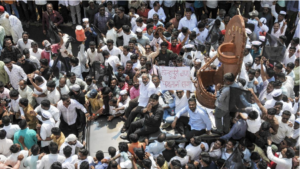
Gokul Election Controversy: Rajesh Patil Wins Chairman Post as Legal Battle Continues in Maharashtra
NCP leader Rajesh Patil has been elected chairman of Kolhapur’s Gokul dairy cooperative with 16 votes, following a controversial ordinance granting voting rights to four government-nominated directors. The Congress-backed panel has questioned the process, while the Bombay High Court’s legal proceedings remain pending.
Gokul Election: Rajesh Patil Elected Chairman After Political and Legal Battle
The Gokul election controversy in Maharashtra has taken a significant turn after former Chandgad MLA and Nationalist Congress Party (NCP) leader Rajesh Patil was elected chairman of the Kolhapur District Cooperative Milk Producers’ Union, popularly known as Gokul Dairy, on November 10, 2026.
Patil secured 16 votes in the chairman’s election, according to reports, giving the ruling Mahayuti alliance control of the cooperative’s leadership despite the Congress-backed panel winning a narrow majority in the earlier board elections.
The result marks the latest development in a political and legal dispute involving the Maharashtra government, opposition leaders, dairy farmers and the Bombay High Court. The controversy began after the Congress MLC Satej Patil-led Samavichari Aghadi secured 13 of the 25 elected director positions, while the Mahayuti-backed panel won 12 seats.
The outcome initially gave the Congress-backed group a numerical advantage on the elected board. However, the election of the chairman became complicated after a quorum dispute and the subsequent introduction of a Maharashtra government ordinance allowing nominated directors to vote in the management committees of certain large cooperative institutions.
The ordinance became the central issue in the Gokul election dispute because four government-nominated directors were given voting rights. Their participation changed the voting arithmetic and helped the Mahayuti-backed group secure the chairmanship.
The Bombay High Court declined to stay the ordinance before the election, allowing the four nominated directors to participate. However, the court directed that their ballots be kept separately and that the election process be recorded. The validity of the ordinance remains under challenge.
The latest result has therefore settled the immediate question of who will occupy the chairman’s post, but it has not ended the legal and political controversy surrounding the cooperative.
Who Is Rajesh Patil, the Newly Elected Gokul Chairman?
Rajesh Patil, a former MLA from Chandgad and leader of the Nationalist Congress Party, was elected chairman of Gokul Dairy on November 10.
His election followed an agreement among the ruling Mahayuti alliance partners under which the NCP was allocated the chairmanship for the first year.
According to reports, Patil’s tenure as chairman will be limited to one year under the understanding reached among the alliance partners. A decision about the future arrangement is expected to be discussed after the initial term.
The election took place after weeks of political developments and legal proceedings surrounding control of the cooperative.
The Gokul election was closely watched because the Congress-backed panel had won more elected director seats in the October board elections. The subsequent participation of government nominees altered the balance and created a fresh political confrontation.
Rajesh Patil’s election was welcomed by leaders from the ruling alliance. NCP leaders said his experience in the cooperative sector would help the organisation and its milk producers.
The new chairman will be expected to oversee the functioning of one of Maharashtra’s most important dairy cooperatives, which has a significant network of milk producers and village-level societies.
The immediate challenge for the new leadership will be to ensure stable administration, maintain relations with milk producers and address the concerns raised during the election dispute.
What Is Gokul Dairy and Why Is It Important?
Gokul Dairy is the popular name of the Kolhapur District Cooperative Milk Producers’ Union. It is one of Maharashtra’s most prominent cooperative dairy organisations and plays an important role in the state’s rural economy.
The organisation connects milk producers with collection centres, processing facilities, distribution networks and the wider dairy market.
For thousands of rural households, milk production is an important source of regular income. Unlike some seasonal agricultural activities, dairy farming can provide a more frequent cash flow when farmers have access to animals, fodder, veterinary services and reliable milk collection arrangements.
Gokul’s cooperative structure brings together village-level milk-producing societies and the larger dairy union. These societies collect milk from producers and help connect them with the processing and marketing system.
The organisation’s scale is one reason the Gokul election has attracted considerable political attention.
Reports have placed Gokul’s annual turnover at approximately ₹4,000 crore, while the organisation is connected to several lakh milk producers. Its network includes thousands of village-level societies across a large number of villages.
The cooperative is therefore more than an ordinary commercial dairy business. Its management decisions can affect milk procurement, payments to producers, processing operations, rural employment and the wider cooperative sector.
The chairman’s post carries significant administrative and political importance because it provides leadership over an institution with a large economic footprint.
October 19 Board Election: Congress-Backed Panel Wins 13 of 25 Seats
The present Gokul election controversy can be traced to the board elections held on October 19, 2026.
The Congress MLC Satej Patil-led Rajarshi Shahu Shetkari Samavichari Aghadi won 13 of the 25 elected director positions.
The Mahayuti-backed Chhatrapati Shahu Shetkari Vikas Aghadi secured the remaining 12 seats.
The result gave the Congress-backed panel a one-seat advantage among the elected directors.
The result was viewed as a setback for the ruling alliance, which had sought control of the influential dairy cooperative.
However, the victory did not immediately settle the leadership question. The newly elected board still had to conduct the chairman’s election, and the process became complicated by the quorum requirement under Gokul’s bylaws.
The board needed at least 14 directors to be present for the meeting to proceed.
Although the Congress-backed panel had 13 elected directors, it did not have enough members on its own to meet the required quorum.
This became the first major obstacle in the Gokul election process.
The Mahayuti-backed directors did not attend the October 29 meeting, leaving the required quorum incomplete. The presiding officer subsequently adjourned the meeting.
The absence of the required number of directors meant that the chairman’s election could not be completed through the scheduled meeting.
The dispute then moved beyond the cooperative’s internal administration and reached the Bombay High Court.
October 29 Quorum Dispute: Why Was the Chairman’s Election Delayed?
The first attempt to elect Gokul’s chairman took place on October 29, 2026.
According to reports, the cooperative’s bylaws required a minimum quorum of 14 directors for the meeting.
The Congress-backed Samavichari Aghadi had won 13 elected seats, while the Mahayuti-backed panel had secured 12.
When the board meeting was convened, all 12 Mahayuti-backed directors reportedly remained absent.
This left only the 13 Congress-backed directors present, one short of the required quorum.
The presiding officer, Mausami Chougule, adjourned the meeting because the minimum number of directors required to conduct the election was not available.
The decision triggered another controversy.
After the meeting was adjourned, the 13 Congress-backed directors reportedly held a separate meeting and declared Shashikant Patil Chuyekar elected chairman unanimously and unopposed.
However, the dairy administration did not recognise this separate election.
The Congress-backed panel then approached the Bombay High Court, seeking legal intervention and recognition of its position.
The Gokul election dispute had now developed into a legal battle over the chairman’s appointment, the quorum requirement and the authority of the presiding officer.
The court proceedings became important because the cooperative’s leadership could not be settled through the original meeting.
Congress-Backed Panel Approaches Bombay High Court
Following the October 29 developments, the Congress-backed Samavichari Aghadi approached the Bombay High Court.
The petition challenged the handling of the chairman’s election and sought relief relating to the claim that Shashikant Patil Chuyekar had been elected chairman in the separate meeting.
The dispute required the court to examine the cooperative’s bylaws, the quorum requirement and the process followed during the meeting.
On November 2, the High Court directed that a fresh meeting be convened on November 10 to elect the chairman. It also directed that notices be issued to all 25 elected directors.
The order was intended to provide another opportunity for the election to take place through a properly convened meeting.
However, the political situation changed after the Maharashtra government moved to introduce an ordinance allowing nominated directors to vote in certain large cooperative institutions.
The ordinance became the next major issue in the Gokul election controversy.
The Congress-backed panel challenged the move, arguing that it could change the balance created by the elected board results.
The government defended the amendment, saying that the participation of experienced nominated members would help improve the functioning of large cooperative institutions and prevent administrative deadlocks.
Maharashtra Government’s Ordinance: What Changed?
The Maharashtra government introduced an ordinance amending provisions of the Maharashtra Cooperative Societies Act, 1960.
The amendment relates to large cooperative institutions that meet specified conditions, including an annual turnover exceeding ₹500 crore and receipt of government assistance.
The assistance may include government share capital, loans, guarantees, grants, land or other forms of support.
Under the new provision, the government can nominate five members to the managing committees of qualifying cooperative institutions.
Four of these nominees have voting rights, while the fifth nominee is a government officer who does not have voting rights.
The four voting nominees are intended to bring relevant qualifications, expertise and experience to the management of large cooperative institutions.
The ordinance was promulgated on November 6, 2026, and amended Section 73AAA of the Maharashtra Cooperative Societies Act.
The provision does not apply to District Central Cooperative Banks.
In Gokul’s case, the amendment became especially significant because the four nominated directors could participate in the chairman’s election.
The Gokul election arithmetic had originally stood at 13 elected directors with the Congress-backed panel and 12 with the Mahayuti-backed panel.
The participation of four additional voting nominees created a different balance.
The opposition alleged that the ordinance was introduced at a time when the ruling alliance had failed to secure a majority in the elected board and could therefore alter the result of the chairman’s election.
The state government, on the other hand, defended the decision as a measure to strengthen management and prevent deadlocks in large cooperative institutions.
Why Did the Opposition Challenge the Ordinance?
The Congress-backed panel and opposition leaders objected to the timing and application of the ordinance.
Their central argument was that the elected board had already delivered its verdict, with the Satej Patil-led panel winning 13 of the 25 seats.
The opposition questioned why the government introduced a change allowing four nominated directors to vote after the board election results had been declared.
According to opposition leaders, the amendment could alter the balance of an elected cooperative board and influence the selection of its office-bearers.
Satej Patil and other opposition representatives argued that the government should respect the mandate given by the elected directors.
The opposition also questioned whether applying the new provision to the existing board and the scheduled chairman’s election was appropriate.
These objections formed the basis of the legal challenge before the Bombay High Court.
The Gokul election dispute consequently became a wider debate about the relationship between government intervention and the independence of elected cooperative institutions.
The government maintained that the amendment was intended to bring professional expertise into institutions handling large amounts of public money and to prevent administrative problems.
The court has not yet delivered a final decision on the constitutional validity of the ordinance.
It is important to distinguish between the opposition’s allegations and the government’s explanation. The legal question remains pending before the court.
Bombay High Court Allows Four Nominated Directors to Vote
Before the chairman’s election on November 10, the Bombay High Court considered the petition challenging the ordinance.
The court declined to grant an interim stay on the government measure, allowing the four nominated directors to participate in the election.
However, the court imposed safeguards relating to the voting process.
It directed that the votes cast by the four nominated directors should be kept in a separate, sealed ballot box.
The court also directed that the election process be video-recorded and photographed.
The result could be declared, but the validity of the process would remain subject to the final outcome of the pending legal proceedings.
This meant that the Gokul election could proceed as scheduled, but the legal challenge over the ordinance would continue.
The court’s interim decision did not amount to a final ruling that the ordinance was constitutionally valid.
The next hearing in the matter has been scheduled for November 25, 2026.
The separate ballot arrangement is important because it preserves the voting record of the nominated directors while the legal dispute is pending.
The court’s directions also provide a record of the election process that may be relevant during further proceedings.
Rajesh Patil Secures 16 Votes: What Happened on November 10?
The chairman’s election was conducted on November 10 at Gokul’s head office in Shirgaon, Kolhapur.
Rajesh Patil, the Mahayuti-backed candidate, was elected chairman after securing 16 votes.
The result marked a major shift from the October 19 board election, in which the Congress-backed panel had won 13 of the 25 elected seats against the Mahayuti-backed panel’s 12.
The four government-nominated directors with voting rights changed the balance of the contest.
Reports stated that the Mahayuti secured 16 votes in the chairman’s election.
The election brought an immediate end to the uncertainty over who would occupy the chairman’s post, although the legal dispute surrounding the nominated directors’ voting rights remains unresolved.
The Gokul election result has drawn criticism from opposition leaders, who have questioned the process and the impact of the ordinance.
The ruling alliance has defended the election and the participation of the nominated directors.
The ballots of the elected directors and the government-nominated directors were required to be maintained separately under the High Court’s directions.
The legal significance of this arrangement will be considered in the proceedings scheduled for November 25.
Rajesh Patil to Serve a One-Year Term
Another important aspect of the result is the reported agreement among Mahayuti partners regarding the duration of the chairmanship.
Rajesh Patil’s tenure has been set at one year under the alliance’s internal understanding.
According to reports, the NCP was allocated the chairmanship for the first year, with a further decision expected after the completion of that period.
The arrangement reflects the power-sharing understanding among the ruling alliance partners.
The one-year term is also politically significant because the Gokul election has been closely linked to the wider contest between the ruling alliance and opposition groups in Maharashtra.
The immediate focus will now shift to the functioning of the new leadership and whether it can maintain stability within the cooperative.
The chairman and board will be expected to address the concerns of milk producers, improve operational performance and ensure that the cooperative continues to serve its members.
The one-year arrangement also means that the leadership question could return to political discussion when the term approaches completion.
Farmers and Opposition Leaders Protest in Kolhapur
The dispute has not remained limited to meetings and courtrooms.
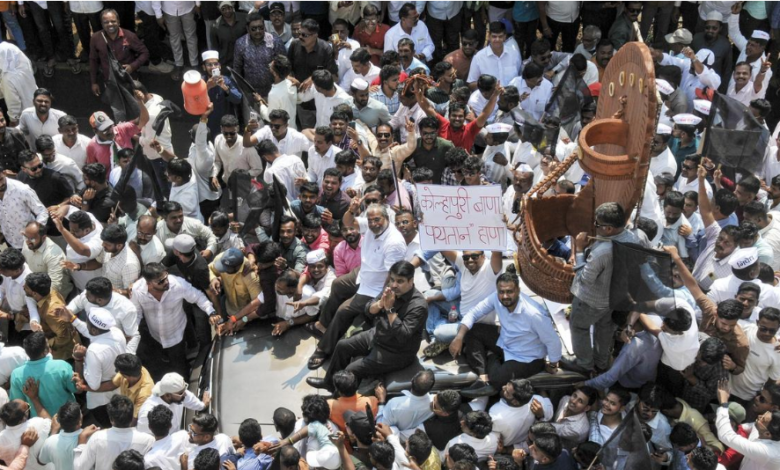
On November 9, opposition leaders and dairy farmers staged a protest in Kolhapur against the government’s decision to give voting rights to nominated directors.
Reports said thousands of milk farmers participated in the agitation, with protesters marching towards the Kolhapur district collectorate along with cattle.
The protest was jointly led by NCP (Sharadchandra Pawar) state president Jayant Patil and Swabhimani Shetkari Sanghatana chief Raju Shetti.
The protesters argued that Gokul belongs to the milk producers and that the elected representatives should be allowed to determine the cooperative’s leadership.
Opposition leaders accused the state government of attempting to alter the result of the board elections through the ordinance.
Satej Patil also criticised the move, arguing that it could weaken the democratic functioning of cooperative institutions.
The Gokul election controversy therefore became a public issue involving farmers, political parties and cooperative sector representatives.
The protest highlighted concerns among sections of the dairy community about government intervention in the management of a cooperative institution.
The allegations made during the agitation remain the opposition’s political position. The government’s justification for the ordinance is that large cooperative institutions need experienced nominees and more effective management.
The legal proceedings will be important in determining the validity of the new provisions.
Why Gokul Matters to Lakhs of Milk Producers
Gokul’s importance extends beyond the political contest for its chairman’s post.
The cooperative is linked to a large network of milk producers and village-level societies.
Milk production is an important source of income for rural households in and around Kolhapur. For many families, dairy farming provides regular earnings that can supplement income from agriculture and other rural occupations.
The cooperative system helps connect individual milk producers with collection, processing and marketing facilities.
The organisation’s management can therefore influence several aspects of the dairy economy, including milk procurement, payments, quality standards, processing capacity and market expansion.
Reports have placed Gokul’s annual turnover at around ₹4,000 crore, underlining its financial scale.
The Gokul election has attracted such attention because the leadership of an institution of this size can have consequences for a large number of rural producers.
The cooperative also has a wider role in the local economy through employment, transportation, processing, packaging and distribution.
Its functioning affects not only milk producers but also people working in associated activities.
For this reason, the leadership dispute has been followed closely by farmers’ organisations and political representatives.
What Are the Challenges Before the New Chairman?
With Rajesh Patil elected chairman, the immediate challenge will be to ensure that Gokul’s day-to-day operations continue smoothly.
The cooperative will have to maintain its milk procurement network, ensure timely payments and manage its processing and distribution operations.
The new leadership will also need to address concerns raised by milk producers during the election controversy.
One of the important expectations from the cooperative is to provide fair and competitive prices for cow and buffalo milk.
Gokul also faces competition from other dairy brands and cooperative organisations. Maintaining quality, improving efficiency and expanding market reach will be important for its long-term performance.
The chairman and board will have to balance the interests of milk producers, cooperative members, employees and consumers.
The Gokul election dispute has also raised questions about the independence of cooperative institutions. Rebuilding confidence among members and producers may therefore be another important task for the new leadership.
The one-year term arrangement adds another political dimension, as the alliance partners will have to decide the future leadership arrangement after the initial period.
What Happens Next in the Bombay High Court?
Although Rajesh Patil has been elected chairman, the legal challenge over the ordinance remains pending.
The Bombay High Court has scheduled the next hearing for November 25, 2026.
The petition challenges the constitutional validity and application of the ordinance that allows four government-nominated directors to vote in the management committees of qualifying cooperative institutions.
The court’s earlier interim decision allowed the nominated directors to participate in the November 10 election, but it did not finally settle the legal issue.
The separate ballot arrangement and recording of the election process were safeguards directed by the court while the matter remains pending.
The Gokul election result may therefore remain connected to the outcome of the legal proceedings.
If the court eventually rules on the validity of the ordinance, the decision could have implications beyond Gokul for other cooperative institutions covered by the amendment.
The November 25 hearing will be an important next step in the legal process.
Until a final judgment is delivered, the ordinance and the legal challenge should be reported with care. The High Court’s refusal to grant an interim stay should not be described as a final approval of the amendment.
Gokul Election: Key Events in Chronological Order
The controversy developed over several weeks. The following timeline summarises the major reported developments:
- October 19, 2026: The Congress-backed Samavichari Aghadi wins 13 of the 25 elected director seats, while the Mahayuti-backed panel wins 12.
- October 29, 2026: The first chairman’s election meeting is adjourned because the required quorum of 14 directors is not met.
- October 29, 2026: The 13 Congress-backed directors reportedly hold a separate meeting and declare Shashikant Patil Chuyekar elected chairman. The dairy administration does not recognise the result.
- November 2, 2026: The Bombay High Court directs that a fresh chairman’s election meeting be held on November 10.
- November 6, 2026: The Maharashtra government promulgates an ordinance allowing four nominated directors to vote in qualifying cooperative institutions.
- November 9, 2026: The Bombay High Court refuses to stay the ordinance but orders separate sealed ballots for the nominated directors and recording of the election process.
- November 9, 2026: Farmers and opposition leaders protest in Kolhapur against the government move.
- November 10, 2026: Rajesh Patil is elected Gokul chairman with 16 votes.
- November 25, 2026: The next hearing in the legal challenge is scheduled.
The timeline shows how the Gokul election developed from a board-level quorum dispute into a wider political and legal controversy.
What the Gokul Controversy Means for Maharashtra’s Cooperative Sector
The dispute has raised a larger question about the balance between elected representation and government participation in cooperative institutions.
Cooperative organisations are built around the participation of their members. In the dairy sector, milk producers and their societies play an important role in the structure and functioning of the organisation.
At the same time, large cooperatives may handle significant financial resources, receive government support and operate complex commercial activities.
The Maharashtra government’s argument is that experienced nominees can contribute to professional management and help prevent deadlocks.
The opposition’s concern is that allowing government-nominated directors to vote could change the balance created through elections.
The Gokul election has brought these competing positions into focus.
The eventual court ruling may clarify how the amended provisions apply and what limits, if any, govern the participation of nominated directors in cooperative decision-making.
The issue could become relevant for other large cooperative institutions covered by the ordinance.
For the cooperative sector, the broader challenge will be to ensure that professional management, financial accountability and democratic participation can operate together.
Conclusion: Gokul Chairman Elected, But Legal Battle Is Not Over
The Gokul election has concluded with NCP leader Rajesh Patil being elected chairman of the Kolhapur District Cooperative Milk Producers’ Union with 16 votes on November 10, 2026.
His election followed a controversial change in the voting rights of government-nominated directors, after the Congress-backed Samavichari Aghadi had secured 13 of the 25 elected board seats against the Mahayuti panel’s 12. The Bombay High Court allowed four nominated directors to vote but directed that their ballots be kept separately and that the election process be recorded.
While the immediate leadership contest has been decided, the constitutional challenge to the ordinance remains pending, with the next hearing scheduled for November 25. The developments have made Gokul a major political and cooperative-sector issue in Maharashtra, with dairy farmers, opposition leaders and the ruling alliance continuing to debate the future of the institution.
Stay Updated With Police Vartha
Follow POLICE VARTHA for the latest Maharashtra political news, cooperative sector updates, farmers’ issues, business developments and breaking news from across the state.
We bring readers important updates on government decisions, public affairs, local developments and issues affecting communities.
WANT TO SHARE NEWS OR PROMOTE YOUR BUSINESS?
Connect with Police Vartha for:
- News Coverage & Publicity
- Business & Brand Advertising
- Local News & Event Coverage
Contact us for news coverage and advertising enquiries.