

Shocking Ayushmann Threat Case: 5 Key Details of Techie’s Arrest
Mumbai Crime Branch arrested a 30-year-old Bengaluru IT professional for allegedly sending threatening messages to Ayushmann Khurrana and other actors. The accused has been sent to judicial custody as police investigate possible extortion and fake gang links.


Ayushmann Khurrana Threat Case: Bengaluru Techie Arrested Over Threatening Audio, Court Sends Accused to Judicial Custody
Mumbai Crime Branch arrested 30-year-old Vaibhav Chandra Mishra for allegedly sending threatening Instagram messages to Bollywood actor Ayushmann Khurrana and other film personalities. Investigators are examining possible extortion attempts and suspected impersonation of the Lawrence Bishnoi gang, while the accused has been sent to judicial custody.
Ayushmann Threat Case: Bengaluru Man Arrested by Mumbai Crime Branch
The Ayushmann threat case has drawn attention across Bollywood after Mumbai Crime Branch arrested a 30-year-old Bengaluru-based IT professional for allegedly sending threatening messages to actor Ayushmann Khurrana and other film personalities.
The accused has been identified as Vaibhav Chandra Mishra. According to reports, he allegedly contacted actors through Instagram and sent threatening messages while claiming to have links with the Lawrence Bishnoi gang.
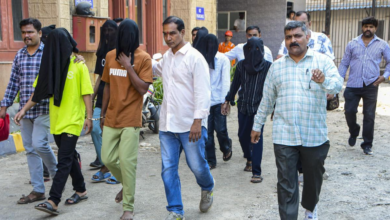
Mumbai Crime Branch traced the accused to Bengaluru through a technical investigation involving the social media accounts allegedly used to send the messages. He was arrested in the first week of November 2026 and subsequently brought to Mumbai for questioning.
The case became particularly serious after reports emerged that Khurrana had received a threatening audio message and a warning that he could be attacked despite travelling in a bulletproof vehicle.
The Ayushmann threat investigation is also examining whether the accused sent similar messages to other celebrities and whether the threats were part of an extortion attempt.
Police have reportedly recovered electronic devices, including a mobile phone, for examination. Investigators are looking into the accounts used to contact the actors, the origin of the messages and whether any other individuals were involved.
The latest development came on November 10, when a Mumbai court remanded Mishra to judicial custody after police sought additional time to investigate possible links with other threats. The accused also filed a bail application, according to reports.
It is important to note that the allegations are under investigation and the accused has not been convicted.
What Threat Did Ayushmann Khurrana Receive?
According to reports, Ayushmann Khurrana received threatening messages through Instagram from an individual claiming to be associated with the Lawrence Bishnoi gang.
The message reportedly contained a warning that the actor could be targeted even if he travelled in a bulletproof car.
The threatening communication was intended to create fear and pressure the actor. Investigators are examining the exact wording, the accounts used to send the messages and the identity of the person responsible.
The Ayushmann threat case gained wider attention after details of the alleged message were reported in the media. The warning reportedly referred to the possibility of an attack similar to the recent shooting incident involving actor Tiger Shroff.
The message raised concerns because it appeared to refer to an incident that had already increased security concerns within the film industry.
The sender allegedly presented himself as someone connected to a criminal network, but police investigations have not established that the accused was genuinely associated with the Lawrence Bishnoi gang.
The police are examining whether the gang’s name was used simply to make the threats appear more serious and frighten the recipients.
The actor reportedly approached the police after receiving the threatening communication. The complaint and digital evidence helped investigators begin tracing the sender.
Who Is Vaibhav Chandra Mishra?
The accused in the Ayushmann threat case has been identified as Vaibhav Chandra Mishra, a 30-year-old man who was traced to Bengaluru.
Reports have described him as an IT professional and a BTech graduate. Some reports also stated that he was unemployed at the time of the investigation.
According to police accounts reported in the media, Mishra was traced through technical analysis of the Instagram accounts allegedly used to send threatening messages.
Investigators reportedly followed digital leads to identify the location from which the messages were sent. The technical investigation eventually led the Mumbai Crime Branch team to Bengaluru.
The accused was arrested there and brought into the Mumbai investigation.
Police are examining his electronic devices and digital communications to understand the extent of the alleged activity.
The investigation is also looking into whether he created multiple fictitious social media accounts and used them to contact different film personalities.
The Ayushmann threat investigation has not yet established the full number of people who may have received messages from the accused.
Police are also examining his possible motive and whether the communications were intended to obtain money, create panic or achieve some other objective.
Any claims about his motive should be treated as preliminary until the investigation and court proceedings establish the facts.
Was Tusshar Kapoor Also Targeted?
The investigation has also brought actor Tusshar Kapoor into the picture.
According to reports, Kapoor received a threatening audio message from an individual claiming to be Harry Boxer, who has been described in media reports as an alleged associate of the Lawrence Bishnoi gang.
The sender reportedly demanded ₹5 crore from the actor and used threatening language to pressure him.
Kapoor alerted the police after receiving the communication. The matter was examined by Mumbai Police, and the audio recording became an important part of the wider investigation into threats against film personalities.
The Ayushmann threat case attracted further attention because police were examining whether the messages received by Khurrana and Kapoor were connected.
However, it is important not to assume that every threatening message received by different actors came from the same person. Investigators must establish the connection through digital evidence, audio analysis and other material.
Reports said the Crime Branch examined the voice in the message sent to Kapoor and compared it with available samples associated with the person the sender claimed to be.
The reported comparison did not establish a match.
This raised the possibility that someone was impersonating a known criminal figure to make the extortion demand appear credible.
The investigation is examining the communications and the possible role of the accused in these incidents.
₹5 Crore Extortion Demand: What Police Are Investigating
One of the most significant details in the wider investigation is the reported ₹5 crore demand made to Tusshar Kapoor.
The sender allegedly used a threatening audio message and claimed to represent a criminal gang.
The demand has raised questions about whether the sender intended to extort money by exploiting the fear surrounding recent threats against Bollywood personalities.
In an extortion attempt, a person may use threats, intimidation or fear of physical harm to pressure someone into paying money.
The Ayushmann threat case is being examined in this wider context because the actor also reportedly received threatening communication demanding money.
Police are investigating whether the messages were connected, whether the same person was behind them and whether other celebrities were approached.
Investigators have reportedly examined the accused’s electronic devices and sought information that could help establish whether any money was transferred or whether additional extortion attempts were made.
The investigation may also involve checking bank details and digital communication records to understand whether the accused received money from anyone.
At this stage, the reported demand should not be treated as proof that money was paid. The police investigation is intended to establish the facts.
Did the Accused Actually Have Links With the Lawrence Bishnoi Gang?
The alleged use of the Lawrence Bishnoi gang’s name is one of the most important aspects of the Ayushmann threat case.
The sender reportedly claimed to be connected to the gang while issuing threats to film personalities.
However, the Mumbai Crime Branch reportedly said that the accused was not found to have an established connection with the gang during the preliminary investigation.
The police suspected that he may have attempted to exploit the fear created by recent incidents involving threats and violence against celebrities.
The distinction is important. A person claiming to represent a criminal gang does not automatically establish that the person is actually connected to that organisation.
Investigators are examining whether Mishra acted alone, whether he used fictitious identities and whether anyone else helped him send the messages.
The Ayushmann threat investigation is also examining the possibility that the gang’s name was deliberately used to intimidate the actors and make the demands appear more dangerous.
The police have not established a genuine organisational link based on the information publicly reported so far.
Until investigators produce verified evidence, the accused should not be described as a confirmed member of the Lawrence Bishnoi gang.
Was Artificial Intelligence Used to Create the Threatening Audio?
Another aspect that has attracted attention is the possibility of voice manipulation or artificial intelligence being used in the threatening communications.
Reports citing investigators have suggested that AI-generated voice samples may have been used to imitate or create audio messages.
Police are reportedly examining the recordings and digital devices to understand how the messages were prepared.
If artificial intelligence or voice-cloning technology was used, it could make it easier for someone to imitate another person’s voice or create recordings intended to appear authentic.
However, the use of AI in this particular case has not been conclusively established in the information publicly available.
The Ayushmann threat investigation will need to examine the original audio files, their digital properties, the devices used to create or send them and any relevant technical evidence.
Voice comparison can be one part of an investigation, but it should be considered alongside other evidence, including account records, device data and communication history.
The case highlights a growing concern about the misuse of digital tools to impersonate individuals, spread threats and potentially facilitate extortion.
It also demonstrates why threatening audio messages should be preserved in their original form and handed to investigators rather than edited or circulated without context.
How Did Mumbai Crime Branch Trace the Accused to Bengaluru?
The investigation reportedly began after the actors brought the threatening communications to the attention of the police.
The Crime Branch examined the social media accounts allegedly used to send the messages and carried out technical analysis to identify the sender.
Digital investigations can involve examining account details, available platform information, device records, internet-related data and other electronic evidence.
In this case, reports said the technical investigation helped police trace the accused to Bengaluru.
A team from the Mumbai Crime Branch then apprehended him with assistance from local police.
The Ayushmann threat case demonstrates how digital evidence can help investigators identify suspects who allegedly use social media platforms to contact victims from another city.
The use of Instagram did not prevent the police from pursuing technical leads.
Investigators are continuing to examine the accused’s devices and accounts to determine whether additional messages were sent and whether other people were involved.
The police are also looking into how the accused allegedly obtained contact information or access to accounts used to approach film personalities.
These details may help establish whether the communications were isolated incidents or part of a wider pattern.
What Did Police Recover From the Accused?
During the investigation, police reportedly recovered electronic devices, including a mobile phone, from the accused.
The devices are important because they may contain information about the Instagram accounts, audio recordings, messages and other digital activity linked to the allegations.
Investigators are examining whether the accused used multiple accounts or fictitious identities to contact celebrities.
They are also looking into whether the devices contain information about other people who may have received threatening messages.
The Ayushmann threat investigation requires the police to establish the connection between the accounts, the devices and the communications sent to the actors.
Digital evidence can help investigators reconstruct when messages were sent, which accounts were involved and whether the same person controlled multiple profiles.
Police are also reportedly examining the accused’s financial details as part of the investigation into the alleged extortion angle.
The results of these examinations may help establish the motive and whether the accused was involved in any other similar incidents.
The contents of the devices and the final findings have not all been made public. Therefore, any claims about what investigators have conclusively recovered should be treated cautiously.
What Happened in Court? Accused Sent to Judicial Custody
The latest major development in the Ayushmann threat case came from a Mumbai court on November 10, 2026.
After the accused had been in police custody for questioning, investigators sought additional custody to examine possible links with other threatening communications.
Police reportedly told the court that they needed more time to establish whether Mishra was connected to threats received by other people and to examine the extent of his alleged activities.
The accused’s lawyer opposed the request for further police custody.
The court ultimately remanded Mishra to judicial custody instead of granting the additional police custody sought by investigators.
Following the order, the accused filed a bail application, according to reports.
Judicial custody means that the accused is held under the authority of the court while the legal proceedings continue. It does not mean that the accused has been convicted.
The Ayushmann threat case remains under investigation, and the court will consider the bail application through the legal process.
The next developments will depend on the investigation, the evidence presented by the prosecution and the court’s decisions.
Why Did Police Want More Custody?
Police reportedly sought additional custody because investigators wanted to examine whether the accused was connected to other threatening messages.
The investigation was not limited to one Instagram communication.
Officers were examining whether the accused had created multiple accounts and contacted other film personalities using similar threats.
They also wanted to understand how he obtained the actors’ contact details and whether any other individuals were involved.
The Ayushmann threat case could therefore have implications beyond the initial complaint if investigators establish that other people were targeted.
Police were also examining the accused’s electronic devices and financial records to understand whether any extortion payments were made or attempted.
The prosecution’s request for further custody was based on the need to continue these investigative steps.
The court’s decision to remand the accused to judicial custody means that further investigation will proceed under the applicable legal process.
What Is the Current Status of the Case?
As of the latest reports dated November 10, 2026, Vaibhav Chandra Mishra has been sent to judicial custody by a Mumbai court and has filed a bail application.
Mumbai Crime Branch is examining the alleged threatening messages, digital evidence and possible links to other incidents.
The Ayushmann threat case also involves the investigation into communications reportedly sent to Tusshar Kapoor, including a ₹5 crore demand.
Police have reportedly not established that the accused was genuinely connected to the Lawrence Bishnoi gang.
The possibility of voice manipulation or AI-generated audio has also been raised in reports, but it should not be described as a confirmed finding until investigators establish it.
The case is therefore at an investigative stage. The court proceedings and forensic examination of digital evidence will be important in determining the next steps.
Any further arrest, charge-sheet filing, bail decision or additional findings should be reported only after confirmation from police or reliable court reporting.
Bollywood Celebrities and Growing Security Concerns
The Ayushmann threat case has renewed concerns about the safety of actors and other public figures.
Film personalities are often visible in public spaces, attend events and maintain a strong presence on social media. This visibility can also make them potential targets for intimidation, impersonation and online harassment.
Threats sent through social media can create fear even when the sender is not physically close to the recipient.
When a sender claims to represent a criminal gang, the threat may appear more serious and can create additional pressure on the person receiving it.
The recent incidents involving film personalities have led to increased attention on security arrangements and the need for quick police responses.
However, every threat must be investigated individually. Authorities must establish who sent the communication, whether the threat is credible, whether money was demanded and whether any criminal network is actually involved.
The Ayushmann threat investigation is an example of why digital communications need to be examined carefully rather than accepting the sender’s claimed identity at face value.
Police must also balance public safety with the need to avoid spreading unverified claims about criminal organisations.
How Social Media Is Being Misused for Threats and Extortion
Social media platforms allow people to communicate instantly, but they can also be misused for intimidation and fraud.
A person may create a fake account, use a false identity and send threatening messages to someone without revealing their actual location.
In alleged extortion cases, the sender may attempt to create fear by claiming to represent a powerful person or criminal organisation.
The Ayushmann threat case has brought attention to this method because the sender reportedly used Instagram and claimed links to the Lawrence Bishnoi gang.
Such cases demonstrate why people receiving threats should preserve the original messages, screenshots, account details and audio files.
They should avoid deleting the communication before reporting it to the police.
They should also avoid responding to demands or transferring money without seeking help from law enforcement.
The use of fake accounts and manipulated audio can make investigations more complicated, but digital records may help identify the people responsible.
Social media companies may also be required to provide relevant information through lawful investigative procedures.
What Should People Do If They Receive Threatening Messages?
The case also offers important lessons for ordinary social media users.
Threatening messages should never be dismissed automatically, particularly when they include demands for money or warnings of physical harm.
People receiving such messages should consider the following precautions:
1. Preserve the original message
Do not delete the conversation or original audio recording. Preserve screenshots, account names, profile links and timestamps.
2. Avoid paying money
Do not transfer money in response to threats. Report the communication to the police and seek guidance.
3. Report the account
Use the platform’s reporting tools to flag accounts involved in threats, impersonation or extortion.
4. Contact the police
If a message contains a threat of physical harm or an extortion demand, approach the police promptly.
5. Do not circulate unverified audio
Forwarding threatening recordings without context can spread panic and misinformation. Share evidence with investigators instead.
6. Secure social media accounts
Use strong passwords and two-factor authentication. Review privacy settings and avoid sharing sensitive personal information publicly.
The Ayushmann threat case demonstrates that even public figures can be targeted through online communications, and that preserving digital evidence can help investigators trace the sender.
What Happens Next?
The next stage of the Ayushmann threat investigation will depend on the examination of digital devices, social media records and other evidence collected by the Mumbai Crime Branch.
Investigators will need to establish whether the accused sent threats to other celebrities, whether the messages were linked to an extortion attempt and whether anyone else was involved.
The alleged connection with the Lawrence Bishnoi gang will also need to be verified through evidence.
The court will consider the accused’s bail application in accordance with the law.
The investigation may also establish whether the threatening audio involved voice imitation or artificial intelligence. Until then, such possibilities should remain described as matters under examination.
The case is being closely watched because it involves threats against prominent film personalities and the alleged misuse of a criminal gang’s identity.
Any further developments should be based on official police statements and verified court updates.
Key Details of the Ayushmann Khurrana Threat Case
- Actor threatened: Ayushmann Khurrana.
- Other actor reportedly targeted: Tusshar Kapoor.
- Accused: Vaibhav Chandra Mishra, 30.
- Accused’s reported location: Bengaluru.
- Arresting agency: Mumbai Crime Branch.
- Alleged method: Threatening messages and audio communications through Instagram.
- Reported extortion demand: ₹5 crore in the message involving Tusshar Kapoor.
- Alleged gang identity used: Lawrence Bishnoi gang.
- Gang connection: Not established in the preliminary police findings reported so far.
- Digital investigation: Electronic devices and social media accounts are being examined.
- Latest court development: Accused sent to judicial custody on November 10, 2026.
- Bail: Accused reportedly filed a bail application.
- Investigation status: Ongoing.
Conclusion: Threat Case Raises Questions About Celebrity Safety and Online Extortion
The Ayushmann threat case has become a major talking point after Mumbai Crime Branch arrested Bengaluru-based IT professional Vaibhav Chandra Mishra for allegedly sending threatening Instagram messages to Bollywood actor Ayushmann Khurrana and other film personalities.
The investigation also involves threatening audio messages reportedly sent to Tusshar Kapoor, including a ₹5 crore extortion demand. The sender allegedly claimed links to the Lawrence Bishnoi gang, but police have not established a genuine connection between the accused and the gang.
Investigators are examining electronic devices, social media accounts and possible links to other threats. On November 10, a Mumbai court sent the accused to judicial custody, and he reportedly filed a bail application. The case highlights growing concerns about online intimidation, fake identities, alleged extortion and the misuse of digital technology.
The investigation is continuing, and further developments will depend on the evidence collected and the court proceedings.
Stay Updated With Police Vartha
Follow POLICE VARTHA for the latest Mumbai crime news, Bollywood updates, police investigations, Maharashtra news and breaking developments.
We bring readers verified updates on incidents that matter to the public.
WANT TO SHARE NEWS OR PROMOTE YOUR BUSINESS?
Connect with Police Vartha for:
- News Coverage & Publicity
- Business & Brand Advertising
- Local News & Event Coverage
Contact us for news coverage and advertising enquiries.