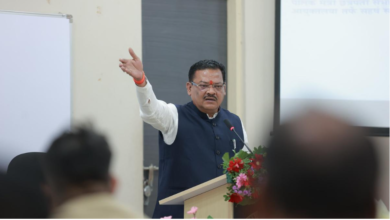


Mundhe Petition: 7 Shocking Updates in Tukaram Mundhe’s FSSAI Case
The Maharashtra FDA has opted for discussions with FSSAI after questioning the Centre's control over food safety inspections and licensing. The withdrawal comes amid a wider debate over the division of regulatory powers between state and central authorities.


Mundhe Petition: 7 Major Developments as Tukaram Mundhe Withdraws Legal Challenge Against FSSAI
After taking the Centre’s food safety regulator to the Bombay High Court over alleged interference in Maharashtra’s enforcement powers, FDA Commissioner Tukaram Mundhe has decided to withdraw the petition. The decision signals a possible shift towards discussions between state and central authorities over who should control inspections, licensing and enforcement of food safety regulations.
Mundhe Petition Withdrawn After Legal Battle With FSSAI
Maharashtra Food and Drug Administration (FDA) Commissioner Tukaram Mundhe has decided to withdraw the petition filed before the Bombay High Court challenging certain regulations and administrative arrangements introduced by the Food Safety and Standards Authority of India (FSSAI).
The development comes just weeks after the Maharashtra FDA approached the court, alleging that the central food regulator had created a parallel enforcement structure that reduced the authority of state food safety officials.
The Mundhe Petition had raised important questions about the division of powers between the Central Government and state authorities under the Food Safety and Standards Act, 2006.
The state had argued that the original legislation was designed to decentralise food safety administration and give state-level officials an important role in licensing, inspections and enforcement.
However, according to the petition, subsequent regulations and administrative orders introduced by FSSAI had gradually expanded the Centre’s role in these areas.
The dispute became particularly significant because Maharashtra’s FDA officials claimed that restrictions on inspecting centrally licensed food businesses were creating difficulties for routine enforcement activities.
According to a report published by The Times of India on November 13, the state FDA decided to withdraw the petition after discussions and an internal review. An FSSAI CEO communication reportedly opened the possibility of resolving the concerns through discussions outside court.
A letter seeking withdrawal was sent by the FDA to the state’s Advocate General.
The Mundhe Petition withdrawal therefore marks a significant development in the ongoing debate over the administrative responsibilities of central and state food safety authorities.
However, withdrawing the petition does not automatically mean that every disagreement between the two authorities has been resolved.
The reported decision indicates a preference for dialogue and an out-of-court resolution.
Why Did Tukaram Mundhe Take the Centre to Court?
The controversy originated from a disagreement over the powers and responsibilities of state food safety authorities and FSSAI.
The Maharashtra FDA argued that the Food Safety and Standards Act, 2006, established a decentralised framework for implementing food safety regulations.
Under this arrangement, state commissioners and designated officers play an important role in enforcing food safety requirements within their respective jurisdictions.
The state claimed that FSSAI gradually introduced additional administrative arrangements that expanded central control over food businesses.
According to Maharashtra’s arguments, this created a situation in which state officials faced restrictions while attempting to inspect businesses holding central food licences.
The Mundhe Petition challenged several regulatory provisions and administrative decisions that the state believed were inconsistent with the original legislative framework.
The petition also questioned the creation of certain central-level posts, including Central Food Safety Officers and Central Licensing Authorities.
Maharashtra argued that these arrangements created an additional enforcement structure that interfered with the responsibilities assigned to state authorities.
The state further questioned whether the FSSAI Chief Executive Officer had the authority to introduce certain administrative arrangements through regulations and executive instructions.
The dispute was therefore not simply about one inspection or one food business.
It involved a broader disagreement over how food safety administration should function across India.
What Is the Food Safety and Standards Act, 2006?
The Food Safety and Standards Act, 2006, is the principal legislation governing food safety in India.
It was introduced to consolidate several existing food-related laws and establish a comprehensive regulatory framework for the food sector.
The legislation aims to ensure that food products available to consumers meet prescribed safety and quality standards.
It also establishes responsibilities relating to the manufacture, storage, distribution, sale and import of food products.
The Food Safety and Standards Authority of India was established under this legislation to develop science-based food standards and regulate food safety.
State governments also play an important role in implementing the Act through their respective food safety departments.
These departments conduct inspections, collect samples, monitor food businesses and take enforcement action where required.
The Mundhe Petition raised questions about how these responsibilities should be divided between the Centre and state governments.
Maharashtra’s position was that the original law intended state authorities to retain substantial enforcement responsibilities.
The state alleged that subsequent regulations had shifted important powers towards central authorities.
This disagreement eventually led to the legal challenge before the Bombay High Court.
What Were the Main Allegations Against FSSAI?
The Maharashtra FDA raised several concerns regarding the regulatory and administrative framework introduced by FSSAI.
One of the central allegations was that the authority had established a parallel enforcement structure that reduced the independence of state food safety officials.
The state argued that the original legislation did not envisage the expansion of central-level enforcement powers in the manner alleged in the petition.
The Mundhe Petition particularly questioned the following developments.
1. Creation of Central Food Safety Officer Posts
The state challenged the creation of dedicated Central Food Safety Officer positions.
According to Maharashtra’s argument, the introduction of these posts expanded the central regulator’s field-level administrative structure.
The state questioned whether these arrangements were consistent with the original provisions of the Food Safety and Standards Act.
2. Central Licensing Authority
Another major concern involved the creation and functioning of Central Licensing Authorities.
The Maharashtra FDA argued that these arrangements affected the responsibilities of state-appointed designated officers.
The state claimed that licensing and inspection responsibilities were being shifted towards central authorities.
3. Restrictions on State-Level Inspections
The state also challenged an FSSAI directive issued in May 2023.
According to the petition, the directive restricted state food safety officials from independently enforcing the Act against businesses holding central licences unless the prescribed central-level involvement was present.
This was one of the most important issues raised by Maharashtra.
4. Food Safety Compliance System
The petition also questioned the functioning of the online Food Safety Compliance System, commonly known as FoSCoS.
The state alleged that the system contributed to bringing more food businesses under central licensing arrangements.
Maharashtra argued that this affected the ability of state authorities to independently manage licensing and enforcement activities.
5. Regulatory Amendments
The state also challenged certain amendments to food safety regulations, including changes introduced in 2026.
It questioned the manner in which some of these regulatory changes were introduced and argued that the required public consultation procedures had not been followed.
These allegations formed the basis of the legal dispute.
It is important to remember that these were arguments made by the state in its petition, not final findings delivered by the Bombay High Court.
What Was the May 2023 FSSAI Order About?
One of the most significant issues in the Mundhe Petition was an FSSAI directive issued in May 2023.
According to the Maharashtra FDA, the directive restricted state food safety officials from independently inspecting certain food businesses holding central licences.
The state argued that this created practical difficulties for its enforcement teams.
For example, when state FDA officials wanted to inspect large food businesses or establishments operating under central licences, they could be required to obtain prior permission or involve central officials, depending on the applicable arrangements.
Maharashtra believed this affected its ability to respond quickly to food safety complaints.
The issue became more prominent after the state began conducting stricter inspections of restaurants, hotels, sweet shops, dairies and other food businesses.
The FDA maintained that state officials should be able to carry out inspections within their jurisdiction in accordance with the powers provided under the legislation.
The Mundhe Petition therefore sought judicial intervention against the restrictions that Maharashtra considered inconsistent with its enforcement responsibilities.
The withdrawal means that the state has chosen to pursue discussions rather than continue the legal challenge at this stage.
Why Did Maharashtra Decide to Withdraw the Mundhe Petition?
The withdrawal decision came after discussions between officials representing the state FDA and FSSAI.
According to the Times of India report published on November 13, an FSSAI CEO communication opened the possibility of resolving the concerns through an out-of-court solution.
A senior FDA official reportedly stated that after discussions and an internal review, the department decided that the concerns could be resolved through dialogue.
The FDA also sent a letter requesting withdrawal of the petition to the state’s Advocate General.
This suggests that the Maharashtra government is seeking an administrative resolution instead of continuing the legal confrontation.
The Mundhe Petition had placed the state and central authorities in a significant jurisdictional dispute.
However, a negotiated approach may provide an opportunity to discuss inspection procedures, licensing responsibilities and coordination between the two regulatory bodies.
It is important to distinguish between the reported reason for withdrawal and the broader questions raised in the original petition.
The withdrawal does not establish that FSSAI’s regulations were unconstitutional or that Maharashtra’s allegations were legally accepted.
Similarly, it does not automatically establish that every concern raised by the state has been addressed.
The precise terms of any understanding or administrative resolution would need to be confirmed through official communication.
Who Is Tukaram Mundhe?
Tukaram Mundhe is an Indian Administrative Service (IAS) officer known for his administrative assignments and enforcement-oriented approach.
He has served in several important government positions in Maharashtra and has been associated with administrative action in areas involving public services and governance.
His appointment as Maharashtra FDA Commissioner brought additional attention to the department’s food safety enforcement activities.
During the period leading up to the legal dispute, the Maharashtra FDA undertook inspections and enforcement operations involving restaurants, eateries, sweet shops, dairies and other food businesses.
The department’s actions also brought attention to the challenges faced by food safety officials while exercising their inspection powers.
The Mundhe Petition became a major development because it brought these administrative concerns before the Bombay High Court.
Rather than being limited to an individual official’s disagreement with the central government, the petition represented a legal challenge filed through the state food safety administration.
The withdrawal has now shifted the focus towards discussions between the two regulatory authorities.
What Is FSSAI and What Powers Does It Have?
The Food Safety and Standards Authority of India is the national food safety regulator established under the Food Safety and Standards Act, 2006.
Its primary responsibility is to establish science-based standards for food products and regulate food safety across the country.
FSSAI also provides guidelines and regulatory frameworks for food businesses.
Its responsibilities include:
- Establishing food safety standards.
- Regulating food manufacturing and distribution.
- Developing licensing and registration frameworks.
- Monitoring food safety compliance.
- Providing scientific guidance on food-related matters.
- Coordinating with state food safety departments.
- Creating awareness about safe food practices.
State food safety departments also have important responsibilities in implementing food regulations.
The disagreement raised in the Mundhe Petition concerned the extent of central and state authority in areas such as licensing, inspection and enforcement.
Both levels of administration are part of India’s broader food safety framework.
The challenge was about how their respective responsibilities should be interpreted and exercised.
What Could the Withdrawal Mean for Food Businesses in Maharashtra?
The withdrawal of the petition may have implications for how the state FDA and FSSAI coordinate their activities.
Food businesses, particularly large establishments holding central licences, operate within a regulatory framework involving licensing, inspections and compliance requirements.
The Maharashtra FDA had argued that certain restrictions were making independent inspections more difficult.
If discussions between the state and central authorities result in a mutually accepted administrative arrangement, it could help clarify inspection procedures.
For food businesses, clear regulatory responsibilities are important because they help establish which authority should be approached for licensing, inspections and compliance-related matters.
The Mundhe Petition also brought attention to the importance of coordination between state and central regulators.
However, businesses should not assume that the withdrawal automatically changes their existing licensing or inspection requirements.
Until an official revised arrangement or notification is issued, food businesses must continue complying with the applicable food safety regulations.
Will Maharashtra FDA Officers Now Have More Inspection Powers?
This is one of the important questions following the withdrawal.
The Maharashtra FDA had approached the court because it believed certain central regulations and directives restricted its enforcement authority.
However, the decision to withdraw the petition does not by itself confirm that all the powers sought by the state have been restored.
The reported reason for withdrawal was the possibility of resolving the concerns through discussions.
The outcome will depend on what the state FDA and FSSAI agree upon and whether any formal changes are introduced.
The Mundhe Petition therefore leaves an important administrative question: how will the two authorities coordinate inspections of food businesses holding central licences?
Any clarification on this matter will be important for food safety officers, food business operators and consumers.
Further official announcements will be needed to understand whether the discussions lead to changes in inspection procedures or regulatory arrangements.
What Does This Mean for Consumers?
The dispute between Maharashtra FDA and FSSAI is important not only for government departments but also for consumers.
Food safety enforcement directly affects the quality of products available in the market.
Consumers depend on regulatory authorities to inspect food establishments, investigate complaints and take action against violations.
The Mundhe Petition highlighted concerns about the administrative arrangements governing these responsibilities.
If state and central authorities coordinate more effectively, it could help improve the efficiency of inspections and enforcement activities.
Consumers ultimately benefit when food safety regulations are implemented consistently.
The main objective of food safety administration should remain the protection of public health.
Regardless of which authority carries out an inspection, the regulatory framework must ensure that food businesses comply with applicable standards.
The withdrawal of the petition provides an opportunity for the authorities to address their differences through administrative discussions.
Seven Important Facts About the Mundhe Petition
Here are seven key points explaining the development:
- Official involved: Tukaram Mundhe, Maharashtra FDA Commissioner.
- Court: Bombay High Court.
- Opposing authority: Union Government and Food Safety and Standards Authority of India.
- Main legislation: Food Safety and Standards Act, 2006.
- Main dispute: Alleged expansion of central enforcement powers and restrictions on state-level inspections.
- Withdrawal decision: The state FDA decided to pursue discussions and an out-of-court resolution.
- Reported development: A withdrawal letter was sent to the state’s Advocate General.
The Mundhe Petition was an important legal development concerning the division of regulatory responsibilities between the Centre and Maharashtra.
Its withdrawal now places greater importance on discussions and administrative coordination.
Frequently Asked Questions About the Mundhe Petition
1. Who is Tukaram Mundhe?
Tukaram Mundhe is an IAS officer serving as Maharashtra’s Food and Drug Administration Commissioner.
2. Why did Tukaram Mundhe approach the Bombay High Court?
The petition challenged certain FSSAI regulations and administrative arrangements that Maharashtra alleged had reduced the inspection and enforcement powers of state food safety officials.
3. What is the Mundhe Petition about?
The Mundhe Petition concerned the constitutional validity of certain food safety regulations and the creation of central-level enforcement positions by FSSAI.
4. Why was the petition withdrawn?
According to reports, the state FDA decided that its concerns could be addressed through discussions with FSSAI following communication from the central regulator and an internal review.
5. What is FSSAI?
FSSAI is the Food Safety and Standards Authority of India, the national regulator responsible for establishing food safety standards and regulating food-related activities.
6. What is the Food Safety and Standards Act, 2006?
It is India’s principal legislation governing food safety, including standards, licensing, inspections and enforcement.
7. Does the withdrawal mean Maharashtra won the case?
No. The petition was withdrawn before a final judicial determination of the constitutional issues. The withdrawal should not be interpreted as a court ruling in favour of either side.
8. Will the Maharashtra FDA continue conducting inspections?
Yes, the department continues to function under the applicable legal and regulatory framework. Any changes to inspection arrangements would require appropriate official clarification.
9. What was the controversy surrounding the May 2023 order?
Maharashtra argued that the order restricted state food safety officials from independently inspecting certain centrally licensed food businesses.
10. What happens next?
The state FDA and FSSAI are expected to address their differences through discussions. Any formal changes will depend on the outcome of those discussions and official decisions.
Conclusion: A New Direction in Maharashtra’s Food Safety Regulatory Dispute
The withdrawal of the petition filed by Maharashtra’s FDA Commissioner Tukaram Mundhe marks a significant development in the dispute between the state government and FSSAI.
The original challenge questioned the expansion of central-level enforcement arrangements and their impact on the inspection powers of state food safety officials. By choosing to withdraw the case and pursue discussions, the state FDA appears to be seeking an administrative solution rather than continuing the legal confrontation.
However, several important questions concerning licensing, inspections and the division of responsibilities between central and state authorities remain relevant. The Mundhe Petition has brought national attention to the importance of clear regulatory powers and coordination in India’s food safety system.
The outcome of the discussions could be important for food businesses, enforcement officials and consumers across Maharashtra. Any final understanding between the authorities will need to be reflected in appropriate official decisions or notifications.
Stay Updated With Police Vartha
Follow POLICE VARTHA for the latest Maharashtra news, Mumbai updates, government decisions, legal developments, food safety news and breaking news from across India.
We bring you important updates covering public issues, administration, crime, consumer rights, government action and local developments.
WANT TO SHARE NEWS OR PROMOTE YOUR BUSINESS?
Connect with Police Vartha for:
- News Coverage & Publicity
- Business & Brand Advertising
- Local News & Event Coverage
Contact us for news coverage and advertising enquiries.