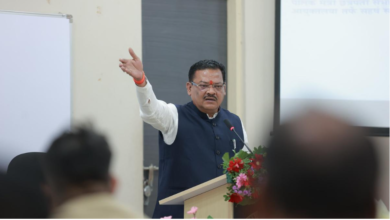


Urgent Climate Change Council Plan: 7 Key Points in Aaditya Thackeray’s Proposal
Aaditya Thackeray wants climate councils at the Centre and in every state to coordinate action, review data and track progress on pollution and climate plans.


Urgent Climate Change Council Plan: 7 Key Points in Aaditya Thackeray’s Proposal
Aaditya Thackeray has called for climate change councils at both the national and state levels, arguing that pollution and climate risks need coordinated action across government departments. His proposal draws on the structure of the Goods and Services Tax (GST) Council, where representatives from the Centre and states meet to discuss shared policy issues.
The central idea is to bring decision-makers together on a regular schedule, review reliable data, set measurable targets and check whether climate action plans are being implemented. Thackeray proposed a national council chaired by the Prime Minister, with state forest and environment ministers as members. He also called for state-level councils chaired by chief ministers and involving relevant departments.
The proposal comes amid public concern about air pollution in Indian cities and questions about how governments measure environmental progress. Thackeray has criticised what he describes as a lack of transparency in environmental data and accused the Centre of “greenwashing”—a political allegation that remains his claim, rather than an independently established finding.
A climate change council, if established, would not clean the air or reduce emissions by itself. Its impact would depend on the authority it receives, the quality of the data it uses, the targets it adopts and whether departments are held accountable for acting on its decisions. The proposal therefore raises a practical question: could a regular, cross-government forum help turn climate plans into measurable results?
What is Aaditya Thackeray proposing?
Thackeray’s proposal has two parts: a council at the national level and matching councils at the state level. The national climate change council would bring the Centre and states into one forum for coordinating policy, reviewing progress and discussing climate-related challenges that cross administrative boundaries.
He has suggested that the Prime Minister chair the national council, with forest and environment ministers from every state participating. Union ministers and representatives from other departments could also be included when relevant. The areas named in reports include urban and rural development, energy, agriculture, industry and roads.
Thackeray has proposed that the national climate change council meet every three months. At those meetings, members would review actual data, targets and progress. The aim would be to make climate action a recurring part of government decision-making, rather than an issue considered only when a crisis or major environmental event draws public attention.
At the state level, Thackeray has proposed councils chaired by the respective chief ministers. These state bodies would bring together departments involved in climate planning and implementation. That could include departments responsible for transport, energy, housing, agriculture, industry, urban planning, water and public works, depending on the state’s needs.
The proposal is a political call for a new structure. It should not be confused with a council that has already been created or given legal powers. The reports describe what Thackeray has urged governments to establish, not an approved national policy or a confirmed implementation timetable. The Times of India Hindustan Times
Why model the climate change council on the GST Council?
The GST Council provides a familiar example of a formal forum where the central and state governments discuss a policy area that affects the whole country. Thackeray’s comparison suggests that climate policy could benefit from a similar mechanism for regular discussion and shared decision-making.
Climate change and pollution do not follow state borders. Emissions from power generation, industry, transport and construction can affect air quality across several districts or states. River systems, forests, coastlines and agricultural regions also connect communities beyond a single administrative boundary. A climate change council could provide a regular place to discuss these shared challenges.
The GST Council model also highlights the importance of bringing different levels of government into the same conversation. States implement many policies that affect land use, transport, local infrastructure, agriculture and public health. The Centre has roles in national targets, energy policy, funding, regulation and international commitments. A climate change council could help align those responsibilities.
But the comparison has limits. A forum can make it easier to coordinate policy, yet it cannot guarantee agreement or implementation. Climate policy involves different kinds of decisions from tax policy: it requires long-term planning, technical expertise, detailed local data and sustained changes across many sectors. The proposed council would need to be designed around those needs.
For a climate change council to work, it would need a clear purpose. Would it set national targets? Review plans prepared by states? Recommend funding? Publish progress reports? Resolve disputes over data? Coordinate emergency responses to extreme heat or floods? These choices would shape whether the body becomes a practical tool or simply another meeting.
The analogy is most useful as a starting point: create a predictable forum where governments can compare evidence and coordinate decisions. The details of membership, authority and accountability would determine whether it could deliver results.
Why is coordination across departments important?
Climate action touches many areas of government. Reducing pollution may involve cleaner transport, power generation, industrial standards, construction practices, waste management and urban design. Preparing for climate impacts can involve flood protection, heat planning, water supply, public health, agriculture and disaster management.
If each department works separately, plans can conflict or leave gaps. A city may promote electric vehicles while failing to provide charging access. A road project may increase traffic and emissions even as another department invests in public transport. A housing plan may ignore heat risks, drainage or access to water. A climate change council could bring those departments together to spot such gaps before policies are implemented.
Coordination is also important because climate risks affect communities differently. Heat can be especially dangerous for outdoor workers, older people, children and people with health conditions. Flooding can affect informal settlements and low-lying neighbourhoods more severely. Farmers may face changing rainfall patterns, while coastal communities can be exposed to erosion and storm surges. A climate change council would need to ensure that its plans consider these varied risks.
Departments also control different pieces of the information needed to understand environmental conditions. Air quality monitoring, energy use, transport activity, tree cover, water availability and health impacts may be measured by separate agencies. A shared review process could help governments bring those sources together and identify where the evidence is incomplete.
That does not mean every issue belongs in one centralised process. Local authorities need room to adapt plans to local conditions. A useful climate change council would set shared goals and support coordination while allowing cities and districts to choose measures suited to their specific risks.
What would quarterly reviews achieve?
Thackeray has proposed that the national climate change council meet every three months to review data, targets and progress. Quarterly meetings could give governments a recurring schedule for checking whether policies are moving forward and whether results match expectations.
Regular reviews can help identify delays early. If a transport or clean-energy project is behind schedule, departments could discuss barriers before the delay becomes entrenched. If an air-quality measure is not producing the expected improvement, officials could investigate whether the problem lies in implementation, enforcement or the original policy design.
A climate change council could also make climate plans more measurable. Instead of relying on broad statements of intent, each plan could set a baseline, identify targets, assign responsibility and specify how progress will be measured. A quarterly review would then examine whether those commitments are being met.
However, meeting every three months only helps if members receive useful information in advance and can make decisions during the meeting. A council that reviews incomplete or inconsistent data could produce misleading conclusions. A council that has no authority to direct departments may be unable to resolve problems it identifies.
The review process would need agreed indicators and clear reporting rules. For example, members would need to know which agency is responsible for collecting each measure, how often the data is updated and how changes are checked. It would also need to distinguish between a policy being announced, a project being completed and a measurable environmental outcome being achieved.
Public reporting could strengthen the process. If meeting outcomes and progress summaries were made available, residents, researchers and local organisations could see what governments promised and what happened next. Transparency would also help the public understand where progress is strong and where it is falling short.
Why is reliable environmental data central to the proposal?
Thackeray has raised concerns about the integrity and transparency of environmental statistics. His accusations about the Centre’s reporting are political claims, and the relevant reports attribute them to him. The broader question about reliable data is nonetheless important: governments need credible measurements to understand pollution and climate risks, set priorities and evaluate whether policies are working.
A climate change council cannot make sound decisions without trustworthy evidence. If different agencies use different methods, compare different time periods or report information at different levels of detail, it becomes difficult to assess progress. A change in a national ranking, for example, may reflect differences in measurement as well as changes in environmental conditions.
For air pollution, a useful picture requires more than one number. Monitoring needs to cover relevant locations and times, and the public needs to understand what the measurements represent. Weather, seasonal patterns, local emissions and the placement of monitoring stations can all affect readings. A climate change council could encourage consistent methods and broader access to monitoring information.
The same principle applies to climate plans. A city’s plan might include measures for transport, buildings, energy, waste and resilience. To assess progress, officials need to know which actions were completed, how much they cost, who benefited and whether environmental conditions changed. A council could help set common reporting practices while allowing local plans to address local priorities.
Independent audits may also help build confidence. Thackeray has called for climate action plans to be formulated and neutrally audited by independent organisations. Any audit system would need clear criteria, public methods and safeguards for independence. The purpose would be to check both the quality of the plan and the evidence used to report its progress.
Without reliable data, even well-intentioned policies can miss their goals. With reliable data, governments can learn from results, adjust measures and explain their decisions. That is why data transparency is not a technical extra; it is one of the foundations of an effective climate change council.
What role could scientists and independent experts play?
Reports on Thackeray’s proposal have also highlighted the value of including scientists and experts in climate governance. A council made up only of politicians and government departments may have the authority to make decisions, but it could benefit from independent advice on climate science, public health, engineering and environmental measurement.
Experts could help members distinguish between short-term weather changes and longer-term climate trends. They could assess whether proposed targets are measurable and whether progress indicators reflect actual outcomes. Public health specialists could explain how pollution affects different groups, while urban planners and engineers could evaluate infrastructure proposals.
Expert participation would not replace political accountability. Elected governments make policy choices and decide how public money is used. But transparent, independent advice could make those choices better informed and help the public understand the evidence behind them.
A climate change council could establish an expert panel or technical secretariat to prepare research and review data before each meeting. Such a body might include specialists from universities, scientific institutions and public agencies. Clear rules would be needed to prevent conflicts of interest and to ensure that different perspectives are heard.
Independent expertise could also help evaluate climate action plans. Auditors could check whether plans include measurable targets, identify who is responsible for implementation and account for vulnerable communities. They could publish findings in plain language so residents can understand what was assessed.
The challenge is to make expert advice consequential. If researchers are invited to meetings but their findings are not considered in decisions, their presence will have little effect. A strong climate change council would explain how it uses expert input and why it accepts or rejects recommendations.
How could state-level councils help?
Climate impacts and priorities differ from state to state. Coastal regions may prioritise sea-level rise, storms and erosion. States with large agricultural areas may focus on heat, water availability, soil health and changing rainfall. Large cities may be more concerned with air pollution, heat islands, transport emissions and drainage.
A state climate change council could bring these priorities into one place. With the chief minister chairing the body, departments could coordinate around the state’s climate action plan and report on their responsibilities. That could help connect statewide objectives with district and city-level programmes.
State-level councils could also help avoid a common problem in public policy: plans that are approved but not integrated into regular government work. If departments are expected to report progress at recurring meetings, climate action may become part of budget planning and project review instead of remaining a separate document.
Local bodies would still have an essential role. Municipal corporations, town councils and district administrations are often responsible for implementing measures that affect daily life, such as waste collection, local roads, drainage, building approvals and public spaces. A state council would need clear ways to include their knowledge and track their work.
A climate change council at the state level could also identify where local authorities need support. A city may have an ambitious climate plan but lack funding, technical staff or consistent data. The state government could help provide resources or coordinate with the Centre.
For the national and state bodies to work together, their responsibilities would need to be clear. The national council could set shared frameworks and coordinate cross-state issues, while state councils could tailor implementation to local conditions. Regular communication between the two levels would be necessary to avoid duplicated reporting or conflicting targets.
What does the proposal mean for pollution?
The screenshot topic links the councils to tackling pollution. A climate change council could contribute by coordinating policies that reduce emissions and improve environmental conditions, but pollution control would still require direct action by departments and regulators.
In cities, air pollution can come from multiple sources, including transport, industry, construction dust, waste burning and other activities. The relative importance of each source varies by location and season. A council could bring agencies together to review local evidence and coordinate measures that address the sources responsible for the greatest harm.
For example, transport planning, road management and public transit investment may be handled by different authorities. A climate change council could help align those decisions, so that one department’s project does not undermine another’s pollution-reduction goals. It could also encourage agencies to set timelines and publish progress.
Pollution is not limited to air. Water contamination, untreated waste, industrial discharge and soil degradation can also affect health and livelihoods. A broad climate change council would need to coordinate with the agencies that oversee these issues, while ensuring that its mandate remains clear enough to be effective.
The council’s work would be stronger if it linked environmental indicators to public health. Monitoring pollution levels is important, but governments also need to understand how exposure affects residents and whether interventions reduce harm. Health departments and researchers could help connect environmental data with outcomes.
It is equally important to avoid treating climate change and pollution as identical issues. They overlap, especially where fossil fuel use contributes to both greenhouse gas emissions and local air pollution. But some pollutants have immediate local effects, while climate change involves longer-term global processes. A well-designed climate change council would recognise the links without losing sight of each problem’s specific causes.
What are the main challenges?
The first challenge is authority. A council can convene officials and review progress, but it needs a clear mandate if it is expected to coordinate action or resolve disputes. Governments would need to decide whether the body can issue directions, recommend actions, monitor compliance or only provide a forum for discussion.
The second challenge is accountability. If a department misses a target, the council needs a process for identifying why and deciding what happens next. Otherwise, quarterly reviews could become a series of presentations without practical follow-up. Responsibilities should be assigned to specific departments, with deadlines and public progress updates.
The third challenge is data quality. Different agencies may collect information using different standards. A national climate change council would need to agree on definitions, methods and reporting schedules while supporting the development of monitoring capacity where it is limited.
The fourth challenge is continuity. Climate planning requires work that continues across election cycles and changes in government. A council’s goals, reports and core procedures should be stable enough to support long-term projects, while remaining open to changes when evidence or conditions evolve.
The fifth challenge is balancing national consistency with local flexibility. Shared targets can help compare progress, but states and cities face different risks and capacities. A climate change council would need to allow local adaptation without making it impossible to assess national progress.
The sixth challenge is public trust. Environmental policy can become politically contested, especially when governments disagree over data or responsibility. Transparent methods, published minutes and independent reviews could help residents see how conclusions were reached. Without transparency, the council could be viewed as a political platform rather than a credible governance body.
Finally, funding matters. Plans often require investment in public transport, clean energy, resilient infrastructure, monitoring and local capacity. A council could identify priorities, but it would need to connect those priorities to budgets and financing decisions. Without resources, even well-designed plans can remain on paper.
What could make a climate change council effective?
A practical climate change council would need a small number of clear responsibilities. It could coordinate national and state plans, review progress, identify data gaps, recommend corrective action and publish an annual report. A defined remit would help members and the public understand what the body is expected to do.
It would also need a permanent technical team. Preparing quarterly reviews requires staff who can collect data, verify figures, compare progress and brief decision-makers. A dedicated secretariat could maintain records and follow up on decisions between meetings.
The council should set measurable targets and establish baselines. Targets need to specify what will change, by when and how success will be measured. If the goal is to reduce a particular form of pollution, for example, the council would need to identify the baseline, the measurement method and the agency responsible for action.
Public reporting should be part of the design from the outset. Publishing an accessible dashboard or progress report could show which commitments have been met and where work is delayed. It could also make it easier for researchers and residents to evaluate the government’s performance.
The council should include affected communities. Climate policies can influence jobs, transport access, housing, energy costs and local land use. Residents, workers and local organisations can identify risks that may not be visible in national data. Their participation could help make plans more practical and equitable.
Finally, the climate change council should connect decisions to implementation. Each meeting should end with clear actions, named departments and deadlines. The next meeting should review what happened. That simple cycle—decide, act, measure and report—would be more meaningful than creating a council without follow-through.
What has Thackeray said about climate action?
Thackeray has argued that environmental governance cuts across nearly every government department and affects people’s quality of life. He has linked the need for stronger coordination to pollution concerns and to questions about India’s progress on international climate commitments.
He has also referred to his time as Maharashtra’s environment and climate change minister, when the state developed climate action plans for Mumbai and other cities. In his view, those plans should be prepared transparently and assessed by independent organisations.
His comments have included criticism of the Centre’s handling of environmental data. Those comments are allegations made by a political leader and should be attributed as such. The existence of a political dispute does not by itself establish whether particular figures have been manipulated. That question requires examination of the data, methods and evidence.
The proposal’s larger argument is that climate action needs more than public statements or international commitments. Governments need to coordinate, measure progress and make information available to the public. A climate change council is one institutional option for creating that process.
Whether the idea gains support will depend on how it is received by the Centre and states, and on the details of any proposed structure. Political agreement would be only the first step. The body would then need clear powers, credible data and a way to make sure decisions lead to action.
What happens next?
The immediate next step is for governments and political stakeholders to respond to the proposal. At the time of the reports, Thackeray was renewing his call for a national climate change council and state-level councils. The proposal had not been presented in those reports as an established government body.
If governments take the idea forward, they would need to determine who chairs the council, which departments participate, how often it meets and what decisions it can make. They would also need to decide how the council relates to existing climate and pollution programmes so that work is coordinated rather than duplicated.
A pilot or phased approach could help demonstrate whether the model is useful. A state might begin with regular reviews of its climate action plan, publish indicators and assess how departments coordinate. Lessons could inform a national framework.
The design should also explain how the public can access information. If the council reviews targets and progress, residents should be able to see the evidence and understand what actions are planned. Public access would give the body greater credibility and help communities take part in local climate planning.
For now, the proposal has opened a discussion about institutional coordination. It does not mean that new councils have already been approved or that pollution will improve immediately. The effectiveness of a climate change council would depend on the decisions made after the proposal is considered.
A proposal that depends on follow-through
Aaditya Thackeray’s call for a climate change council puts coordination, data and accountability at the centre of the climate debate. The proposed structure would bring the Centre and states together, involve departments beyond environment ministries and review progress on a regular schedule.
The idea addresses a real governance challenge: climate and pollution policies depend on many agencies, while environmental risks often cross administrative borders. A forum modelled on the GST Council could provide a place to coordinate those responsibilities. But the model would need to be adapted to the technical, long-term and locally varied nature of climate action.
The most important questions are practical. Would the council have authority to act on its findings? Would progress data be independently checked? Would departments have measurable responsibilities? Would states and local bodies have the resources to carry out agreed plans? Would the public be able to see what was decided?
If those questions are answered well, a climate change council could help governments identify gaps, align policies and track results. If they are left unresolved, the council could become a forum for discussion without a clear effect on pollution or climate resilience.
The proposal should therefore be judged not only by who sits on the council, but by what it can accomplish. Credible data, public reporting, expert input and follow-through would determine whether it becomes a useful tool for environmental governance.
Stay connected with Police Vartha
Stay connected with Police Vartha for more updates on pollution, climate action, public policy and other important developments. Visit our website regularly for the latest news and explainers.