
Wagh Nakh: 7 Amazing Facts About Shivaji Maharaj’s Historic Weapon
After returning from London's Victoria and Albert Museum, the iconic tiger-claw weapon has reached Mumbai. The six-month exhibition brings together rare Maratha weapons, offering visitors a closer look at the legacy, craftsmanship and military history of the Maratha Empire.

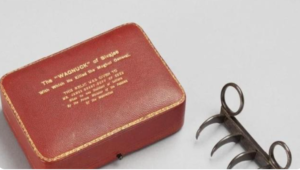
Wagh Nakh: 7 Amazing Facts About Shivaji Maharaj’s Historic Weapon Now on Display in Mumbai
Mumbai’s Chhatrapati Shivaji Maharaj Vastu Sangrahalaya has opened a special exhibition featuring the historic Wagh Nakh, the tiger-claw-shaped weapon traditionally associated with Chhatrapati Shivaji Maharaj’s encounter with Afzal Khan. The exhibition also showcases several other rare Maratha-era weapons, offering visitors an opportunity to explore Maharashtra’s military heritage.
Wagh Nakh: Historic Weapon Associated With Shivaji Maharaj Goes on Display in Mumbai
Mumbai has become the centre of attention for history enthusiasts after the historic Wagh Nakh associated with Chhatrapati Shivaji Maharaj was placed on public display at the Chhatrapati Shivaji Maharaj Vastu Sangrahalaya (CSMVS).
The rare weapon is part of a special exhibition titled ‘Shivshastra Shauryagatha’, which showcases weapons associated with Chhatrapati Shivaji Maharaj and the Maratha period.
The exhibition has been inaugurated by Maharashtra Culture Minister Ashish Shelar and brings together several historically significant weapons that reflect the military traditions, craftsmanship and strategic capabilities of the Maratha era.
The Wagh Nakh, also known as tiger claws, holds a special place in Maharashtra’s historical memory because of its traditional association with Shivaji Maharaj’s famous encounter with Afzal Khan at Pratapgad in 1659.
For people familiar with the history of the Maratha Empire, the Wagh Nakh represents one of the most remembered episodes associated with Shivaji Maharaj’s courage and military strategy.
The weapon has attracted attention because it was brought back to Maharashtra from London’s Victoria and Albert Museum in July 2024 under a three-year loan agreement.
After being displayed at different locations in Maharashtra, the historic artefact has now reached Mumbai, allowing residents and visitors to see it at one of the city’s most prominent museums.
The arrival of the Wagh Nakh at CSMVS is significant not only because of its historical association but also because it provides an opportunity to understand how weapons were designed, preserved and used during the Maratha period.
The exhibition is expected to attract history enthusiasts, students, researchers, tourists and admirers of Chhatrapati Shivaji Maharaj.
What Is the Historic Wagh Nakh Associated With Shivaji Maharaj?
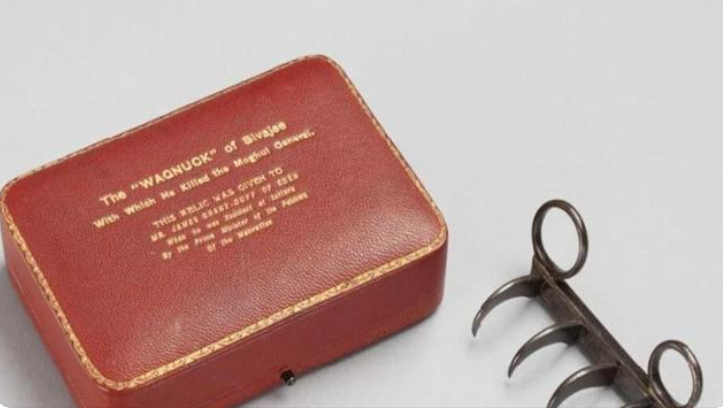
The Wagh Nakh is a traditional weapon designed in the shape of tiger claws.
The name ‘Wagh Nakh’ comes from the Marathi words ‘Wagh’, meaning tiger, and ‘Nakh’, meaning claws.
Unlike conventional swords and daggers, the Wagh Nakh is a compact weapon designed to fit around the fingers.
The historic example displayed at CSMVS is made of steel and features four curved claws mounted on a metal bar.
It also has two rings designed to fit around the fingers, allowing the weapon to be held securely in the hand.
Its unusual design makes the Wagh Nakh particularly interesting from a historical and engineering perspective.
The weapon was designed to be concealed within the hand, making it different from larger weapons such as swords, spears and shields.
The Wagh Nakh is traditionally associated with Chhatrapati Shivaji Maharaj’s confrontation with Afzal Khan at Pratapgad in 1659.
The episode is one of the most significant events remembered in the history of the Maratha kingdom.
The weapon has therefore become an important symbol in Maharashtra’s historical and cultural memory.
Visitors to the museum can now observe the physical design of the Wagh Nakh rather than simply reading about it in historical accounts.
The display also allows researchers and students to examine the craftsmanship and construction of an important historical weapon.
However, the historical association should be understood with appropriate care. The displayed object is traditionally identified with Shivaji Maharaj’s encounter with Afzal Khan, and its provenance has been described through historical records and museum accounts.
Shivaji Maharaj and Afzal Khan: The Historic Encounter at Pratapgad
The story of the Wagh Nakh cannot be separated from the historic encounter between Chhatrapati Shivaji Maharaj and Afzal Khan in 1659.
During this period, Shivaji Maharaj was expanding his influence in the western Deccan and strengthening the foundations of the Maratha kingdom.
Afzal Khan, a senior commander of the Bijapur Sultanate, was sent to challenge Shivaji Maharaj’s growing power.
The two sides eventually agreed to meet near Pratapgad Fort in present-day Satara district of Maharashtra.
The meeting was surrounded by political tension and military uncertainty.
According to traditional historical accounts, both leaders arrived with their own security arrangements.
During the encounter, Afzal Khan allegedly attempted to attack Shivaji Maharaj while embracing him.
Shivaji Maharaj defended himself using concealed protective equipment and weapons traditionally identified as the Wagh Nakh and the bichwa dagger.
Afzal Khan was fatally wounded during the confrontation.
The incident became a defining episode in the history of the Maratha kingdom and is remembered for Shivaji Maharaj’s strategic preparation and ability to respond to a dangerous situation.
The encounter also had wider political consequences, strengthening Shivaji Maharaj’s position and contributing to the growing influence of the Maratha forces.
Today, the Wagh Nakh displayed at CSMVS provides visitors with a tangible connection to this important historical episode.
The exhibition gives people an opportunity to explore the weapon’s design and understand why it continues to hold cultural significance in Maharashtra.
How Did Shivaji Maharaj’s Wagh Nakh Reach London?
One of the most interesting aspects of the Wagh Nakh’s history is its journey from Maharashtra to Britain.
Historical accounts cited in media reports state that the weapon came into the possession of James Grant Duff, an officer of the British East India Company.
Grant Duff served as the Political Agent at Satara between 1818 and 1824.
During his time in India, he reportedly received the Wagh Nakh from the prime minister of the Peshwas.
He subsequently took the weapon to Britain after his service in India.
The Wagh Nakh remained with his family for generations before his descendants donated it to London’s Victoria and Albert Museum.
The weapon eventually became part of the museum’s collection.
Its presence in Britain attracted interest among historians and people concerned about the preservation and return of historical Indian artefacts.
For Maharashtra, the possibility of bringing the Wagh Nakh back to India became an important cultural issue.
The weapon was not simply an old object. It carried a historical association with one of the most significant personalities in the state’s history.
Its return was therefore viewed as an important opportunity to reconnect the artefact with the region and people associated with its history.
How Did the Wagh Nakh Return to Maharashtra After More Than 150 Years?
The process of bringing the historic Wagh Nakh back to Maharashtra involved international coordination and institutional arrangements.
In October 2023, the Maharashtra government entered into a memorandum of understanding with London’s Victoria and Albert Museum.
The agreement provided for the temporary return of the historic tiger-claw weapon to India under a three-year loan arrangement.
The Wagh Nakh was brought to Maharashtra in July 2024.
The return was an important moment for the state’s cultural and historical institutions.
Instead of permanently transferring ownership, the arrangement allowed the artefact to be brought to India for public display and preservation under agreed conditions.
The weapon was subsequently displayed in different locations across Maharashtra, including Kolhapur, Satara and Nagpur.
These exhibitions helped people from different parts of the state view an artefact associated with Chhatrapati Shivaji Maharaj.
The Wagh Nakh’s journey also highlighted the importance of international museum cooperation.
Returning historical objects for temporary exhibitions requires coordination involving museums, governments, conservation experts and other institutions.
The agreement with the Victoria and Albert Museum made it possible for the Wagh Nakh to be displayed in Maharashtra while following the applicable international procedures.
Its arrival at CSMVS in Mumbai marks another important stage in that journey.
Ashish Shelar Inaugurates ‘Shivshastra Shauryagatha’ Exhibition
Maharashtra Culture Minister Ashish Shelar inaugurated the special exhibition at the Chhatrapati Shivaji Maharaj Vastu Sangrahalaya.
The exhibition, titled ‘Shivshastra Shauryagatha’, focuses on historical weapons associated with Chhatrapati Shivaji Maharaj and the wider Maratha period.
During the inauguration, Shelar highlighted the importance of bringing historical artefacts back to Maharashtra through international cooperation and following the required procedures.
He also stressed that preserving and conserving weapons associated with the Shivaji era is a responsibility shared by the government and society.
According to the minister, historical weapons are not merely symbols of bravery.
They also demonstrate the engineering knowledge, metallurgy, craftsmanship and strategic planning of their period.
The Wagh Nakh, in particular, represents the importance of planning and preparation in historical military encounters.
The exhibition has been organised jointly by the Maharashtra government’s Department of Cultural Affairs, the Directorate of Archaeology and Museums, and CSMVS.
Officials associated with the museum and the cultural affairs department were also present at the inauguration.
The event included a traditional Powada performance by Shahiri Nandesh Umap, depicting the historic encounter involving Afzal Khan.
A book titled ‘Dandpatta’ was also released during the programme.
The inauguration highlighted the importance of preserving Maharashtra’s historical heritage and making it accessible to the public.
What Other Historic Maratha Weapons Are Displayed at CSMVS?
Although the Wagh Nakh is the main attraction, the exhibition features several other historically significant weapons.
The collection provides visitors with a wider understanding of the military traditions and weapon-making techniques associated with the Maratha period.
Some of the important artefacts displayed include:
1. Wagh Nakh of Chhatrapati Shivaji Maharaj
The tiger-claw-shaped weapon traditionally associated with Shivaji Maharaj’s encounter with Afzal Khan is one of the central attractions.
Its compact design and historical significance make it particularly interesting for visitors.
2. Sword of Senasaheb Subha Raghuji Raje Bhosale
The exhibition also features the sword associated with Raghuji Raje Bhosale.
Its presence adds another important dimension to the display of Maratha-era military heritage.
3. Sword of Sarsenapati Prataprao Gujar
Prataprao Gujar was an important military commander associated with Shivaji Maharaj.
His sword is among the historical weapons showcased in the exhibition.
4. Shield of Khanderao Gaikwad
The exhibition also includes the shield associated with Khanderao Gaikwad.
Such protective equipment provides insight into the defensive arrangements and military equipment used during earlier periods.
5. Dandpatta of Sardar Raste
The Dandpatta is a traditional Indian gauntlet sword.
It is designed with a protective hand covering connected to a long blade.
The weapon is an important example of the variety of designs used in traditional Indian warfare.
6. Other Maratha-Era Weapons
Several additional weapons from the Shivaji era and contemporary historical periods are also part of the exhibition.
Together, these artefacts create a broader picture of the weapons, craftsmanship and military traditions of Maharashtra.
The display allows visitors to compare different weapon designs and understand how they served different purposes.
Why Is the ‘Shivshastra Shauryagatha’ Exhibition Important?
The exhibition is important because it brings together several historical objects connected with Maharashtra’s military and cultural heritage.
For many visitors, the opportunity to see the Wagh Nakh in person is particularly meaningful.
Most people know about the weapon through history books, school lessons, documentaries and cultural accounts.
Seeing the actual historical artefact allows visitors to examine its construction and appreciate its unusual design.
The exhibition also goes beyond the story of a single weapon.
By showcasing swords, shields and other historical equipment, it provides a wider understanding of the Maratha military tradition.
It also encourages interest in historical research, museum conservation and the preservation of cultural objects.
Students can learn about the materials used in traditional weapons, while researchers can study the craftsmanship and historical context of the displayed objects.
The exhibition also highlights the importance of museums as institutions that preserve and communicate history.
Historical artefacts require specialised care because they can deteriorate when exposed to unsuitable environmental conditions.
Their preservation involves maintaining appropriate temperature, lighting, display distances and security arrangements.
CSMVS has reportedly followed international conservation standards while preparing the exhibition.
These arrangements are important to ensure that the historical objects remain protected while being displayed to visitors.
How Is the Wagh Nakh Being Preserved Inside the Museum?
Displaying a historical weapon requires more than placing it inside a glass case.
Museums must consider the condition of the artefact, its material, environmental requirements and the risks associated with public display.
The Wagh Nakh is a steel object and requires suitable conservation arrangements to protect it from deterioration.
According to officials associated with the exhibition, international conservation standards have been followed for the display.
These include temperature controls, appropriate lighting and maintaining a safe viewing distance.
Such arrangements help protect historical objects from environmental damage and unnecessary handling.
The museum also has to ensure that visitors can observe the artefact clearly without compromising its preservation.
The conservation process is particularly important because the Wagh Nakh is a rare historical object with considerable cultural significance.
The exhibition therefore combines public access with the responsibility of protecting an important artefact for future generations.
Where Can Visitors See Shivaji Maharaj’s Wagh Nakh in Mumbai?
People interested in viewing the historic Wagh Nakh can visit the Chhatrapati Shivaji Maharaj Vastu Sangrahalaya in South Mumbai.
The museum is located in the Fort area and is one of the city’s major cultural institutions.
The special ‘Shivshastra Shauryagatha’ exhibition has been announced as a six-month public exhibition.
Visitors can explore the Wagh Nakh along with other historic weapons associated with the Maratha period.
The exhibition provides an opportunity for families, students, tourists and history enthusiasts to learn more about Maharashtra’s heritage.
Those planning a visit should check the museum’s official website for the latest visiting hours, admission information and exhibition details.
Museum website: https://www.csmvs.in/
The exhibition is particularly relevant for people interested in the history of Chhatrapati Shivaji Maharaj, the Maratha Empire and traditional Indian weapons.
Why Should Students and Young People Visit This Exhibition?
The Wagh Nakh exhibition offers an opportunity to learn history beyond textbooks.
For students, historical objects can make important events easier to understand.
Reading about the encounter between Shivaji Maharaj and Afzal Khan provides historical information, but seeing an artefact traditionally associated with that event creates a different learning experience.
Students can observe the weapon’s design and understand the importance of metallurgy and craftsmanship in earlier periods.
The other weapons on display also provide an opportunity to learn about military equipment and the development of traditional weapon-making techniques.
The exhibition can encourage young people to take an interest in history, archaeology and museum studies.
It also highlights the importance of protecting historical objects rather than treating them merely as symbols of the past.
The Wagh Nakh is an example of how an artefact can connect different generations with an important historical chapter.
The Cultural Significance of Bringing Historical Artefacts Back to Maharashtra
The return of the Wagh Nakh to Maharashtra is part of a wider discussion about the preservation and display of historical artefacts.
Many objects connected with India’s history are held in museums and private collections outside the country.
International cooperation between governments and museums can create opportunities for such artefacts to return temporarily or permanently, depending on the relevant agreements.
In the case of the Wagh Nakh, the three-year loan arrangement with the Victoria and Albert Museum made its return possible.
The exhibition in Mumbai provides an opportunity for people to see an artefact that had remained in Britain for generations.
The initiative also highlights the importance of documenting the history and provenance of historical objects.
Museums play an essential role in ensuring that artefacts are properly preserved, researched and presented to the public.
The Wagh Nakh exhibition is therefore significant both as a historical display and as an example of cultural cooperation.
Seven Important Things to Know About the Wagh Nakh Exhibition
Here are seven important facts about the exhibition at CSMVS:
- Historic weapon: The Wagh Nakh is traditionally associated with Chhatrapati Shivaji Maharaj’s encounter with Afzal Khan in 1659.
- Mumbai display: The weapon is now on public display at the Chhatrapati Shivaji Maharaj Vastu Sangrahalaya.
- Special exhibition: It is part of the ‘Shivshastra Shauryagatha’ exhibition.
- International return: The Wagh Nakh was brought back from London’s Victoria and Albert Museum in July 2024 under a three-year loan agreement.
- Ministerial inauguration: Maharashtra Culture Minister Ashish Shelar inaugurated the exhibition.
- Other artefacts: Visitors can also see Raghuji Raje Bhosale’s sword, Prataprao Gujar’s sword, Khanderao Gaikwad’s shield and Sardar Raste’s Dandpatta.
- Public access: The special exhibition is scheduled to remain open for six months.
Conclusion: Wagh Nakh Exhibition Brings Maharashtra’s History Closer to the Public
The display of the historic Wagh Nakh at Mumbai’s Chhatrapati Shivaji Maharaj Vastu Sangrahalaya marks an important moment for Maharashtra’s cultural and historical heritage.
Traditionally associated with Chhatrapati Shivaji Maharaj’s encounter with Afzal Khan at Pratapgad, the weapon represents a memorable chapter in the history of the Maratha kingdom. Its return from London’s Victoria and Albert Museum under a three-year loan agreement has made it possible for people in Maharashtra to view the artefact once again.
The ‘Shivshastra Shauryagatha’ exhibition also brings together several other historic weapons, including swords, shields and the traditional Dandpatta. Inaugurated by Culture Minister Ashish Shelar, the exhibition highlights the importance of preserving historical objects and making them accessible to future generations.
For students, tourists and history enthusiasts, the Wagh Nakh display offers an opportunity to explore Maharashtra’s military traditions, craftsmanship and rich cultural past.
Stay Updated With Police Vartha
Follow POLICE VARTHA for the latest Mumbai news, Maharashtra news, historical updates, cultural events, government announcements and breaking news from across India.
We bring you important updates covering public issues, history, local developments, crime, government decisions and major national events.
WANT TO SHARE NEWS OR PROMOTE YOUR BUSINESS?
Connect with Police Vartha for:
- News Coverage & Publicity
- Business & Brand Advertising
- Local News & Event Coverage
Contact us for news coverage and advertising enquiries.