

Musafirkhana Demolition: 7 Shocking Updates as Bombay HC Halts BMC Action
The 87-year-old Musafirkhana building in Bhendi Bazaar was declared dangerous by the BMC, but objections from trust beneficiaries led to a Bombay High Court intervention. Further demolition has been halted until November 25 as the legal dispute continues.

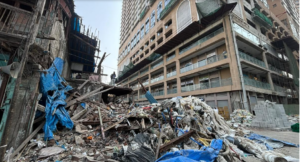
BMC Begins Musafirkhana Demolition: 7 Major Developments as Bombay HC Steps In
The Brihanmumbai Municipal Corporation began demolishing the historic Haji Ismail Haji Habib Musafirkhana building in Bhendi Bazaar, once associated with fugitive gangster Dawood Ibrahim. The structure was classified as C-1 due to its dangerous condition. However, the demolition faced a legal challenge, and the Bombay High Court subsequently ordered a halt to further work until November 25, 2026.
Musafirkhana Demolition Begins in Mumbai’s Bhendi Bazaar
The Brihanmumbai Municipal Corporation (BMC) began demolishing the Haji Ismail Haji Habib Musafirkhana building in south Mumbai’s Bhendi Bazaar area on November 19, 2026.
The building, located on Pakmodia Street, is historically associated with fugitive gangster Dawood Ibrahim, who reportedly lived there with his family during his early years in Mumbai.
The Musafirkhana Demolition operation attracted considerable attention because of the building’s connection with Mumbai’s underworld history.
The civic body classified the structure under the C-1 category, which indicates that a building is extremely dangerous and requires urgent demolition.
According to reports, the building had deteriorated significantly, creating concerns about the safety of people visiting the premises and those passing through the surrounding streets.
The demolition operation was conducted under heavy police security, with a large number of BMC officials and police personnel present at the location.
The structure was covered with blue metal sheets as civic workers began the demolition process.
However, the operation did not proceed without legal challenges.
Two individuals claiming to be beneficiaries of the Haji Ismail Haji Habib Musafirkhana Trust approached the Bombay High Court, challenging the demolition notice and the manner in which the action was initiated.
On November 19, the High Court directed the authorities to maintain the existing situation and halted further demolition until November 25, 2026.
This development has made the Musafirkhana Demolition a significant civic and legal issue in Mumbai.
The case now involves questions relating to building safety, demolition procedures, property rights and the redevelopment of the Bhendi Bazaar area.
Which Building Is Being Demolished by the BMC?
The building involved in the Musafirkhana Demolition is known as Haji Ismail Haji Habib Musafirkhana.
It is situated on Pakmodia Street in the Bhendi Bazaar locality of south Mumbai.
The structure is particularly known because Dawood Ibrahim and his family reportedly lived there during his early years.
The building is also associated with the history of Mumbai’s underworld, making it a recognisable location in accounts of the city’s criminal history.
However, the building’s original purpose was very different.
It was established as a lodging facility for Haj pilgrims travelling to Mecca.
The premises reportedly provided temporary accommodation to pilgrims before becoming a residential building occupied by several families.
The structure is approximately 87 years old, according to reports covering the demolition proceedings.
Over the years, the building became associated with Dawood Ibrahim, who reportedly lived there with his family before leaving India in 1986.
The Musafirkhana Demolition therefore involves a structure with both historical and legal significance.
Despite its association with a prominent figure in Mumbai’s underworld history, the immediate civic reason cited for demolition was the building’s dangerous and deteriorated condition.
The BMC also maintained that the structure was part of the wider Bhendi Bazaar redevelopment requirements.
Why Did BMC Classify the Building as C-1?
One of the major reasons behind the civic action was the building’s classification under the C-1 category.
In Mumbai, the Brihanmumbai Municipal Corporation classifies structurally dangerous buildings into different categories based on their condition and the level of risk they pose.
The C-1 classification generally refers to a highly dangerous structure that requires urgent evacuation and demolition.
Buildings placed in this category are considered unsafe for continued occupation because their structural condition may pose a threat to residents and the general public.
The Musafirkhana Demolition was initiated after the BMC treated the structure as dangerous and issued notices relating to its demolition.
According to the civic authorities, the building’s deteriorating condition created a risk for people visiting the premises, including those using the ground-floor prayer hall.
The danger was not limited to the occupants.
Pedestrians, visitors and people moving through the surrounding streets could also potentially be affected if parts of the structure collapsed.
A C-1 classification is therefore an important civic safety measure.
However, the classification and the legality of the specific demolition notice were separate issues in the legal proceedings.
The petitioners questioned the manner in which the notice was served and the time provided to occupants to vacate the premises.
The BMC, meanwhile, maintained that demolition proceedings had been initiated earlier.
These competing arguments became part of the proceedings before the Bombay High Court.
How Did Dawood Ibrahim Become Associated With the Musafirkhana Building?
The Haji Ismail Haji Habib Musafirkhana building became widely recognised because of its reported connection with Dawood Ibrahim’s early life in Mumbai.
Dawood Ibrahim is a fugitive underworld figure associated with organised criminal activities and the 1993 Mumbai serial bomb blasts.
According to historical accounts, he and his family lived in the Bhendi Bazaar building during his early years.
The premises were reportedly used as a residential base before he became one of the most prominent figures in Mumbai’s underworld.
The building’s association with his early life gave it a place in discussions about the history of organised crime in Mumbai.
The Musafirkhana Demolition has therefore attracted attention beyond the immediate issue of building safety.
For many people, the structure represents a location connected with an important chapter in the city’s underworld history.
However, the building was originally established as accommodation for Haj pilgrims and predates Dawood Ibrahim’s association with it.
It is important to distinguish between the property’s original purpose and its later historical association.
The BMC’s demolition action was officially connected to its dangerous structural condition and redevelopment requirements, rather than being described as an operation targeting the historical association itself.
Bombay High Court Steps In and Halts Further Demolition
The most significant development in the Musafirkhana Demolition case came when the Bombay High Court intervened on November 19, 2026.
Two petitioners, Shaikh Abdul Razak and Amirali Vazirali Panjwani, approached the court challenging the demolition notice issued by the BMC.
They claimed to be beneficiaries of the Haji Ismail Haji Habib Musafirkhana Trust.
The petitioners questioned the civic body’s decision to proceed with demolition and argued that the notice had provided insufficient time for occupants to vacate the premises.
According to their submissions, a notice issued on November 16 was pasted on the building on November 17, asking occupants to vacate by November 18.
They argued that the short notice period was arbitrary and violated the applicable government notification.
The petitioners also raised concerns about proceedings pending before the State Waqf Tribunal and referred to a related matter before the Supreme Court.
The BMC disputed the allegations and informed the court that the demolition process had a longer history, with the first notice having been issued in 2018.
After hearing the matter, a division bench led by Chief Justice Mahesh Chandra Tripathi and Justice Advait Sethna directed all parties to maintain the status quo until November 25.
The court’s order effectively halted further demolition work.
The BMC’s lawyer informed the court that civic officials would take approximately 30 minutes to one hour to withdraw personnel from the site.
The Musafirkhana Demolition was therefore interrupted by the interim judicial order.
The court has not delivered a final judgment on the disputed issues. The matter remains subject to further proceedings.
Why Did Residents and Trust Beneficiaries Oppose the Demolition?
The proposed demolition attracted objections from people associated with the building and its trust.
One of their primary concerns was the short period provided to vacate the premises.
The petitioners argued that occupants were given very little time between the notice being served and the scheduled demolition.
They questioned whether the civic body had followed the appropriate legal procedures before beginning the operation.
The Musafirkhana Demolition also raised questions about the status of proceedings before the State Waqf Tribunal.
The petitioners claimed that the matter was protected by an order of the tribunal and questioned the BMC’s decision to proceed.
The civic body, however, maintained that it had acted under the applicable legal framework and referred to earlier proceedings and notices.
The dispute consequently moved beyond the structural condition of the building.
It also involved the rights of the trust beneficiaries, the position of occupants and the legal process governing demolition notices.
The Bombay High Court’s interim order provides an opportunity for these issues to be examined further.
Until the next hearing, the parties have been directed to maintain the existing situation.
What Is the Connection Between Musafirkhana and Bhendi Bazaar Redevelopment?
The Musafirkhana Demolition is also connected with the larger redevelopment activity taking place in Bhendi Bazaar.
The area is undergoing a major cluster redevelopment project led by the Saifee Burhani Upliftment Trust (SBUT).
The redevelopment initiative aims to transform the densely populated locality through improved housing, infrastructure and public facilities.
Bhendi Bazaar is one of south Mumbai’s older and more congested neighbourhoods.
Several buildings in the locality have ageing structures and infrastructure that require improvement.
The redevelopment project is intended to replace older buildings with modern residential and commercial facilities while improving the overall living environment.
The Musafirkhana building falls along a proposed internal road alignment associated with the redevelopment project.
Reports have stated that the trust had requested the BMC to take action regarding the structure, citing the applicable court order and the building’s condition.
The demolition is therefore linked to both structural safety concerns and the wider redevelopment plan.
However, the High Court’s interim order means that further action must remain on hold until the next scheduled hearing or any subsequent judicial direction.
What Is a C-1 Dangerous Building in Mumbai?
The C-1 classification is an important category used by the BMC when assessing dangerous buildings.
Mumbai has several old structures that require regular inspection because of ageing construction materials, structural deterioration and exposure to weather conditions.
The civic body examines buildings and determines whether they are safe for continued occupation.
A building classified as C-1 is generally considered extremely dangerous and requires urgent evacuation and demolition.
Such structures may present risks including:
- Collapse of walls or structural components.
- Falling concrete, plaster or other building materials.
- Damage to nearby properties.
- Injuries to residents and pedestrians.
- Risks to visitors and people using adjoining public spaces.
The Musafirkhana Demolition highlights the importance of timely structural inspections in densely populated areas.
A dangerous building in a crowded locality can affect not only its residents but also people moving through nearby streets.
The BMC has a responsibility to identify such risks and take appropriate action under applicable municipal laws.
At the same time, demolition proceedings must follow the required legal procedures, particularly where ownership, occupancy or other legal disputes exist.
The present case demonstrates how civic safety responsibilities and legal rights can intersect.
What Happens After the Bombay High Court’s Stay Order?
Following the High Court’s November 19 order, the BMC was directed to maintain the existing situation at the Musafirkhana building.
The interim order remains applicable until November 25, 2026, the next date specified by the court.
The court has directed the BMC to retain the existing situation and refrain from further demolition during this period.
The Musafirkhana Demolition case will therefore depend on the proceedings scheduled before the High Court.
The civic body may be required to respond to the allegations raised by the petitioners.
The court will have to consider the arguments relating to the demolition notice, the building’s condition and the legal proceedings referred to by the parties.
The next hearing could provide greater clarity on whether the BMC can resume demolition work or whether further legal proceedings are necessary.
Until then, it would be incorrect to report that the entire building has been demolished or that the BMC has received final judicial approval to continue.
The present position is that demolition began but further work was halted through an interim court order.
Seven Important Facts About the Musafirkhana Demolition
Here are seven important details about the case:
- Building name: Haji Ismail Haji Habib Musafirkhana.
- Location: Pakmodia Street, Bhendi Bazaar, South Mumbai.
- Historical association: The building was once home to Dawood Ibrahim and his family.
- BMC classification: C-1, indicating a highly dangerous structure.
- Demolition began: November 19, 2026.
- Redevelopment connection: The structure falls along a proposed internal road alignment associated with Bhendi Bazaar redevelopment.
- Latest court development: Bombay High Court halted further demolition until November 25, 2026.
The Musafirkhana Demolition has become an important issue involving civic administration, building safety, redevelopment and judicial intervention.
Frequently Asked Questions About the Musafirkhana Demolition
1. Which building is being demolished by the BMC?
The building is Haji Ismail Haji Habib Musafirkhana, located on Pakmodia Street in Bhendi Bazaar, south Mumbai.
2. Why is the building associated with Dawood Ibrahim?
Dawood Ibrahim and his family reportedly lived in the building during his early years in Mumbai.
3. Why did the BMC decide to demolish the structure?
The BMC classified it as a C-1 dangerous building, indicating that it was structurally unsafe and required demolition.
4. When did the Musafirkhana Demolition begin?
The BMC began demolition work on November 19, 2026.
5. Did the Bombay High Court stop the demolition?
Yes. On November 19, the Bombay High Court ordered a halt to further demolition and directed the parties to maintain the status quo until November 25, 2026.
6. Who challenged the demolition?
Shaikh Abdul Razak and Amirali Vazirali Panjwani, who claimed to be beneficiaries of the Haji Ismail Haji Habib Musafirkhana Trust, approached the Bombay High Court.
7. What was the objection raised by the petitioners?
They questioned the demolition notice and argued that occupants had been given insufficient time to vacate the building. They also referred to proceedings before the State Waqf Tribunal.
8. What is the connection with Bhendi Bazaar redevelopment?
The building falls along a proposed internal road alignment connected with the Bhendi Bazaar cluster redevelopment project.
9. Has the entire building been demolished?
The BMC began demolition, but further work was halted by the Bombay High Court. The court directed that the existing situation be maintained until November 25.
10. When is the next important court date?
The Bombay High Court has scheduled the matter for further consideration on November 25, 2026.
Conclusion: Musafirkhana Demolition Turns Into a Major Legal and Civic Dispute
The demolition of Haji Ismail Haji Habib Musafirkhana in Bhendi Bazaar has become a significant development in Mumbai, combining the building’s historical association with Dawood Ibrahim with current concerns over structural safety and redevelopment.
The BMC began demolition work after classifying the structure as C-1, indicating that it was dangerous and required urgent action. However, the decision faced opposition from individuals claiming to be beneficiaries of the trust, who questioned the demolition notice and the time provided to occupants.
The Bombay High Court subsequently intervened and ordered a halt to further demolition until November 25, 2026. The Musafirkhana Demolition case now raises important questions about the balance between public safety, redevelopment requirements and legal rights.
The next court hearing will be crucial in determining the direction of the dispute and whether the civic body can proceed with further action.
Stay Updated With Police Vartha
Follow POLICE VARTHA for the latest Mumbai news, Maharashtra updates, BMC developments, court proceedings, civic issues and breaking news from across India.
We bring you important updates covering public safety, crime, government decisions, legal developments and local news.
WANT TO SHARE NEWS OR PROMOTE YOUR BUSINESS?
Connect with Police Vartha for:
- News Coverage & Publicity
- Business & Brand Advertising
- Local News & Event Coverage
Contact us for news coverage and advertising enquiries.