
Versova Tree Cutting: 7 Shocking Updates as BMC Faces Residents’ Anger
The Coastal Road North project has triggered a growing environmental dispute in Versova, with residents demanding answers over tree-felling permissions, transplantation plans and possible alternatives to protect Nana Nani Park's decades-old greenery.

Versova Tree Cutting: 7 Shocking Developments as BMC Faces Residents’ Anger at Nana Nani Park
The felling of mature trees at Nana Nani Park in Versova has triggered strong opposition from local residents and environmental activists. The BMC’s action is linked to the Coastal Road North project, but citizens are questioning whether alternative engineering solutions could have protected the neighbourhood’s green cover.
Versova Tree Cutting at Nana Nani Park Sparks Public Outrage
The Versova Tree Cutting controversy has become a major environmental issue in Mumbai after the Brihanmumbai Municipal Corporation (BMC) began removing mature trees at Nana Nani Park in Versova.
The tree-felling operation started on November 18, 2026, as part of construction work connected with the Coastal Road North project.
The development has triggered protests from residents, environmental activists and concerned citizens who believe that the loss of mature trees could seriously affect one of the neighbourhood’s important green spaces.
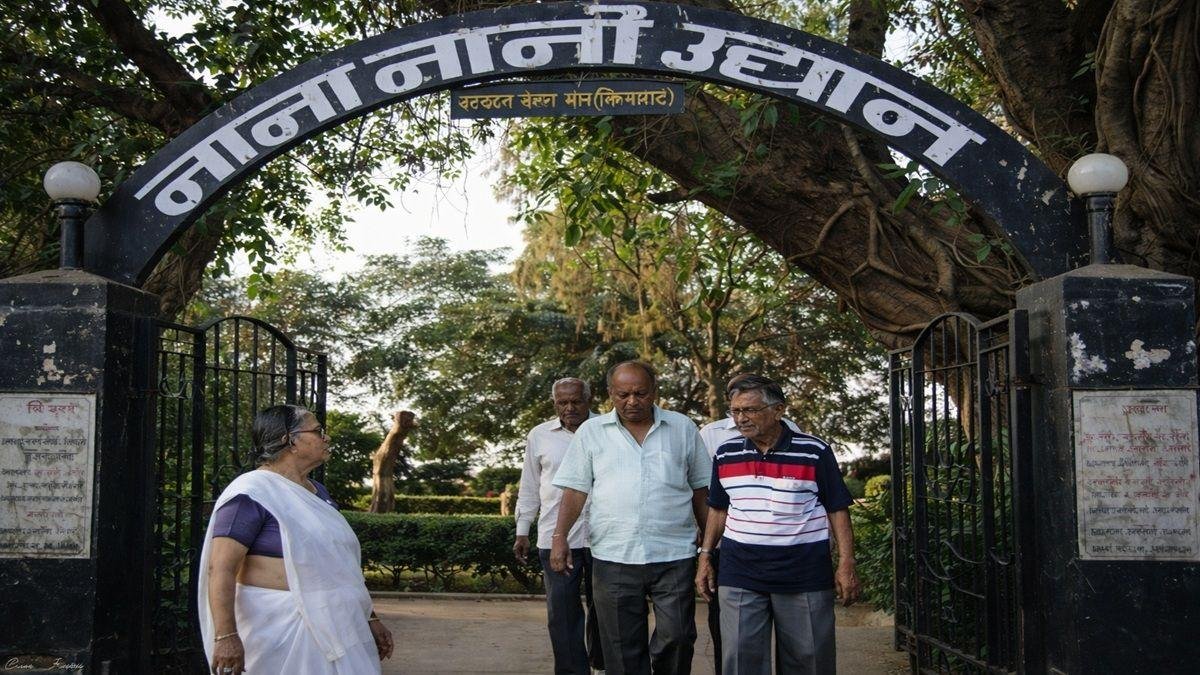
Nana Nani Park, located in the Seven Bungalows area of Versova, has been a familiar recreational space for residents for more than two decades. The park is used by senior citizens, morning walkers, children and families looking for an open and peaceful environment in the densely populated Andheri-Versova neighbourhood.
However, the Versova Tree Cutting operation has put the future of its existing greenery under the spotlight.
According to media reports, the initial phase of the operation involved the cutting of dozens of trees. Residents gathered at the park to oppose the action and demanded that the civic authorities reconsider the project arrangements.
The controversy is not limited to the number of trees being removed. Citizens have also raised questions about the transparency of the approval process, the proposed transplantation of trees and whether alternative construction methods could reduce the environmental impact.
The BMC has maintained that the work is part of an approved infrastructure project and that the necessary permissions have been obtained.
The disagreement has now developed into a wider debate about infrastructure development, environmental protection and the responsibility of civic authorities towards public green spaces.
Why Is BMC Cutting Trees at Nana Nani Park?
The primary reason behind the Versova Tree Cutting operation is the construction of infrastructure connected with the Coastal Road North project, which includes the Versova-Bhayandar coastal corridor.
The project requires the construction of an interchange and supporting infrastructure in the area surrounding Nana Nani Park.
According to reports, the proposed alignment and construction work require space for elevated road structures, pillars and foundations.
The BMC has stated that the park is situated within a designated Development Plan (DP) road.
A senior civic official told the Free Press Journal that the area between the northbound and southbound carriageways forms part of a 36-metre-wide road. The central portion, where the trees stand, was originally planted by local residents around 25 to 30 years ago for beautification.
The civic official also stated that the BMC had not originally developed or maintained the space as a conventional municipal garden.
Residents, however, argue that the area has developed into an important public green space over the years.
For people living nearby, the question is not simply whether the land forms part of a planned road. Their concern is whether the infrastructure project could have been designed differently to preserve more of the existing trees.
The Versova Tree Cutting dispute therefore reflects the challenge of balancing long-term infrastructure requirements with the environmental needs of a densely populated neighbourhood.
How Many Trees Will Be Cut at Nana Nani Park?
One of the biggest concerns surrounding the Versova Tree Cutting controversy is the number of trees that could be affected.
Different media reports have published different figures, depending on whether they refer to the initial phase, the park-specific plan or the wider interchange alignment.
According to a Times of India report published on November 20, the initial phase involved 44 trees being cut, while 89 trees were slated for felling and another 48 were proposed for transplantation.
A separate Hindustan Times report referred to 184 trees being felled inside the park and another 164 being transplanted.
Meanwhile, a Free Press Journal report, citing a Tree Authority letter dated June 23, stated that permission had been granted for cutting 182 trees and transplanting 139 trees for the proposed Versova interchange-to-Bangur Nagar alignment. Another 765 trees were to be retained, with 3,662 new trees proposed as compensatory plantation.
These figures should not be treated as interchangeable because they refer to different reported scopes and project details.
The exact park-specific number and final implementation status should be clarified through the BMC’s official tree-felling permissions and project documents.
For residents, the concern remains that a substantial number of established trees could disappear from an area where green spaces are already limited.
The Versova Tree Cutting issue has consequently raised demands for a transparent, publicly accessible account of every tree marked for removal, transplantation or retention.
Residents Protest Against Tree Felling at Nana Nani Park
The removal of trees prompted residents and environmental activists to gather at Nana Nani Park and express their opposition.
According to reports, protests began after the BMC started the tree-felling operation on November 18.
Citizens assembled at the location carrying placards and raising slogans highlighting the importance of preserving trees and protecting Mumbai’s remaining green spaces.
Some protesters also formed a human chain and organised silent demonstrations.
The Versova Tree Cutting protests attracted attention because many of the trees had been part of the neighbourhood’s landscape for decades.
Residents said the park was more than just an open area. It had become a place where people could exercise, spend time outdoors, interact with neighbours and enjoy some relief from the surrounding concrete development.
The protests also highlighted concerns about the loss of shade and the potential increase in local temperatures.
Several citizens argued that infrastructure development should not automatically result in the removal of mature trees when other engineering possibilities may be available.
Environmental activists also questioned whether the authorities had adequately considered residents’ objections before proceeding.
The demonstrations reflected a wider demand for greater public participation in decisions affecting neighbourhood green spaces.
What Is Nana Nani Park and Why Is It Important to Versova Residents?
Nana Nani Park is an established public green space in the Seven Bungalows area of Versova.
The park was opened in 2001 after local residents helped transform a former dumping ground into a greener community space.
Over the years, it became a familiar destination for people living in Versova and surrounding parts of Andheri.
The park has served different groups of residents.
Senior citizens use it for walking and social interaction. Children and families visit for recreation, while morning walkers and fitness enthusiasts make use of its open spaces.
For many residents, the trees provide shade and create a more comfortable outdoor environment.
The Versova Tree Cutting issue has therefore become emotional for people who have watched the park develop over the years.
Some residents have reportedly been associated with planting and caring for the trees since the park’s early days.
Mature trees also provide environmental benefits that cannot be replicated immediately by planting small saplings.
They contribute to shade, provide habitats for birds and insects, help absorb carbon dioxide and support the local urban ecosystem.
Their roots also play a role in maintaining soil conditions.
In densely populated parts of Mumbai, neighbourhood parks can provide important environmental and social benefits.
This is why residents are asking the BMC to consider the long-term impact of the proposed construction work on the park.
Residents Question Whether Alternative Routes Could Save the Trees
Another important aspect of the Versova Tree Cutting controversy is the demand for alternative engineering solutions.
Residents and environmental groups have argued that the project should be examined to determine whether a different alignment could reduce the number of trees affected.
One proposal reportedly suggested extending the coastal road alignment further north, with an exit closer to Versova Beach.
Supporters of the alternative said that changing the route could help protect the park and reduce the impact on nearby greenery.
Residents also questioned whether modern construction and tree-transplantation technologies could be used more extensively.
Their argument is that infrastructure development should involve an assessment of environmental costs alongside construction requirements.
The BMC and project authorities, however, have continued with the approved alignment.
The debate raises a larger question about how infrastructure projects should incorporate public feedback and environmental considerations before construction begins.
The Versova Tree Cutting dispute demonstrates why alternative designs, engineering assessments and environmental safeguards should be explained clearly to affected communities.
Citizens are not necessarily opposing infrastructure development itself. Their concern is whether the environmental impact can be reduced without compromising the project’s objectives.
Did BMC Obtain Permission to Cut the Trees?
The question of permission has become central to the Versova Tree Cutting controversy.
According to reports, the BMC’s Tree Authority approved the relevant tree-felling and transplantation proposals in May 2026.
The Free Press Journal also reported that a Tree Authority letter dated June 23 granted permission for the removal and transplantation of trees affected by the proposed interchange-to-Bangur Nagar alignment.
The civic administration has maintained that the project has the necessary permissions and authorisations.
However, some residents and environmental activists have questioned the legality and transparency of the approval process.
Three citizens reportedly issued a legal notice to the BMC and the state urban development department, challenging the validity of the Tree Authority’s constitution.
Their allegation was that the authority had not been constituted in accordance with the Maharashtra (Urban Areas) Protection and Preservation of Trees Act, 1975.
The notice reportedly raised concerns about the absence of nominated expert members and questioned whether the public had received a meaningful opportunity to examine the proposals and submit objections.
The citizens also sought access to documents relating to the permissions, public notices, objections and relevant proceedings.
These are allegations raised by the citizens and should not be treated as established judicial findings.
The Versova Tree Cutting issue therefore involves two separate questions: whether the project has received the necessary permissions and whether those permissions were granted through a legally valid and transparent process.
The authorities’ response and any subsequent legal proceedings will be important in determining the next steps.
What Is the BMC’s Stand on the Tree-Felling Operation?
The BMC has maintained that the tree-felling operation is connected with an approved infrastructure project and that the required permissions have been obtained.
According to a senior civic official quoted by the Free Press Journal, Nana Nani Park is located within a designated Development Plan road.
The official explained that local residents had planted the trees in the central portion of the road decades ago for beautification.
The civic administration has also pointed to compensatory plantation as part of the project arrangements.
According to the reported Tree Authority approval, 3,662 new trees are proposed to be planted as compensation for the trees affected by the work.
The BMC’s position is that the coastal road infrastructure requires the proposed construction alignment and that the tree-related permissions have been addressed.
However, residents have continued to question whether the existing mature trees could be saved through improved construction techniques or a revised alignment.
The Versova Tree Cutting debate is therefore not only about whether permissions exist but also about whether the environmental safeguards and alternatives have been adequately considered.
The civic administration’s detailed response to the objections and legal notice will be important for public understanding.
Why Are Environmental Activists Concerned About Mature Trees?
Environmental activists have repeatedly highlighted the importance of mature trees in urban areas.
A fully grown tree provides benefits that may take many years to reproduce through new plantation.
Mature trees offer shade, help moderate surrounding temperatures and support biodiversity.
They also contribute to the visual character of neighbourhoods and provide natural spaces for residents.
The Versova Tree Cutting controversy has renewed discussions about Mumbai’s shrinking green cover and the increasing pressure on open spaces.
The city continues to expand through transport infrastructure, residential development and commercial projects.
While such projects can improve connectivity and economic activity, they can also place pressure on existing trees and natural habitats.
Environmental concerns become particularly significant in areas where public open spaces are limited.
Residents argue that removing established trees and replacing them with young saplings cannot provide the same immediate environmental benefits.
New plantations require time, proper maintenance and suitable conditions to survive.
Transplanted mature trees also need specialised care, and their survival cannot be assumed simply because they have been relocated.
This is why activists are asking the authorities to prioritise saving existing trees wherever technically possible.
Can Tree Transplantation Replace the Trees Being Cut?
Tree transplantation is often proposed as an alternative to cutting mature trees.
The process involves carefully removing a tree along with an appropriate portion of its root system and relocating it to another site.
However, transplantation is a technically demanding process.
The success of transplantation depends on several factors, including the species of tree, its age, size, root structure, health and the suitability of the destination.
After transplantation, trees require regular monitoring, watering and maintenance.
Some trees may survive relocation successfully, while others may struggle because of root damage, environmental changes or inadequate aftercare.
The Versova Tree Cutting controversy has brought these concerns into public discussion.
Residents have questioned whether the authorities have explored advanced transplantation methods and whether sufficient resources are being allocated to protect mature trees.
The reported project plans include transplantation of some trees and compensatory plantation of new trees.
However, environmental groups argue that preservation should remain the first priority whenever possible.
A transparent survival-monitoring system could also help residents understand whether transplanted trees are actually surviving after relocation.
How Could Tree Loss Affect Mumbai’s Environment?
The removal of mature trees can have several environmental consequences, particularly in heavily developed urban neighbourhoods.
Trees help reduce direct exposure to sunlight by providing shade.
Their leaves also contribute to the natural cooling of surrounding areas through evapotranspiration.
When substantial tree cover is removed, paved and concrete surfaces may absorb more heat, potentially increasing local temperatures.
Trees also help filter certain airborne particles and provide habitats for urban wildlife.
The Versova Tree Cutting controversy has therefore raised concerns about the possible long-term effects on the local environment.
Another important issue is the availability of public outdoor spaces.
Neighbourhood parks offer residents an opportunity to spend time outside, exercise and interact with others.
When green spaces are reduced, people may have fewer accessible places for recreation.
The environmental impact of an infrastructure project should therefore be assessed beyond the immediate construction site.
It should also consider long-term changes to shade, biodiversity, public access and neighbourhood conditions.
What Happens Next in the Nana Nani Park Controversy?
The future of the Versova Tree Cutting operation will depend on the project’s construction schedule, the civic body’s decisions and the response to objections raised by citizens.
Residents and environmental activists have continued to demand clarity about the number of trees being removed, the legal permissions and the alternatives considered by the project authorities.
A legal notice has also brought attention to questions about the constitution and functioning of the Tree Authority.
The BMC has indicated that tree-felling work would resume after the already cut trees were cleared from the site.
The controversy may therefore continue to attract public attention as the project progresses.
The next important developments will include:
- The BMC’s response to the legal notice issued by citizens.
- Clarification of the exact number of trees approved for removal and transplantation.
- Publication of relevant tree-felling permissions and supporting documents.
- Information about the alternative routes and engineering methods considered.
- Details of compensatory plantation locations and maintenance arrangements.
- Updates on the transplantation and survival of affected trees.
- Further protests or legal action by residents and environmental groups.
The Versova Tree Cutting issue highlights the need for meaningful communication between civic authorities and the communities affected by major infrastructure projects.
7 Important Facts About the Nana Nani Park Tree-Cutting Controversy
- Location: Nana Nani Park, Seven Bungalows, Versova, Mumbai.
- Authority involved: Brihanmumbai Municipal Corporation.
- Date work began: November 18, 2026.
- Main reason: Construction connected with the Coastal Road North project.
- Residents’ concern: Loss of mature trees and neighbourhood green cover.
- Civic body’s position: The project has obtained the necessary permissions and includes transplantation and compensatory plantation.
- Legal concern: Citizens have challenged the validity of the Tree Authority’s constitution and sought clarification about the approval process.
Frequently Asked Questions About Versova Tree Cutting
1. Why are trees being cut at Nana Nani Park in Versova?
The trees are being removed to facilitate construction connected with the Coastal Road North project, including the proposed Versova interchange.
2. Who is responsible for the tree-felling operation?
The Brihanmumbai Municipal Corporation is carrying out the civic action connected with the infrastructure project.
3. When did the Versova Tree Cutting operation begin?
The operation began on November 18, 2026.
4. How many trees will be affected?
Different reports provide different figures. The Free Press Journal reported permission for cutting 182 trees and transplanting 139 across the relevant alignment. The Times of India reported 89 trees slated for cutting and 48 for transplantation in its coverage of the park-specific operation. The exact scope should be confirmed through official documents.
5. Why are residents protesting?
Residents are concerned about the loss of mature trees, reduced green cover, rising local temperatures and the possible impact on the park’s recreational value.
6. Did the BMC obtain permission?
The BMC has maintained that the necessary permissions were obtained. The Tree Authority reportedly approved the relevant proposals. However, some citizens have challenged the validity of the authority’s constitution and the transparency of the approval process.
7. What is the Coastal Road North project?
It is a major road infrastructure project involving the northern extension of Mumbai’s coastal road network, including the Versova-Bhayandar corridor.
8. Will new trees be planted?
According to the reported Tree Authority approval cited by the Free Press Journal, 3,662 new trees are proposed as compensatory plantation for the wider alignment.
9. Can transplanted trees survive?
Some transplanted trees can survive when appropriate techniques and aftercare are provided. However, survival depends on the species, condition, transplantation method and maintenance.
10. What are residents demanding?
Residents want greater transparency, clarification of permissions, consideration of alternative engineering solutions and stronger efforts to preserve mature trees.
Conclusion: Mumbai’s Development Must Also Protect Its Green Spaces
The Versova Tree Cutting controversy at Nana Nani Park has once again highlighted the difficult balance between infrastructure development and environmental protection in Mumbai.
While the Coastal Road North project is intended to improve connectivity, residents are concerned about the loss of mature trees that have been part of their neighbourhood for decades. The BMC has maintained that the project has the required permissions and includes transplantation and compensatory plantation.
However, questions about the approval process, alternative construction methods and the long-term environmental impact remain important. Citizens deserve clear information about which trees are being removed, which will be transplanted and how the proposed compensatory plantation will be monitored.
Development and environmental protection should not be treated as opposing goals. Better planning, transparent decision-making and the use of suitable engineering solutions can help reduce the impact of major infrastructure projects. The Versova Tree Cutting issue should encourage authorities to give greater importance to protecting Mumbai’s remaining green spaces while planning the city’s future.
Stay Updated With Police Vartha
Follow POLICE VARTHA for the latest Mumbai news, Maharashtra updates, civic issues, environmental developments, BMC news and important public-interest stories.
We bring you updates covering government decisions, local issues, public safety, infrastructure, crime and environmental concerns.
WANT TO SHARE NEWS OR PROMOTE YOUR BUSINESS?
Connect with Police Vartha for:
- News Coverage & Publicity
- Business & Brand Advertising
- Local News & Event Coverage
Contact us for news coverage and advertising enquiries.