
Raut Delimitation Claim: 7 Explosive Revelations in ₹150 Crore MP Allegation
The Shiv Sena (UBT) MP has accused the BJP of attempting to secure parliamentary support through alleged financial inducements, while the ruling party has dismissed his claims. The controversy comes amid a wider political battle over constituency boundaries and women's reservation.

Raut Delimitation Claim: 7 Explosive Revelations in ₹150 Crore MP Allegation
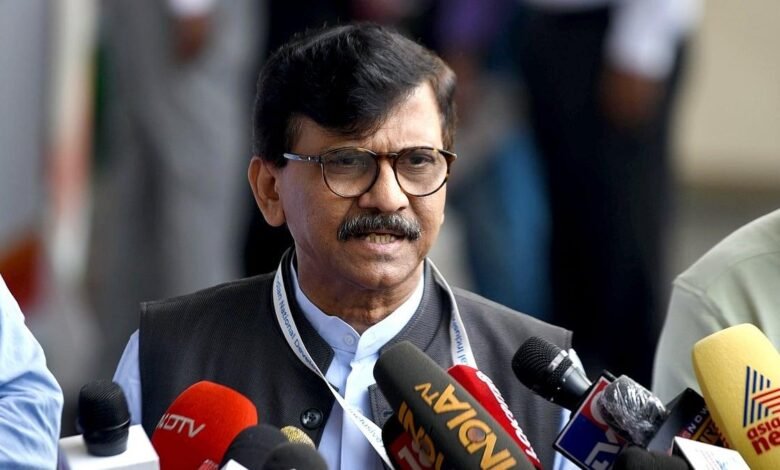
A major political controversy has erupted after Shiv Sena (UBT) MP Sanjay Raut accused the BJP of allegedly offering ₹150 crore to individual MPs to secure their support for the proposed Delimitation Bill. Raut has also questioned the frequent visits of Union Home Minister Amit Shah to Mumbai and alleged that political negotiations are taking place behind the scenes. The BJP has rejected his claims, turning the issue into a fresh political confrontation.
Raut Delimitation Claim Sparks Major Political Controversy
The Raut Delimitation Claim has triggered a fresh political confrontation between the Bharatiya Janata Party (BJP) and the opposition after Shiv Sena (UBT) MP Sanjay Raut made serious allegations regarding the proposed Delimitation Bill.
Speaking to reporters, Raut alleged that MPs were being offered as much as ₹150 crore each to secure their support for the proposed legislation.
The allegation has attracted considerable attention because the Delimitation Bill is connected with a major constitutional and political debate concerning the future composition of the Lok Sabha and the implementation of women’s reservation in Parliament and state legislative assemblies.
According to Raut, attempts were being made to persuade lawmakers from other political parties to support the proposed legislation. He claimed that the amount allegedly being offered had increased from ₹100 crore to ₹150 crore within just two days.
The Shiv Sena (UBT) leader also alleged that certain prominent political leaders in Maharashtra had been given responsibility for arranging the money and securing support from MPs.
However, Raut did not publicly identify the MPs who were allegedly approached or provide documentary evidence to substantiate the financial allegations.
The Raut Delimitation Claim has therefore become a major talking point in Maharashtra politics, with questions being raised about political defections, parliamentary numbers and the process of securing support for important legislation.
The BJP has rejected the allegations. Maharashtra minister Girish Mahajan described Raut’s remarks as childish and questioned their credibility.
The controversy has once again highlighted the growing political differences between the ruling BJP and opposition parties over the proposed delimitation exercise.
1. Sanjay Raut Alleges ₹150 Crore Offer to MPs
The central issue behind the Raut Delimitation Claim is the allegation that individual Members of Parliament were being offered ₹150 crore to support the proposed Delimitation Bill.
While interacting with reporters in Chhatrapati Sambhajinagar, Raut claimed that MPs were being approached in large numbers.
According to his statement, the alleged amount had increased from ₹100 crore to ₹150 crore in a period of two days.
Raut suggested that the purpose of these alleged offers was to secure the necessary parliamentary support for the proposed legislation.
He also warned that if Maharashtra MPs supported the Bill, the public should remember the figure of ₹150 crore mentioned in his allegation.
The statement immediately attracted political attention because it involved an extremely large amount of money and raised questions about the possibility of political inducements.
However, it is important to understand that these statements represent allegations made by an opposition politician.
No publicly presented documentary evidence or independently verified transaction has established that such payments were offered to MPs.
The Raut Delimitation Claim should therefore be understood as a political allegation that requires independent verification rather than a confirmed financial transaction.
The BJP has strongly rejected the charge.
2. Raut Claims the Alleged Amount Increased From ₹100 Crore to ₹150 Crore
Another important part of the Raut Delimitation Claim concerns the alleged increase in the amount being offered to MPs.
Raut told reporters that the figure had reportedly increased from ₹100 crore to ₹150 crore within two days.
He used this claim to argue that efforts to secure support for the Delimitation Bill were becoming increasingly aggressive.
The alleged increase became one of the most discussed aspects of his press interaction.
According to Raut, MPs were being approached individually, and political negotiations were allegedly taking place to obtain the required support.
He also suggested that prominent leaders in Maharashtra had been entrusted with arranging funds.
However, Raut did not publicly disclose the identities of the alleged intermediaries or the MPs who were supposedly approached.
He also did not provide evidence establishing that the alleged amount had actually been offered or transferred.
The Raut Delimitation Claim has consequently raised questions about the source of the information behind his statements.
In a political environment where allegations and counter-allegations frequently become part of public debate, it is important to distinguish between statements made at press conferences and facts established through independent investigation.
Any claim involving such substantial financial inducements would require credible evidence, including financial records, communications or testimony from individuals directly involved.
Until such evidence becomes available, the alleged increase from ₹100 crore to ₹150 crore remains Raut’s claim.
3. Sanjay Raut Questions Amit Shah’s Frequent Mumbai Visits
Apart from the alleged financial offers, Raut also questioned the frequent visits of Union Home Minister Amit Shah to Mumbai.
The Raut Delimitation Claim expanded into a broader political attack when the Shiv Sena (UBT) leader suggested that the alleged efforts to secure parliamentary support were connected with political activity in Maharashtra.
Raut questioned why Amit Shah had visited Mumbai repeatedly over the preceding months.
He raised questions about what political discussions and transactions were allegedly taking place during these visits.
He also suggested that Mumbai could be involved in arrangements connected with the alleged financial offers to MPs.
These statements were part of Raut’s broader criticism of the BJP and its efforts to secure support for the proposed legislation.
However, questioning a political leader’s travel schedule does not independently establish that any illegal financial transaction has taken place.
No verified evidence presented in the reports establishes that Amit Shah’s visits were connected with the alleged payments.
The BJP has rejected the wider allegations made by Raut.
The Raut Delimitation Claim has nevertheless brought the issue of political negotiations and the role of Maharashtra-based leaders into public discussion.
The allegations have also created fresh political tension between the BJP and Shiv Sena (UBT).
4. Raut Refers to Earlier Political Defections in Maharashtra
During his interaction with reporters, Raut also referred to earlier political defections in Maharashtra.
He compared the alleged ₹150 crore offer with amounts he claimed were involved in previous instances of political defections.
Raut referred to the political developments of the past five years and alleged that lawmakers had previously been offered substantial sums to change political sides.
He claimed that an MLA had been bought for ₹50 crore and an MP for ₹75 crore.
He also referred to six MPs who left his party and alleged that each had received ₹80 crore under an arrangement connected with Maharashtra Deputy Chief Minister Eknath Shinde.
These claims were part of Raut’s attempt to draw a comparison between earlier political developments and the alleged financial inducements surrounding the Delimitation Bill.
However, these statements also remain allegations made by Raut and should not be presented as established facts without independent verification.
Maharashtra politics has witnessed major changes over recent years, including party splits, leadership disputes and shifts in political alliances.
The political developments involving the Shiv Sena and the Nationalist Congress Party have significantly changed the state’s political landscape.
The Raut Delimitation Claim has now brought these earlier developments back into the political conversation.
By referring to previous defections, Raut attempted to suggest that the alleged offers were part of a larger pattern of political bargaining.
The BJP and other leaders involved in the earlier political developments have not been shown to have accepted the specific financial allegations merely because Raut made these comparisons.
5. BJP Minister Girish Mahajan Rejects Raut’s Allegations
The allegations made by Sanjay Raut did not go unanswered.
BJP leader and Maharashtra minister Girish Mahajan dismissed Raut’s statements when asked about the matter.
According to a Times of India report published on November 22, Mahajan described the allegations as childish and said that nobody took Raut seriously anymore.
His response represents the BJP’s rejection of the claims made by the Shiv Sena (UBT) MP.
The political exchange has further intensified the controversy.
While Raut has accused the BJP of attempting to secure parliamentary support through alleged financial inducements, the BJP has questioned the credibility of his statements.
The Raut Delimitation Claim has therefore developed into a political dispute involving allegations, denials and competing narratives.
At present, the publicly available reports do not establish that the alleged ₹150 crore payments took place.
Nor do they establish that specific MPs received or accepted such offers.
For readers, it is important to understand both sides of the controversy.
Raut has made a serious allegation that requires evidence and investigation if authorities receive a formal complaint.
The BJP has rejected the allegation and questioned its credibility.
The next developments will depend on whether additional evidence emerges or whether the matter becomes the subject of a formal inquiry.
6. What Is the Delimitation Bill and Why Is It Important?
To understand the importance of the Raut Delimitation Claim, it is necessary to understand what delimitation means.
Delimitation is the process of determining or redrawing the boundaries of electoral constituencies.
In India, delimitation is intended to help maintain appropriate representation of the population across parliamentary and assembly constituencies.
As population distribution changes over time, the question of how electoral constituencies should be structured becomes increasingly important.
The exercise can influence the number of representatives elected from different regions and the geographical boundaries of constituencies.
This makes delimitation a politically sensitive subject.
The proposed legislative changes have attracted significant attention because they are linked to plans to increase the strength of the Lok Sabha and facilitate the implementation of 33 per cent reservation for women in Parliament and state legislative assemblies.
The government and opposition parties have different views on the timing, structure and possible consequences of the proposed changes.
The proposed constitutional amendment discussed earlier in 2026 sought to enable an expansion of the Lok Sabha’s strength from its existing 543 elected seats to a maximum of 850.
The proposal also became linked with the implementation of women’s reservation.
However, the legislation faced a major setback in April 2026.
The Constitution Amendment Bill introduced in April failed to secure the required special majority in the Lok Sabha on April 17.
Following that development, the related Delimitation Bill and another dependent Bill were not taken forward.
The government has since been considering another legislative push.
This political background explains why the Raut Delimitation Claim has attracted such significant attention.
The issue is not simply about the alleged financial offers. It is also connected with a major debate over India’s parliamentary representation and electoral structure.
7. Why Has Delimitation Become a Major Political Issue?
Delimitation is one of the most important constitutional and electoral subjects because it can affect the political representation of different states.
India has a large and diverse population, and states have experienced different levels of population growth over the decades.
Consequently, discussions about the future distribution of parliamentary seats have generated concerns about regional representation.
Some political parties argue that increasing the number of Lok Sabha seats is necessary to reflect demographic changes.
Others have raised questions about how the exercise could affect states that have successfully controlled population growth.
There are concerns that states with slower population growth could lose relative political influence if seat distribution is changed primarily on the basis of population.
The debate also involves the constitutional framework governing the delimitation process and the timing of future exercises.
The Raut Delimitation Claim has emerged against this sensitive political background.
The opposition has questioned the government’s approach and demanded greater clarity about the proposed changes.
Some opposition leaders have also argued that women’s reservation should be implemented without unnecessary delays.
The BJP and its supporters have maintained that the legislative process must address the constitutional and electoral requirements associated with delimitation.
The issue therefore involves several interconnected subjects:
- Representation of different states.
- Distribution of parliamentary constituencies.
- The strength of the Lok Sabha.
- Implementation of women’s reservation.
- Constitutional amendments.
- Political support required for legislation.
These questions make delimitation a major issue for India’s political future.
8. How Is Women’s Reservation Connected With Delimitation?
One of the most important aspects of the proposed legislative changes is their connection with women’s reservation.
The Constitution (106th Amendment) Act, 2023, commonly known as the Women’s Reservation Act or Nari Shakti Vandan Adhiniyam, provides for one-third reservation for women in the Lok Sabha, state legislative assemblies and the Delhi Legislative Assembly.
However, its implementation is linked to the completion of a future census and a subsequent delimitation exercise under the constitutional provisions.
The proposed changes discussed in 2026 have therefore involved both the question of increasing parliamentary representation and the implementation of women’s reservation.
Supporters of the government’s approach argue that the expansion of legislative seats could provide an opportunity to implement the reservation while accommodating changes in population.
Opposition parties have questioned whether women’s reservation should remain linked to a future delimitation exercise.
Some have argued that the reservation should be implemented as soon as possible within the existing parliamentary structure.
This disagreement has become an important part of the wider political debate.
The Raut Delimitation Claim has added another dimension to this controversy by raising allegations about how the government is attempting to secure parliamentary numbers.
However, the alleged financial offers and the constitutional question of women’s reservation are separate matters.
Both issues should be examined independently.
The debate over women’s representation deserves attention regardless of the political allegations surrounding the proposed legislation.
9. Why Is the Government Seeking Parliamentary Support?
Constitutional amendments require a special majority in Parliament.
This means that the government cannot necessarily rely on an ordinary majority to pass the proposed constitutional changes.
Under Article 368 of the Constitution, a constitutional amendment generally requires:
- A majority of the total membership of each House of Parliament.
- At least two-thirds of the members present and voting in each House.
Certain constitutional amendments also require ratification by at least half of the state legislatures.
The exact requirement depends on the nature of the amendment.
This makes support from MPs particularly important when a constitutional amendment is being considered.
The Raut Delimitation Claim revolves around Raut’s allegation that the BJP is attempting to obtain additional support for the proposed legislation through political inducements.
Raut has suggested that the government does not have sufficient numbers and is therefore trying to persuade or attract MPs from other parties.
However, the actual parliamentary arithmetic and the government’s legislative strategy must be assessed through official parliamentary records and statements.
The failure of the earlier constitutional amendment in April demonstrated the difficulty of securing the required support.
It also showed that opposition from several parties can prevent a major constitutional proposal from moving forward.
The political negotiations surrounding any fresh proposal will therefore remain important.
10. Opposition Parties Raise Questions About the Proposed Legislation
The proposed delimitation exercise has exposed differences between the ruling alliance and opposition parties.
Some opposition parties have expressed concerns about the possible impact of the proposed seat expansion on regional representation.
Others have indicated that they are willing to discuss increasing the number of parliamentary seats but want women’s reservation to be implemented without being delayed by the delimitation process.
The Congress has indicated its willingness to discuss a fresh Delimitation Bill, while seeking that the exercise be delinked from the 2027 Census.
NCP (SP) working president Supriya Sule also indicated on November 14 that her party was, in principle, willing to support a proposal to increase the number of Lok Sabha seats in every state by 50 per cent.
These differences show that the opposition is not necessarily united on every aspect of the delimitation debate.
The Raut Delimitation Claim has emerged during this period of political negotiation and disagreement.
The allegations have also raised questions about whether the government is attempting to secure support from individual MPs or smaller political parties.
However, political discussions and negotiations are not by themselves evidence of financial wrongdoing.
Any specific allegation of bribery or illegal inducement would require credible evidence.
The coming weeks could provide further clarity on how different parties intend to approach the proposed legislation.
11. Why Did Sanjay Raut Call It a Political Stock Exchange?
During his criticism of the BJP, Raut used the expression Political National Stock Exchange to describe what he alleged was the buying and selling of political support.
The phrase was used sarcastically to attack what he described as financial bargaining involving elected representatives.
The Raut Delimitation Claim became even more widely discussed after the phrase was used in political reporting.
Raut suggested that the alleged amounts involved in political defections had increased over time.
He compared his claimed figures from earlier political developments with the alleged ₹150 crore offer connected with the Delimitation Bill.
The expression was intended as a political criticism rather than a reference to any actual financial exchange or recognised stock market.
His remarks also reflect the larger debate about political defections and the stability of elected governments.
In a parliamentary democracy, MPs are elected to represent their constituencies and participate in lawmaking.
The possibility of lawmakers changing political positions in exchange for financial benefits raises serious questions about democratic accountability.
However, it is equally important that such accusations are supported by evidence before being treated as established wrongdoing.
12. What Could Happen If the Delimitation Bill Returns to Parliament?
If the government introduces another legislative proposal connected with delimitation, it could lead to a fresh round of political negotiations.
The government would need to secure the required parliamentary support for any constitutional amendment.
Opposition parties would examine the proposal and decide whether to support, oppose or seek changes.
The Raut Delimitation Claim may also influence the political atmosphere surrounding these discussions.
The controversy could become an issue during parliamentary debates, press conferences and political campaigns.
If the allegations are formally raised before an appropriate authority with supporting evidence, they may also lead to demands for an inquiry.
However, the allegations alone do not establish that any offence has occurred.
The government has not announced a confirmed date for a proposed special sitting to introduce the fresh legislative proposal, according to the reports available at the time of writing.
The final outcome will depend on the contents of any new legislation, the government’s strategy and the response of opposition parties.
The debate will also require careful consideration of constitutional provisions and the interests of different states.
13. Seven Major Developments in the Raut Delimitation Controversy
The following are seven important developments readers should understand:
1. ₹150 crore allegation
Sanjay Raut alleged that MPs were being offered ₹150 crore each to support the proposed Delimitation Bill.
2. Alleged increase in the amount
Raut claimed that the amount had increased from ₹100 crore to ₹150 crore within two days.
3. Maharashtra leaders mentioned
He alleged that prominent political leaders in Maharashtra had been given responsibility for arranging funds and securing support.
4. Questions about Amit Shah’s visits
Raut questioned Union Home Minister Amit Shah’s repeated visits to Mumbai and suggested that political negotiations were taking place.
5. BJP rejects the allegations
Maharashtra minister Girish Mahajan dismissed Raut’s claims as childish.
6. Delimitation debate continues
The proposed legislation remains connected with discussions about expanding the Lok Sabha and implementing women’s reservation.
7. Earlier constitutional amendment failed
The Constitution Amendment Bill introduced in April 2026 failed to secure the required special majority in the Lok Sabha on April 17.
Together, these developments explain why the Raut Delimitation Claim has become an important political story.
Frequently Asked Questions About the Raut Delimitation Claim
1. What is the Raut Delimitation Claim?
It refers to allegations made by Shiv Sena (UBT) MP Sanjay Raut that MPs were being offered ₹150 crore each to support the proposed Delimitation Bill.
2. Who made the ₹150 crore allegation?
The allegation was made by Sanjay Raut, a Rajya Sabha MP belonging to Shiv Sena (UBT).
3. Why is the BJP being accused?
Raut alleged that the BJP was attempting to secure parliamentary support for the proposed legislation by offering financial inducements to MPs.
These allegations have been rejected by the BJP.
4. Has the ₹150 crore payment been proven?
No. The publicly available reports do not establish that such payments were made or that MPs received the alleged money.
5. What did Girish Mahajan say?
BJP leader and Maharashtra minister Girish Mahajan dismissed Raut’s allegations as childish, according to a Times of India report published on November 22.
6. Why did Sanjay Raut question Amit Shah’s Mumbai visits?
Raut questioned the Union Home Minister’s frequent visits and alleged that political negotiations connected with the proposed legislation were taking place in Mumbai. He did not establish evidence connecting those visits to financial transactions.
7. What is the Delimitation Bill?
The proposed legislation is connected with the delimitation of parliamentary constituencies and the broader proposal to increase the strength of the Lok Sabha.
8. How is the Bill connected with women’s reservation?
The proposed legislative changes are linked with the implementation of 33 per cent reservation for women in Parliament and state legislative assemblies.
9. Why is parliamentary support important?
Constitutional amendments require a special majority under Article 368 of the Constitution. Therefore, the government needs sufficient support in both Houses of Parliament.
10. What happened to the earlier constitutional amendment?
The Constitution Amendment Bill introduced in April 2026 failed to secure the required special majority in the Lok Sabha on April 17.
11. Did Sanjay Raut identify the MPs allegedly approached?
The Indian Express report stated that Raut did not name the MPs or political leaders allegedly involved and did not provide evidence substantiating his claims.
12. What happens next?
The next developments will depend on the government’s decision regarding fresh legislation, parliamentary negotiations and any further response to Raut’s allegations.
Conclusion: ₹150 Crore Allegation Adds Fresh Heat to India’s Delimitation Debate
The Raut Delimitation Claim has created a fresh political controversy at a time when the future of parliamentary representation and women’s reservation remains a major subject of national discussion. Sanjay Raut’s allegation that MPs were being offered ₹150 crore each to support the proposed Delimitation Bill has attracted widespread attention and triggered a strong response from the BJP.
His questions about Amit Shah’s frequent Mumbai visits and references to earlier political defections have added further political tension. However, the allegations have not been independently established, and the BJP has rejected them.
The larger issue of delimitation remains important because it could influence the composition of the Lok Sabha, the representation of different states and the implementation of women’s reservation. The failure of the earlier constitutional amendment in April 2026 has also demonstrated the importance of parliamentary support for such legislation.
As political parties continue to discuss the proposed changes, citizens will be watching closely for clarity on the government’s next move. Whether the allegations lead to further political action or remain part of the ongoing political exchange, the Raut Delimitation Claim has brought renewed attention to the relationship between political accountability, parliamentary democracy and the future of electoral representation in India.
Stay Updated With Police Vartha
Follow POLICE VARTHA for the latest political news, Maharashtra updates, Parliament developments, government decisions and breaking news from across India.
We bring you important updates on politics, public affairs, law and order, civic issues and developments that matter to citizens.
WANT TO SHARE NEWS OR PROMOTE YOUR BUSINESS?
Connect with Police Vartha for:
- News Coverage & Publicity
- Business & Brand Advertising
- Local News & Event Coverage
Contact us for news coverage and advertising enquiries.