
Delimitation Bill SHOCKING Row: 7 Explosive Details of Raut’s ₹150 Crore Claim
Shiv Sena (UBT) MP Sanjay Raut alleges that lawmakers are being offered ₹150 crore each to support the proposed legislation, triggering a political controversy and a sharp response from the BJP.

Delimitation Bill Row: 7 Crucial Details Behind Raut’s ₹150 Crore Claim
Delimitation Bill controversy grows as Sanjay Raut alleges BJP offered ₹150 crore per MP for support. BJP rejects the allegations. Read the latest details.Raut claimed that political negotiations were underway to gather the required numbers for the legislation and alleged that a Maharashtra minister had taken responsibility for arranging the funds. The BJP has rejected the allegations, with Maharashtra minister Girish Mahajan dismissing Raut’s remarks. The controversy has once again brought the proposed restructuring of Lok Sabha seats, political defections and women’s reservation into the national spotlight.
1. Sanjay Raut Makes ₹150 Crore Allegation Against BJP
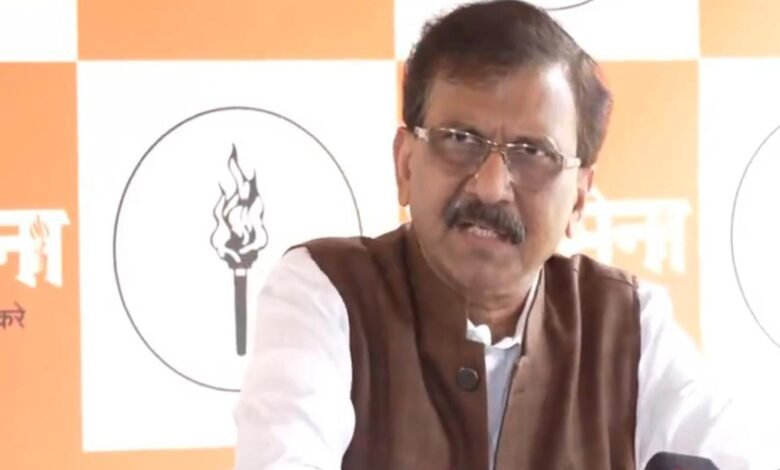
A fresh political controversy has erupted around the proposed Delimitation Bill after Shiv Sena (UBT) leader and Rajya Sabha MP Sanjay Raut made serious allegations against the Bharatiya Janata Party (BJP).
During a press conference in November 2026, Raut alleged that the BJP was attempting to secure the support of Members of Parliament by offering them as much as ₹150 crore each in exchange for backing the proposed legislation.
According to Raut, the alleged strategy involved approaching MPs belonging to smaller political parties and encouraging individual lawmakers to break away from their respective parties.
He further claimed that the alleged offer would allow an MP to leave their political party and support the Delimitation Bill without facing disqualification.
Raut also alleged that a prominent Maharashtra minister had taken responsibility for arranging the money required to secure political support.
These remarks have attracted attention because the proposed Delimitation Bill is connected to a significant constitutional and political debate concerning the future composition of the Lok Sabha.
The allegations have also raised questions about the political negotiations taking place ahead of any fresh legislative attempt.
However, it is important to clarify that the ₹150 crore claim is an allegation made by Sanjay Raut. He has not publicly provided independently verified evidence establishing that such payments have been offered.
The BJP has rejected the allegations.
The controversy has therefore developed into a political exchange between the opposition and the ruling party, with the proposed Delimitation Bill once again becoming a major subject of discussion.
2. What Exactly Did Sanjay Raut Claim?
Sanjay Raut made the allegations while addressing reporters about the political situation surrounding the proposed legislation.
He claimed that the government was attempting to secure the support of approximately 40 to 45 additional MPs required to pass the proposed measure.
According to Raut, the government was allegedly approaching smaller political parties and attempting to persuade their lawmakers to support the legislation.
He further suggested that if entire political parties could not be persuaded to change their position, individual MPs could be approached.
Raut used the expression “BJP National Stock Exchange” while referring sarcastically to the alleged amount being offered to individual lawmakers.
He claimed that the alleged rate had reached ₹150 crore per MP.
In his remarks, Raut also questioned why the Winter Session of Parliament had not been convened and suggested that the government was concentrating on securing political support before proceeding with the legislation.
He alleged that the government was short of the required parliamentary numbers and was attempting to overcome the difficulty through political negotiations.
Another significant part of his statement concerned the alleged role of a Maharashtra minister.
Raut claimed that a prominent minister from the state had taken responsibility for arranging the necessary funds.
However, he did not establish the identity of the alleged individuals involved in these transactions through publicly verified evidence.
His statements have not been independently substantiated.
The allegations have nevertheless intensified the debate surrounding the Delimitation Bill and the political strategies being discussed by different parties.
3. BJP Responds to Sanjay Raut’s Allegations
The allegations quickly attracted a response from the BJP.
Maharashtra minister Girish Mahajan dismissed Raut’s remarks, describing them as a childish allegation.
His response indicated that the BJP was not accepting the accusations made by the Shiv Sena (UBT) leader.
The BJP has also rejected the broader allegations of attempting to purchase MPs through financial offers.
The political disagreement has created another confrontation between the ruling party and opposition leaders in Maharashtra.
While Raut has questioned the government’s intentions and alleged attempts to influence parliamentary support, the BJP has dismissed his claims.
This difference in positions has made the controversy a major talking point in Maharashtra politics.
For the public, the central question is whether any evidence will emerge to support the allegations.
At present, the ₹150 crore figure remains a claim made by Raut and should not be treated as an established payment arrangement.
The BJP’s response is also an important part of the story and needs to be included when reporting the controversy.
The proposed Delimitation Bill itself remains a separate legislative issue, and the political allegations should not be confused with the actual provisions of the legislation.
4. What Is the Delimitation Bill and Why Is It Important?
To understand the controversy, it is necessary to understand the meaning of delimitation.
Delimitation refers to the process of determining or redrawing the boundaries of electoral constituencies and allocating representation based on the applicable constitutional and legal framework.
In India, delimitation is particularly important because it determines how parliamentary constituencies are organised and how voters are represented in the Lok Sabha.
The number of constituencies and the distribution of seats among states have significant political consequences.
A change in the number of parliamentary seats can influence the representation of different states and the overall composition of Parliament.
The proposed Delimitation Bill has become controversial because it is connected with plans to increase the strength of the Lok Sabha.
The proposal discussed in the 2026 legislative exercise sought to increase the maximum strength of the Lok Sabha from the existing 543 elected seats to as many as 850 seats.
This would represent a major change in the size and composition of India’s lower house of Parliament.
Supporters of the proposal argue that the parliamentary structure needs to be updated to reflect demographic changes and facilitate the implementation of women’s reservation.
Opposition parties, however, have raised concerns about the timing, methodology and possible consequences of the proposed delimitation exercise.
These disagreements have made the Delimitation Bill one of the most politically sensitive legislative subjects.
5. Why Does the Proposed Bill Seek to Increase Lok Sabha Seats to 850?
One of the central features of the proposed Delimitation Bill is the plan to increase the maximum strength of the Lok Sabha to 850.
At present, the Lok Sabha has 543 elected seats.
The proposed expansion would significantly increase the number of parliamentary constituencies and the total number of elected representatives.
The government’s broader argument is that parliamentary representation should be updated in accordance with demographic changes and the country’s evolving electoral requirements.
India’s population has changed considerably over the decades.
The distribution of population among different states and regions is therefore an important part of the delimitation debate.
The government has also linked the proposed expansion with the implementation of women’s reservation in Parliament and state legislative assemblies.
However, opposition parties have raised concerns about how the new seats would be distributed.
They argue that the exercise could have consequences for the political representation of different states.
The Delimitation Bill has therefore become a subject of disagreement not only between political parties but also over broader questions concerning federal representation.
The debate involves several important considerations:
- The total number of Lok Sabha seats.
- The allocation of parliamentary constituencies.
- The representation of different states.
- The use of census data.
- The implementation of women’s reservation.
- The constitutional framework governing delimitation.
The final structure of any future delimitation exercise will depend on the legislation and constitutional provisions that are ultimately approved.
6. How Is the Delimitation Bill Connected to Women’s Reservation?
Women’s reservation is another major reason why the proposed Delimitation Bill has attracted national attention.
The Constitution provides for 33 per cent reservation for women in the Lok Sabha and state legislative assemblies through the constitutional amendment framework introduced in 2023.
However, the implementation of this reservation is linked to a future delimitation exercise and the completion of the relevant constitutional conditions.
The proposed 2026 legislative package sought to address the issue through changes to the existing framework.
The government has argued that expanding the Lok Sabha could provide additional room for implementing women’s reservation while increasing parliamentary representation.
Opposition parties have raised a different position.
Several opposition leaders have argued that women’s reservation should be implemented without waiting for a major restructuring of parliamentary seats.
They have also questioned whether the proposed delimitation exercise could affect the political balance between states.
The disagreement has become an important part of the wider political debate.
The Delimitation Bill is therefore not simply about increasing the number of MPs.
It is also connected to the future of women’s political representation and the way parliamentary constituencies will be organised.
The question of how and when women’s reservation should be implemented remains central to the discussions.
7. Why Did the Earlier Constitutional Amendment Fail in Parliament?
The current controversy also has a background in the earlier legislative developments of April 2026.
A Constitution Amendment Bill connected with the proposed parliamentary expansion and women’s reservation framework was introduced during the April legislative exercise.
However, the constitutional amendment failed to secure the required special majority in the Lok Sabha on April 17, 2026.
A constitutional amendment requires more than a simple majority.
It must satisfy the special majority requirements prescribed under Article 368 of the Constitution.
Following the failure of the amendment, the related Delimitation Bill and another dependent legislative measure were not proceeded with.
This setback became a major political development because the proposed changes were connected with the future composition of Parliament.
The government subsequently faced the challenge of building broader political support for any fresh legislative attempt.
Opposition parties continued to raise questions about the proposed structure and the timing of delimitation.
The failure of the April amendment is an important part of the background to Raut’s latest allegations.
He has claimed that the government is attempting to gather the necessary numbers before proceeding with the proposed legislation again.
However, his allegation that MPs are being offered money to support the measure remains unverified.
The earlier failure explains why parliamentary numbers and political negotiations have become important issues in the current debate.
8. Raut Claims the Government Is Short of 40 to 45 MPs
Another major part of Sanjay Raut’s statement concerns the numbers required to pass the proposed legislation.
He claimed that the government was short of approximately 40 to 45 MPs needed to secure support for the Delimitation Bill.
This claim formed the basis of his allegation that the ruling party was allegedly attempting to approach individual lawmakers and smaller political parties.
According to Raut, the government was trying to overcome the parliamentary shortfall by persuading MPs to change their political positions.
He further alleged that financial offers were being discussed as part of this process.
The exact parliamentary arithmetic would depend on the final text of the legislation, the constitutional route followed and the strength of parties and members present during voting.
A constitutional amendment requires a special majority, making the support of opposition parties and other parliamentary groups particularly important.
The government cannot rely only on an ordinary majority when attempting to pass a constitutional amendment.
This is why support across political parties becomes an important consideration.
Raut’s comments have brought attention to the political calculations surrounding the Delimitation Bill.
However, his claim regarding the number of MPs being approached and the alleged financial offers should be understood as his version of events rather than an independently established fact.
9. Why Is the Opposition Concerned About Delimitation?
Opposition parties have raised several concerns about the proposed delimitation exercise.
One of the biggest issues involves the distribution of parliamentary representation among states.
India is a federal country, and states have different population sizes, demographic patterns and political requirements.
An exercise that changes the number of parliamentary seats can have important consequences for the relative representation of different regions.
Some opposition parties have argued that states which have made progress in population stabilisation should not be disadvantaged in parliamentary representation.
They have also questioned whether using older census figures or a particular population-based formula would create an imbalance.
Another concern is the relationship between delimitation and women’s reservation.
Opposition leaders have argued that women’s reservation should not be delayed because of disagreements over constituency boundaries or the total number of seats.
The debate therefore involves more than the political interests of individual parties.
It concerns the balance between population, representation, federalism and democratic participation.
The Delimitation Bill has become controversial because different political parties have different views on how these competing considerations should be addressed.
10. Why Has Maharashtra Become Important in the Political Controversy?
Maharashtra has emerged as an important part of the latest political controversy because Raut specifically alleged that a prominent minister from the state had taken responsibility for arranging funds.
He also questioned the frequent visits of Union Home Minister Amit Shah to Mumbai and alleged that political negotiations were being conducted through the city.
These statements were made by Raut during his public comments and have not been independently established.
He further referred to earlier political defections in Maharashtra while criticising what he described as attempts to influence lawmakers.
Maharashtra has witnessed major political realignments and party splits in recent years.
These developments have made the issue of defections particularly sensitive in the state’s political environment.
Raut used those earlier events to strengthen his criticism of the BJP.
He also alleged that MPs who had previously left his party had received substantial financial payments.
Those claims, too, should be understood as allegations rather than established facts.
The latest Delimitation Bill controversy has therefore become connected with the wider political rivalry between Shiv Sena (UBT), the BJP and other parties in Maharashtra.
11. Raut Questions Amit Shah’s Frequent Visits to Mumbai
During his remarks, Sanjay Raut also questioned the repeated visits of Union Home Minister Amit Shah to Mumbai.
Raut suggested that these visits were connected with political discussions and the alleged effort to secure support for the proposed Delimitation Bill.
He questioned what transactions were taking place and suggested that Mumbai was being used as a centre for political negotiations.
These statements were part of his broader criticism of the BJP.
However, Raut did not publicly establish evidence connecting Amit Shah’s visits with any alleged financial arrangement.
The BJP has rejected the allegations made by the Shiv Sena (UBT) leader.
The issue has nevertheless added another dimension to the controversy.
The Delimitation Bill debate is already politically sensitive because it involves parliamentary representation, constitutional changes and women’s reservation.
Raut’s allegations have now brought the subject of alleged political inducements into the discussion.
12. What Is the Anti-Defection Law and Why Did Raut Mention Disqualification?
One of the most significant aspects of Raut’s allegation is his claim that MPs switching parties to support the Delimitation Bill would not face disqualification.
His statement has brought attention to India’s anti-defection law.
The anti-defection provisions are contained in the Tenth Schedule of the Constitution.
They were introduced to address political defections and prevent elected representatives from changing political allegiance in circumstances covered by the law.
Under the relevant provisions, members of Parliament and state legislatures may face disqualification if they voluntarily give up membership of their political party or vote or abstain contrary to the party’s direction without the required permission.
The law contains specific provisions and exceptions, and its application depends on the circumstances of each case.
For example, the merger provision under the Tenth Schedule involves a requirement that at least two-thirds of the members of a legislature party agree to a merger.
Simply leaving a political party or supporting a particular Bill does not automatically guarantee protection from disqualification.
Raut alleged that individual MPs could switch sides and support the proposed legislation without facing such consequences.
However, his statement should not be interpreted as an established legal position.
Whether a particular MP could face disqualification would depend on the applicable constitutional provisions and the facts of the case.
The Delimitation Bill controversy has therefore raised questions not only about parliamentary support but also about the legal consequences of political defections.
13. What Could Happen if the Delimitation Bill Is Reintroduced?
The future of the proposed legislation will depend on the government’s next steps and its ability to secure the necessary parliamentary support.
Following the failure of the April 2026 constitutional amendment, the government would need to consider the appropriate legislative route for any fresh attempt.
The political debate has continued, with opposition parties expressing concerns about the proposed framework.
If the legislation is brought forward again, it could trigger another major parliamentary debate.
Political parties are likely to examine several issues, including:
- The proposed increase in Lok Sabha seats.
- The distribution of constituencies among states.
- The use of census data.
- The implementation of women’s reservation.
- The constitutional requirements for passing the legislation.
- The effect on India’s federal political structure.
The Delimitation Bill could therefore become one of the major issues in the coming parliamentary discussions.
Raut’s allegations have added further political tension, but the actual legislative process will depend on the government’s formal decisions and parliamentary proceedings.
14. Why Is the Delimitation Debate Important for Ordinary Citizens?
Although delimitation may appear to be a technical parliamentary exercise, it has a direct connection with democratic representation.
The way constituencies are organised determines how citizens elect their representatives.
Changes in constituency boundaries and seat allocation can influence the relationship between voters and elected representatives.
An increase in the number of Lok Sabha seats could also change the overall structure of parliamentary representation.
For ordinary citizens, the most important issues include fair representation, effective democratic participation and transparency in the legislative process.
The debate over women’s reservation is equally important because it concerns the participation of women in political decision-making.
The Delimitation Bill therefore has consequences beyond the political competition between the BJP and opposition parties.
It is connected to the broader functioning of India’s democratic institutions.
The allegations made by Raut have added another question to this debate: whether political support for such an important constitutional measure is being sought through legitimate parliamentary processes.
That question will require evidence and appropriate scrutiny rather than political statements alone.
15. What Are the Main Questions That Remain Unanswered?
The latest controversy has raised several questions that remain unanswered.
First, has any MP actually been offered ₹150 crore to support the Delimitation Bill?
Second, is there evidence of any financial transaction or communication supporting the allegation?
Third, who is the Maharashtra minister whom Raut referred to in his statement?
Fourth, which MPs or political parties have allegedly been approached?
Fifth, what is the government’s actual parliamentary strategy for any fresh legislative attempt?
Sixth, when will Parliament take up the proposed legislation again?
Seventh, how will the government address the concerns raised by opposition parties about the distribution of seats and the use of census data?
These questions are important because the controversy involves allegations of serious political misconduct as well as a significant constitutional proposal.
The ₹150 crore allegation should be investigated or substantiated through credible evidence if any formal complaint or supporting material emerges.
At the same time, the government and political parties will need to address the substantive questions surrounding the Delimitation Bill through parliamentary discussion.
16. Political Reactions Could Intensify Ahead of the Next Parliamentary Session
The latest exchange between Sanjay Raut and the BJP could intensify political disagreements surrounding the proposed legislation.
The opposition is likely to continue questioning the government’s approach to delimitation, while the ruling party is expected to defend its position on parliamentary restructuring and women’s reservation.
The BJP has already dismissed Raut’s claims.
The issue could also become part of the wider political debate in Maharashtra, where party defections and political realignments remain sensitive subjects.
However, the next major development will depend on the government’s formal position and whether a fresh legislative proposal is introduced.
The Delimitation Bill will require careful examination because of its potential impact on parliamentary representation and constitutional arrangements.
Political allegations may attract headlines, but the public will also need clear information about the actual provisions of the proposed legislation.
The coming parliamentary developments will therefore be important in determining how the controversy progresses.
17. Frequently Asked Questions About the Delimitation Bill Controversy
1. What is the latest controversy involving Sanjay Raut?
Shiv Sena (UBT) MP Sanjay Raut has alleged that the BJP is offering ₹150 crore to individual MPs to secure their support for the proposed Delimitation Bill.
2. Who made the ₹150 crore allegation?
The allegation was made by Sanjay Raut, a Rajya Sabha MP belonging to Shiv Sena (UBT).
3. When did Sanjay Raut make the allegation?
Raut made the remarks during press interactions in November 2026, including a press conference on November 22.
4. What does Raut claim the money is being offered for?
He alleges that MPs are being offered ₹150 crore each in exchange for leaving their political parties and supporting the proposed legislation.
5. Has the ₹150 crore payment been proven?
No. The claim remains an allegation made by Sanjay Raut. Publicly verified evidence establishing the alleged payments has not been presented in the reports cited here.
6. How has the BJP responded?
BJP minister Girish Mahajan dismissed Raut’s remarks as a childish allegation. The BJP has rejected the accusations.
7. What is the proposed Delimitation Bill?
It is a proposed legislative measure connected with restructuring parliamentary representation and increasing the maximum strength of the Lok Sabha to 850 seats.
8. How many elected seats does the Lok Sabha currently have?
The Lok Sabha currently has 543 elected seats.
9. Why is the proposed legislation controversial?
Opposition parties have raised concerns about the distribution of seats among states, the use of census data, federal representation and the connection with women’s reservation.
10. How is women’s reservation connected to the proposal?
The proposed legislative package is connected with the implementation of 33 per cent reservation for women in Parliament and state legislative assemblies.
11. Why did the earlier constitutional amendment fail?
The Constitution Amendment Bill connected with the proposal failed to secure the required special majority in the Lok Sabha on April 17, 2026.
12. What is the anti-defection law?
The anti-defection provisions under the Tenth Schedule of the Constitution regulate circumstances in which MPs and MLAs can be disqualified for leaving their political parties or voting against party directions.
13. Can an MP switch parties without facing disqualification?
Not automatically. Disqualification depends on the constitutional provisions and the specific circumstances. The merger exception has its own requirements.
14. Which Maharashtra minister did Raut accuse of arranging the alleged funds?
Raut referred to a prominent Maharashtra minister but did not establish the person’s identity or provide publicly verified evidence of the alleged arrangement.
15. Has the government announced a date for passing the Delimitation Bill?
The reports cited here do not establish a confirmed date for a fresh legislative attempt.
Conclusion: ₹150 Crore Allegation Adds a New Twist to the Delimitation Bill Debate
The allegations made by Sanjay Raut have added a fresh political dimension to the ongoing debate surrounding the proposed Delimitation Bill.
His claim that MPs are allegedly being offered ₹150 crore each to switch political sides and support the legislation has triggered strong reactions from the BJP.
The BJP has rejected the allegations, with Maharashtra minister Girish Mahajan dismissing them as childish.
While the political exchange has attracted considerable attention, the allegations have not been independently established and should be treated as claims made by Raut.
Beyond the political controversy, the Delimitation Bill remains an important issue because of its potential impact on the size of the Lok Sabha, the distribution of parliamentary representation and the implementation of women’s reservation.
The earlier failure of the constitutional amendment in April 2026 has made the question of parliamentary support particularly significant.
The next developments will depend on the government’s legislative decisions, the response of opposition parties and the discussions that take place in Parliament.
For now, the ₹150 crore allegation has intensified the political debate, but the public will be looking for evidence, official clarification and greater transparency regarding the claims.
Stay connected with POLICE VARTHA for the latest political developments, Maharashtra news, Parliament updates and important national headlines.
POLICE VARTHA – No Fear with Police, It’s a Trust.