

Maharashtra Exam Paper Leak: 7 Powerful Reforms, 10 Years in Jail and ₹10 Crore Fine
A state-appointed committee has proposed tougher punishments, property attachment, special investigations and fast-track courts to tackle examination fraud. The recommendations also include possible examination fee refunds and stronger security arrangements for MPSC recruitment tests.

Maharashtra Exam Paper Leak: Major Reform Panel Recommends 10-Year Jail Term and ₹10 Crore Fine
Maharashtra may introduce significantly stricter punishment for people and organisations involved in question paper leaks and organised examination fraud. A state-appointed examination reform committee has recommended increasing the punishment to seven to ten years of imprisonment, along with a minimum fine of ₹10 crore for those involved in organised examination crimes.
The growing concern over Exam Paper Leak cases has increased demands for stronger protection of competitive examinations in Maharashtra. Preventing an Exam Paper Leak is essential to ensure that deserving candidates receive a fair opportunity in government recruitment.
The recommendations are part of a wider effort to strengthen the state’s competitive examination system and restore confidence among candidates preparing for government recruitment tests. The committee has also proposed property attachment, dedicated investigation teams, special fast-track courts and improved monitoring of examination centres.
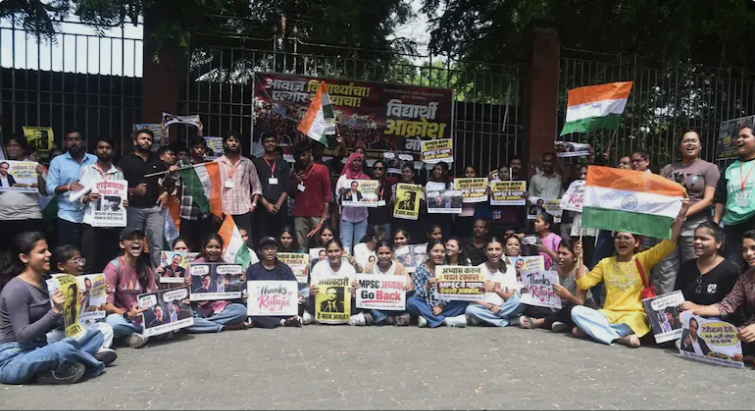
The report is particularly important for thousands of candidates who appear for Maharashtra Public Service Commission (MPSC) examinations and other government recruitment tests. For many aspirants, competitive examinations represent years of preparation, financial investment and the hope of securing a stable government job. Allegations of question paper leaks and irregularities can undermine that effort and raise serious questions about fairness.
The proposed measures seek to address these concerns by making examination-related offences more expensive and legally risky for those who organise or facilitate malpractice.
However, an important distinction must be understood: these are recommendations made by the committee, not punishments that have already become law. The Maharashtra government will have to consider the proposals and take the necessary legislative steps before the recommended changes can be enforced.
Exam Paper Leak: Why Maharashtra Is Considering Tougher Laws
The issue of examination irregularities has become a major concern among government job aspirants in Maharashtra. Candidates preparing for recruitment examinations expect the process to be transparent, secure and based on merit. When allegations of question paper leaks or unfair practices emerge, confidence in the entire selection system can be affected.
An Exam Paper Leak can create an unequal situation in which certain individuals may gain access to confidential examination material before the test, while genuine candidates are left competing without the same information.
Such incidents can also result in cancelled examinations, delayed recruitment, additional expenses and uncertainty for applicants. Candidates may have to repeat preparation, travel to examination centres again or wait for fresh recruitment schedules.
The Maharashtra government constituted a high-level committee on September 4, 2026, amid allegations of irregularities and malpractice in MPSC examinations and protests by aspirants. The committee is headed by senior IAS officer V. Radha.
The panel was asked to examine problems in the recruitment examination system and recommend measures to make the process more reliable. Its second report, submitted to the state government on November 23, 2026, focuses on stronger legal provisions and additional safeguards against examination fraud.
What Is the Committee Proposing?
The most prominent recommendation is to increase the punishment for individuals and organisations involved in organised examination crimes.
The committee has proposed:
-
Seven to ten years of imprisonment for those involved in organised examination fraud and paper leaks.
-
A minimum fine of ₹10 crore.
-
Attachment or confiscation of property connected with the offence.
-
Recovery of financial losses and examination-related expenses.
-
Special Task Force involvement in serious cases.
-
Special fast-track courts to handle examination-related offences.
The objective is to create a stronger deterrent against organised networks that may attempt to compromise recruitment examinations.
The proposed Exam Paper Leak provisions are not limited to the person who physically obtains or circulates a question paper. The broader reform proposals seek to address organised wrongdoing, including the role of institutions, service providers and people responsible for facilitating malpractice.
The committee has also recommended different penalties for candidates using unfair means and for agencies involved in examination-related misconduct. This distinction is important because examination fraud can involve several different kinds of offences, with different levels of responsibility.
The proposed changes are intended to make the law more comprehensive and improve accountability at different stages of the examination process.
Seven to Ten Years in Jail for Organised Examination Fraud
Under the committee’s proposal, people and organisations involved in organised examination crime could face imprisonment ranging from seven to ten years.
The recommendation is significant because organised examination fraud can involve multiple participants and coordinated activities. It may require access to confidential documents, communication networks, technology, intermediaries or the involvement of people connected with examination arrangements.
A question paper is supposed to remain confidential until the authorised examination process begins. If confidential material is circulated in advance, the fairness of the examination can be seriously compromised.
The proposed increase in the minimum imprisonment period is intended to discourage people from participating in such activities. It also sends a message that examination-related fraud should be treated as a serious offence rather than a minor administrative violation.
The Exam Paper Leak issue is particularly sensitive in recruitment examinations because the outcome can influence access to government employment. A compromised examination may affect candidates who have prepared honestly and followed every prescribed rule.
The proposed seven-to-ten-year punishment would apply to the category of organised examination crime described in the committee’s recommendations. It should not be confused with the separate proposed punishment for an individual candidate caught using unfair means during an examination.
Minimum Fine of ₹10 Crore: A Strong Financial Penalty
Another major part of the proposal is the minimum fine of ₹10 crore for those involved in organised examination crime.
The proposed amendments aim to make Exam Paper Leak offences more difficult to organise and financially risky for those involved. Strict action against an Exam Paper Leak network could help discourage organised examination fraud.
Financial penalties are intended to discourage organised networks from treating examination fraud as a profitable activity. If the financial consequences are substantial, people and institutions may think twice before becoming involved in illegal arrangements.
The committee has also recommended property attachment and wider recovery of losses. This would allow the proposed legal framework to address not only imprisonment and monetary penalties but also assets connected with the offence.
The Exam Paper Leak recommendations therefore focus on both criminal punishment and financial accountability.
The proposal is especially relevant where organised malpractice involves more than one person or an institution. In such situations, authorities may need to investigate financial transactions, ownership of assets, communication records and the role of different participants.
The committee has reportedly recommended clarifying the meaning of property so that the law can address different categories of assets, including land, buildings, movable property, intellectual property and digital or virtual assets.
This broader approach is intended to prevent offenders from avoiding the consequences of the law merely because assets are held in forms other than conventional physical property.
Separate Punishment Proposed for Candidates Using Unfair Means
The committee has also recommended stricter punishment for candidates who use unfair means during competitive examinations.
According to the reported recommendations, candidates found guilty of using unfair means could face imprisonment of five to ten years and a fine of up to ₹50 lakh.
This is a separate category from organised examination crime and paper leaks. It concerns misconduct by candidates during the examination process.
Unfair means can undermine the principle that every applicant should be assessed under the same conditions. A candidate who uses prohibited assistance or technology may gain an advantage over others who follow the rules.
The proposed increase in punishment is intended to protect the credibility of recruitment examinations and discourage cheating.
The Exam Paper Leak debate also highlights the need to distinguish between different offences. A candidate using an unauthorised device, a person distributing confidential question papers and an agency facilitating organised malpractice may have different roles and levels of responsibility.
The committee’s recommendations propose separate punishment structures to address these different situations.
Candidates should remember that these are proposed changes. The current legal provisions remain applicable unless and until the government completes the necessary legal process and the amendments come into force.
Service Provider Agencies Could Face a ₹5 Crore Fine
Examination authorities often depend on external service providers for various operational requirements. These may include examination-related technology, logistics, venue management and other support services.
If an agency involved in these arrangements participates in malpractice, the consequences can affect the credibility of the entire recruitment process.
The committee has proposed increasing the financial penalty for service-provider agencies involved in examination misconduct to as much as ₹5 crore. It has also recommended recovering examination-related expenses and increasing the period of disqualification or ban from four years to eight years.
This proposal is intended to make service providers more accountable for their responsibilities.
An agency entrusted with examination-related work is expected to follow strict confidentiality, security and operational standards. Any failure or deliberate involvement in malpractice can put candidates and the examination authority at risk.
The proposed eight-year ban would also have a longer-term impact on agencies found guilty under the relevant provisions, if the recommendations are adopted.
The Exam Paper Leak issue is therefore not limited to candidates or government officials. Private organisations and service providers involved in examination operations may also come under greater scrutiny.
Directors and Management Members May Face Criminal Action
The committee has also proposed stricter consequences for directors, management members and people in charge of service-provider firms involved in examination malpractice.
Under the reported recommendations, such individuals could face imprisonment of five to ten years and a fine of up to ₹5 crore.
This proposal focuses on individual accountability within organisations. A company or agency may be involved in examination-related work, but responsibility for its decisions and operations can also rest with people who manage or supervise it.
The purpose of the proposed provision is to ensure that responsibility does not remain limited to the organisation as a legal entity when individuals in positions of authority are found to have participated in wrongdoing.
For a secure examination system, the people managing service providers must ensure that confidential material, candidate information and examination procedures are protected.
If adopted, the proposed changes could increase the legal responsibility of management personnel in cases involving organised misconduct.
Special Task Force Proposed to Investigate Serious Cases
One of the important recommendations in the report is the creation of a dedicated Special Task Force (STF) to investigate serious examination-related offences.
A specialised team could help authorities handle cases that involve multiple locations, digital evidence, financial transactions or organised networks.
A question paper leak investigation may require more than ordinary local inquiry. Investigators may need to examine how confidential material was accessed, whether it was shared electronically, who received it and whether money or other benefits changed hands.
A dedicated STF could focus on these issues and coordinate investigation into serious cases.
The committee has also recommended stronger requirements regarding the rank of officers investigating examination-related offences. The reported proposal suggests that investigations in districts should be handled by officers of at least the rank of Additional Superintendent of Police, while cases in police commissionerate areas should be investigated by officers of at least Deputy Commissioner of Police rank.
These recommendations are intended to strengthen the quality and seriousness of investigations.
The Exam Paper Leak problem can involve complex evidence, and an effective investigation is essential to identify those responsible and establish the facts.
Special Fast-Track Courts for Examination Cases
The committee has also recommended establishing special fast-track courts to deal with examination-related offences.
Cases involving recruitment examinations can have consequences beyond the individuals directly accused. A prolonged investigation or trial may leave candidates uncertain about the validity of an examination and the future of a recruitment process.
Fast-track courts are proposed as a way to reduce delays in the judicial handling of such cases.
The report has also recommended transferring pending cases under the relevant law to special courts and disposing of them within three months.
The proposed timeline is an important part of the reform plan. However, actual disposal of cases would depend on the legal process, evidence, court functioning and other applicable requirements.
A speedy process should also preserve the rights of the accused and ensure that cases are decided on the basis of evidence and due procedure.
The Exam Paper Leak recommendations therefore seek to combine stronger punishment with a more focused system for investigating and deciding cases.
Examination Fees May Be Refunded to MPSC Candidates
The report is not limited to punishment and investigation. It also contains recommendations intended to reduce the financial burden on candidates.
The committee has proposed that MPSC consider refunding the full examination fee to candidates who actually appear for its examinations.
This recommendation could be important for candidates who spend money on application fees, travel, accommodation and preparation.
A candidate may invest considerable time and resources in preparing for a government recruitment examination. If the examination is cancelled or affected by serious irregularities, applicants may face additional financial and personal difficulties.
The committee’s recommendation regarding fee refunds is intended to provide some relief to candidates.
However, the wording of the recommendation is important. The panel has suggested that MPSC should consider the refund arrangement. This does not mean that refunds have already been approved or that candidates can currently claim money under a newly introduced policy.
Candidates should wait for an official announcement from MPSC or the state government before assuming that a refund process has started.
The Exam Paper Leak issue has made candidate protection an important part of the broader reform discussion.
Refund of Answer-Key Objection Fees
The committee has also recommended refunding the fee paid by a candidate to challenge a provisional answer key if the objection is found to be valid.
Answer keys are an important part of the examination process because they allow candidates to assess their responses and raise objections when they believe an answer is incorrect.
However, filing an objection may involve paying a prescribed fee. If the commission accepts the objection, the committee believes the candidate should receive a refund of that fee.
This proposal is intended to make the objection process fairer and reduce the financial burden on candidates whose concerns are found to be justified.
It may also encourage candidates to report genuine errors in answer keys rather than avoid doing so because of the additional cost.
The recommendation is part of a wider effort to improve transparency and accountability in recruitment examinations.
District Collectors May Get Greater Responsibility
The committee has also recommended giving district collectors an important role in the supervision and management of examination arrangements.
The conduct of a competitive examination involves several stages. These include identifying examination centres, checking infrastructure, arranging security, ensuring the availability of facilities and monitoring the process on the day of the test.
The involvement of district-level administration could help create a more coordinated system.
District collectors are positioned to coordinate with local authorities and institutions. Greater responsibility could help ensure that examination venues meet prescribed standards and that arrangements are monitored properly.
The Exam Paper Leak problem has also highlighted the importance of controlling access to examination centres and confidential material.
The committee’s proposals seek to strengthen administrative accountability so that examination arrangements are not left without clear supervision.
New Venue Bank Proposed for Examination Centres
Another important recommendation is the creation of a separate database or “Venue Bank” of examination centres.
The proposed Venue Bank would help authorities identify schools, colleges and other suitable locations that meet the required standards for conducting examinations.
A reliable database could include information about the infrastructure, seating capacity, facilities and suitability of each centre.
The availability of a verified list may help authorities select venues more systematically and reduce last-minute uncertainty.
It could also support inspections and monitoring before examinations are conducted.
The selection of examination centres is an important part of the recruitment process. A poorly managed centre can create difficulties for candidates and may raise questions about the security and fairness of the examination.
The Exam Paper Leak reforms therefore include measures that focus on prevention, not only punishment after an incident has taken place.
Technology and Cybersecurity to Receive Greater Attention
Competitive examinations increasingly depend on digital systems for registration, communication, examination management and other administrative functions.
Technology can improve efficiency, but it can also create new risks if security measures are not adequate.
Stronger digital security could help authorities identify vulnerabilities that may lead to an Exam Paper Leak. Preventing an Exam Paper Leak will require cooperation between examination authorities, technology providers and investigating agencies.
The committee has recommended preparing detailed guidelines for security checks and measures to prevent the misuse of technology during recruitment examinations. These guidelines are proposed to be prepared under the guidance of the Additional Chief Secretary (Home), in consultation with MahaCyber.
The panel has also recommended creating a technology and cybersecurity cell to study emerging methods that could be used for malpractice.
The technologies identified in reports include micro-communication devices, wearable cameras and artificial intelligence tools.
The purpose of such a cell would be to understand new risks and recommend ways to prevent their misuse.
The Exam Paper Leak challenge is changing as technology develops. Examination security therefore needs to be regularly reviewed rather than relying only on traditional checks.
MPSC May Need a Chief Information Security Officer
The committee has also recommended appointing a Chief Information Security Officer (CISO) for the Maharashtra Public Service Commission.
MPSC aspirants expect transparent examinations, and preventing an Exam Paper Leak is an important part of restoring their confidence. The proposed reforms seek to address Exam Paper Leak concerns while improving the overall recruitment process.
A CISO would have an important role in overseeing information-security practices and identifying weaknesses in digital systems.
The report also recommends a unified information-security policy for systems operated by MPSC and systems managed on its behalf by external agencies.
Such measures could help improve the protection of examination-related information and candidate data.
Recruitment systems may handle personal details, application documents, examination records and other sensitive information. A security failure could affect not only the confidentiality of examination material but also the privacy of applicants.
A consistent security policy could help establish clearer responsibilities for everyone involved in managing these systems.
Three-Tier Command and Control Centre System
The committee has also proposed a three-tier examination command and control centre system.
The suggested structure would operate at three levels:
-
MPSC headquarters level: To coordinate overall examination monitoring and administration.
-
District level: To supervise arrangements and coordinate local implementation.
-
Examination centre level: To monitor operations at the venue on the examination day.
Such a structure could help authorities identify problems more quickly and improve communication between different levels of administration.
The system may also support monitoring of examination arrangements and help ensure that instructions are followed consistently.
The Exam Paper Leak issue demonstrates why examination security needs to be addressed at every stage, from planning and venue selection to the actual conduct of the test.
One-Time Registration Through MahaID or Aadhaar
The committee has also suggested a one-time registration facility for candidates through MahaID or Aadhaar.
At present, candidates applying for different recruitment examinations may have to provide similar information and upload documents repeatedly.
A one-time registration facility could simplify the application process by allowing eligible candidates to register their details once and use the information for multiple applications, subject to the applicable rules.
This could reduce repetitive paperwork and make the application process more convenient.
However, any such system would need appropriate safeguards for personal information, identity verification and data security.
The proposal is intended to improve the overall candidate experience while making recruitment administration more efficient.
More Vacancies Proposed for MPSC Group-C Recruitment
The committee’s broader reform work has also included recommendations concerning recruitment opportunities.
Among the proposals reported is an increase in vacancies for the MPSC Group-C Combined Preliminary Examination 2026 to more than 16,000.
The panel has also recommended a one-time relaxation of one year in the upper age limit for recruitment examinations.
These proposals are relevant to aspirants who have been waiting for government recruitment opportunities and seeking clarity about vacancies and eligibility.
The recommendations should not be treated as confirmed recruitment notifications. Candidates must check official MPSC announcements for final vacancy numbers, eligibility conditions, examination schedules and any changes to age limits.
The Exam Paper Leak issue is connected to the larger question of trust in recruitment. Candidates need not only secure examinations but also clear information about vacancies, timelines and selection procedures.
Akashvani News+2
Why the Recommendations Matter to Government Job Aspirants
For many young people in Maharashtra, government recruitment examinations are a major career goal.
Candidates may spend years preparing for examinations while balancing employment, education and family responsibilities. Coaching, books, online courses, travel and application fees can add to the financial pressure.
When a recruitment examination is affected by allegations of malpractice, candidates may face uncertainty about whether their effort will lead to a fair result.
A serious Exam Paper Leak allegation can affect the credibility of the entire selection process. Even candidates who have prepared honestly may begin to question whether merit is being respected.
The committee’s recommendations attempt to address these concerns through a combination of stronger laws, improved supervision, better cybersecurity and candidate-focused measures.
If implemented effectively, these changes could help create a recruitment system in which candidates have greater confidence in the fairness of examinations.
However, the success of reforms will depend on how consistently they are implemented. Strong penalties alone may not prevent malpractice if monitoring, investigation and accountability remain weak.
What Happens Next? Government to Consider the Proposals
The second report has been submitted to the Maharashtra government, and the proposed amendments will need to be considered by the relevant authorities.
Chief Minister Devendra Fadnavis has indicated that the government will make efforts to take up the proposed changes during the upcoming Winter Session of the state legislature.
The recommendations may require amendments to the Maharashtra Competitive Examination (Prevention of Unfair Means) Act, 2024.
Until the legislative process is completed and the amendments come into force, the existing law will continue to apply.
This distinction is important for candidates, coaching institutions, examination agencies and the general public. The proposed punishments should not be described as already implemented.
The committee is also expected to submit further reports as part of its broader examination reform exercise.
What Candidates Should Do While Waiting for Official Changes
Candidates preparing for MPSC and other Maharashtra government recruitment examinations should continue relying on official notifications rather than social media messages or unverified claims.
They should regularly check examination schedules, application instructions, eligibility criteria and updates issued by the relevant recruitment authorities.
If candidates notice a genuine irregularity, they should preserve relevant evidence and use the official complaint or grievance channels available to them.
They should avoid sharing unverified allegations, personal details of other candidates or confidential examination material online.
Candidates should also be cautious of people claiming that they can arrange examination papers, guarantee selection or provide access to answer keys in exchange for money. Such claims may involve fraud and should be reported to the appropriate authorities.
The proposed Exam Paper Leak reforms may change the legal consequences of examination fraud if adopted, but candidates should continue following the existing rules and official instructions.
A Stronger Examination System Requires More Than Strict Punishment
The proposed penalties are among the most prominent parts of the committee’s report, but the broader reform plan covers several other areas.
A secure recruitment system requires proper examination-Centre selection, trained staff, clear responsibilities, technology safeguards, transparent answer-key procedures and timely investigation of complaints.
The creation of a Venue Bank could improve the selection of centres. A cybersecurity cell could help identify new methods of cheating. A Special Task Force could investigate serious offences, while fast-track courts could help reduce delays in legal proceedings.
Similarly, fee-refund proposals and simplified registration could improve the experience of candidates.
The Exam Paper Leak problem cannot be addressed through punishment alone. Prevention, monitoring, accountability and timely action are equally important.
The government will need to ensure that any amendments are supported by practical implementation measures and adequate resources.
Public Confidence Will Depend on Implementation
The recommendations have emerged at a time when examination transparency and recruitment fairness are important concerns for aspirants across Maharashtra.
A law may prescribe strict penalties, but candidates will ultimately judge the system by whether examinations are conducted securely, complaints are investigated fairly and recruitment processes are completed transparently.
If the proposed changes are accepted, authorities will need to communicate the new rules clearly to candidates, examination agencies and institutions.
They will also need to ensure that investigation mechanisms are properly staffed and that examination centers follow consistent security standards.
The proposed Exam Paper Leak reforms could become an important step towards strengthening the recruitment system, provided they move beyond the report stage and are implemented effectively.
POLICE VARTHA – Keeping Citizens Informed
At POLICE VARTHA, we are committed to bringing readers the latest updates on Maharashtra government decisions, competitive examinations, public safety, police activities and important developments affecting citizens. Issues such as examination fraud and recruitment irregularities deserve clear and responsible reporting because they directly affect students, job aspirants and families across the state. We aim to keep our readers informed about important policy proposals, official announcements and developments that matter to the public. Visit POLICE VARTHA for more breaking news, Maharashtra updates and reliable local coverage.
Conclusion: Will Maharashtra’s Proposed Reforms Restore Trust?
The Maharashtra examination reform committee has recommended a stricter legal framework to deal with organized examination fraud and question paper leaks. The proposed seven-to-ten-year imprisonment and minimum ₹10 crore fine for organized examination crime are among the most significant recommendations in its second report.
The proposed legal changes could strengthen Maharashtra’s response to Exam Paper Leak cases if implemented effectively. Public confidence in recruitment examinations will depend on how seriously authorities address every Exam Paper Leak complaint.
The proposals also cover property attachment, Special Task Force investigations, fast-track courts, stronger penalties for candidates and service providers, cybersecurity improvements and greater administrative supervision.
For candidates, the recommendations concerning examination fee refunds, answer-key objection fees, recruitment vacancies and age relaxation are also important.
However, the proposals are not yet equivalent to a change in the law. The state government must consider the recommendations and complete the necessary legislative process before any new punishment or arrangement becomes enforceable.
The real test will be whether the proposed reforms lead to secure examinations, fair investigations and transparent recruitment. Maharashtra’s government job aspirants are looking for a system in which hard work and merit determine the outcome.
The Exam Paper Leak issue has made that demand even more urgent. Stronger laws may act as a deterrent, but consistent implementation will be essential to rebuild confidence in the state’s competitive examination system.
Frequently Asked Questions
1. What punishment has the Maharashtra committee proposed for exam paper leaks?
The committee has recommended seven to ten years of imprisonment and a minimum fine of ₹10 crore for individuals and organizations involved in organized examination crime. Property attachment and recovery of losses have also been proposed.
2. Has the ₹10 crore fine become law in Maharashtra?
No. The ₹10 crore minimum fine is a recommendation made by the examination reform committee. The state government must consider the proposal and complete the required legislative process before it becomes enforceable.
3. Who is heading the Maharashtra examination reform committee?
The committee is headed by senior IAS officer V. Radha. It was constituted by the Maharashtra government on September 4, 2026.
4. What action has been proposed against candidates caught cheating?
The committee has recommended five to ten years of imprisonment and a fine of up to ₹50 lakh for individuals found using unfair means in competitive examinations.
5. Will MPSC candidates receive examination fee refunds?
The committee has recommended that MPSC consider refunding the full examination fee to candidates who actually appear for its examinations. It has also proposed refunding answer-key objection fees when objections are accepted. These proposals are not yet confirmed as implemented policies.
6. What is the proposed Special Task Force?
The proposed Special Task Force would investigate serious examination-related offences, including organised malpractice and question paper leaks.
7. When could the proposed amendments be introduced?
The state government has indicated that it will make efforts to take up the proposed amendments during the upcoming Winter Session of the Maharashtra Legislature. The final timing and approval will depend on the government’s legislative process.