
Bhiwandi Shawarma: 7 Alarming Food Safety Questions After Second Outbreak
A fresh suspected food poisoning incident near Vanjarpatti Naka has sent several people, including children and a pregnant woman, to hospital. The civic body has acted against the roadside stall as authorities investigate what caused the illness.


Bhiwandi Shawarma Food Poisoning: Shocking Second Outbreak Raises Food Safety Concerns
A fresh suspected food poisoning incident near Vanjarpatti Naka has sent several people, including children and a pregnant woman, to hospital. The civic body has acted against the roadside stall as authorities investigate what caused the illness.
Bhiwandi shawarma food poisoning case: Several people fall ill after eating chicken shawarma near Vanjarpatti Naka. Authorities investigate.
According to media reports, people who consumed food from the outlet began experiencing health complications, including vomiting, diarrhoea, nausea, abdominal discomfort and giddiness. Several affected individuals were taken to Indira Gandhi Memorial (IGM) Sub-District Hospital in Bhiwandi for medical attention.
The reported number of affected people varies across news reports. The Hindu reported at least 11 people falling ill, while The Times of India reported 13 hospitalised patients. Other local reports put the number at 17. The exact final count should be established through official medical and administrative records.
The incident is particularly concerning because Bhiwandi had witnessed another major suspected food poisoning episode earlier this year, when a large number of people reportedly became ill after consuming food from an eatery in the Khandu Pada area.
The latest Bhiwandi shawarma incident has therefore renewed public concern over whether food safety inspections and hygiene checks are being carried out regularly enough to prevent similar situations.
Second Bhiwandi Shawarma Incident Raises Concern
The latest incident is not being viewed as an isolated food safety concern. It has brought back memories of the earlier food poisoning episode reported in Bhiwandi in June 2026.
During that incident, dozens of people reportedly developed symptoms after consuming food from an eatery in the Khandu Pada area. Reports at the time mentioned shawarma, pizza and other food items among the products consumed by affected customers. The number of people who fell ill increased as more patients reached hospitals.
The earlier episode had already raised questions about the conditions under which food was being prepared and sold in the city. The latest Bhiwandi shawarma case has once again placed the spotlight on roadside food establishments and the responsibilities of the authorities overseeing them.
Residents may reasonably expect food businesses to follow basic hygiene requirements, especially when preparing products containing chicken and other perishable ingredients. A repeat incident involving a similar food item makes it important for officials to examine whether existing inspection systems are working effectively.
However, the fact that both incidents involved shawarma does not, by itself, establish that the same contamination source or preparation method was responsible. Each case requires its own investigation, laboratory findings and examination of the food involved.
Several People Reportedly Fall Ill After Eating Chicken Shawarma
According to reports, the affected customers had consumed chicken shawarma purchased from a roadside outlet near Vanjarpatti Naka. Some of them reportedly started experiencing symptoms after eating the food.
The complaints included vomiting, diarrhoea, nausea and abdominal discomfort. Reports also mentioned giddiness and other health complications. As the symptoms developed, affected individuals were taken to hospital for treatment.
The presence of children among the reported patients has added to the concern. One report also mentioned a pregnant woman among those affected.
Food-related illnesses can be particularly worrying when young children, pregnant women and elderly people are involved. Such individuals may require closer medical observation depending on the severity of their symptoms and their overall health.
At this stage, it is important to distinguish between a suspected food poisoning incident and a scientifically confirmed source of contamination. The fact that several people reportedly became unwell after consuming food from the same outlet is a serious reason for investigation, but laboratory testing is needed to establish what caused the illness.
The Bhiwandi shawarma case should therefore be followed through verified updates from the hospital, the municipal health department, the Food and Drug Administration and the investigating police team.
Patients Admitted to Indira Gandhi Memorial Hospital
The affected individuals were reportedly taken to Indira Gandhi Memorial Sub-District Hospital in Bhiwandi, where they received medical attention.
Reports quoting civic health officials stated that the patients were stable at the time of the update. Stool samples were also reportedly collected and sent for laboratory examination.
Medical treatment and laboratory testing are important parts of responding to a suspected food poisoning episode. Doctors first assess the patient’s symptoms, hydration levels and general condition. Depending on the situation, treatment may include fluids, observation and other medical care considered necessary by the treating team.
Laboratory examination can help investigators and health officials understand whether an infectious organism or another contaminant may have been involved. The results may also help authorities decide whether additional public health measures are required.
The reported hospitalisation of several people after eating food from one location makes timely medical monitoring particularly important. Anyone who may have consumed the same food and is experiencing similar symptoms should seek medical advice rather than waiting for the situation to worsen.
The Bhiwandi shawarma incident also highlights why hospitals, local health departments and food safety authorities need to coordinate quickly when multiple patients report similar symptoms.
What Action Did the Municipal Corporation Take?
Following the incident, the Bhiwandi-Nizampur City Municipal Corporation (BNCMC) reportedly took action against the roadside food stall near Vanjarpatti Naka.
News reports stated that the civic body dismantled the stall, with a demolition operation carried out using a JCB machine. Municipal officials and members of the health department reportedly visited the location, while police and Food and Drug Administration personnel were also involved in the response.
The reported civic action has drawn attention to the issue of food businesses operating without the necessary permissions or registrations. The Times of India reported that the stall was dismantled and that officials suspected it may not have had valid permissions to operate.
Action against an establishment following a suspected food poisoning incident may be necessary where officials identify violations. However, the investigation into the actual cause of illness must continue separately. Dismantling a stall does not automatically establish what caused the reported symptoms.
Authorities need to examine the food preparation area, ingredients, storage arrangements, water supply, equipment, cleanliness and relevant licences or registrations. They must also establish whether the outlet was complying with the applicable food safety requirements.
The latest Bhiwandi shawarma case should serve as a reminder that inspections must not be limited to the period immediately following a public health incident.
Police Investigation and Food Safety Checks
Police and food safety officials have reportedly been alerted following the incident. Reports also stated that Nizampura police initiated an investigation.
The investigation will be important in establishing the circumstances surrounding the sale and consumption of the food. Officials may need to examine statements from affected customers, the stall operator, employees and anyone involved in preparing or supplying the ingredients.
Food safety authorities may also examine the ingredients used at the outlet and the conditions in which they were stored. If samples are available, laboratory examination can help determine whether contamination was present.
The exact cause should not be assumed before the relevant findings are available. Possible explanations reported in connection with food safety investigations can include contaminated raw materials, improper storage, inadequate cooking, unsafe water or poor handling practices. These are possibilities that investigators may examine, not confirmed findings in this particular case.
The Bhiwandi shawarma investigation should establish whether any food safety rules were violated and whether those violations contributed to the reported illness.
If officials identify specific violations, appropriate legal and administrative action can be taken under the applicable laws. Any action should be based on evidence and the findings of the investigation.
Why Chicken Shawarma Requires Careful Food Handling
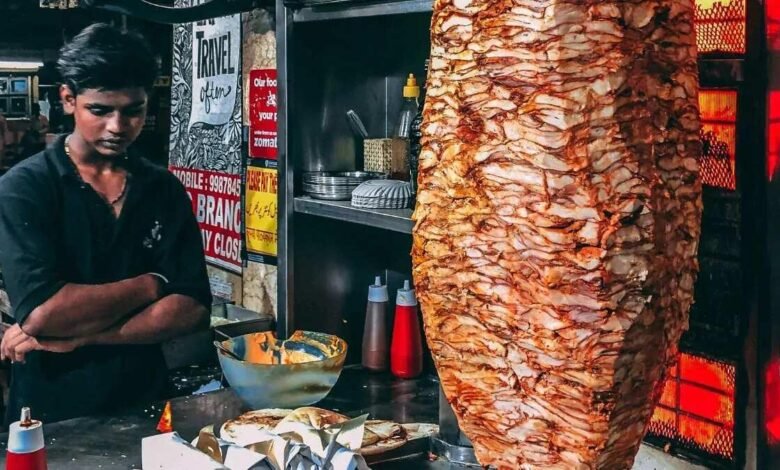
Shawarma is a popular food item sold at restaurants, takeaway counters and roadside stalls. Chicken shawarma typically involves marinated meat cooked on a rotating vertical spit, with portions served in wraps or rolls alongside vegetables, sauces and other ingredients.
The preparation process requires attention to temperature, cleanliness and the handling of raw and cooked food. Chicken is a perishable product and can become unsafe if it is stored, transported or handled incorrectly.
One important food safety requirement is maintaining the appropriate temperature during storage. Raw chicken should be kept under suitable refrigeration until it is prepared for cooking. Leaving perishable ingredients exposed to unsuitable temperatures for extended periods can increase the risk of bacterial growth.
Cooking is equally important. The meat must be cooked thoroughly, and food handlers should ensure that the cooked portions are not contaminated by contact with raw meat, dirty utensils or unclean surfaces.
The vegetables, sauces and other ingredients served with shawarma also need careful handling. Even if the meat is properly cooked, contamination can occur during assembly if the preparation area, knives, chopping boards or serving equipment are not clean.
The latest Bhiwandi shawarma incident is a reminder that food safety depends on the complete preparation process, not simply on how the final product looks or tastes.
Could Improper Storage Lead to Food Poisoning?
Food storage is one of the important areas that investigators may examine in a suspected food poisoning case.
Chicken and other perishable ingredients need suitable storage conditions. If raw meat is kept outside refrigeration for too long, or if cold storage equipment is not functioning properly, the risk of bacterial multiplication can increase.
Food businesses must also pay attention to the movement of ingredients from suppliers to storage areas and then to preparation counters. Maintaining a clean refrigerator is not enough if food is exposed to unsafe conditions during transportation or preparation.
Another important issue is the separation of raw and cooked products. Raw chicken, cooked meat, vegetables and ready-to-eat ingredients should not be handled in a way that allows cross-contamination.
Sauces and dressings also require attention. They should be prepared, stored and served using hygienic methods. Containers should be covered and cleaned regularly, and ingredients should not be used beyond their safe storage period.
These are general food safety principles. They should not be interpreted as a conclusion about the outlet involved in the Bhiwandi shawarma case. The actual cause can only be established through the investigation and relevant test results.
Symptoms That May Follow Contaminated Food
Foodborne illness can cause different symptoms depending on the contaminant involved and the health of the person affected.
Common symptoms may include:
- Nausea
- Vomiting
- Diarrhoea
- Stomach cramps
- Abdominal pain
- Fever
- Weakness
- Dizziness or giddiness
Symptoms may begin within hours of eating contaminated food, although the time can vary depending on the cause.
People experiencing repeated vomiting or diarrhoea may lose significant amounts of fluid. Dehydration can become a serious concern, particularly for young children, older adults and pregnant women.
Warning signs that require prompt medical attention can include persistent vomiting, blood in the stool, high fever, severe abdominal pain, reduced urination, extreme weakness, confusion or signs of dehydration.
Anyone experiencing concerning symptoms should consult a medical professional. People should not rely on social media posts or home remedies as a substitute for medical assessment.
The Bhiwandi shawarma incident demonstrates why people who develop symptoms after eating from a common food outlet should report the incident to health authorities and seek timely medical care.
Why Children and Pregnant Women Need Special Attention
Reports about the latest incident mentioned children and a pregnant woman among those affected. This makes the situation especially concerning from a public health perspective.
Children can become dehydrated more quickly than adults when they experience vomiting or diarrhoea. Parents and caregivers should pay attention to symptoms such as unusual sleepiness, reduced urination, dry mouth, persistent vomiting or difficulty keeping fluids down.
Pregnant women should also seek medical advice promptly if they develop symptoms of foodborne illness. The appropriate medical response depends on the symptoms, the stage of pregnancy and the individual’s health condition.
It is not appropriate to assume that every person who consumed the food will develop an illness. Equally, the absence of immediate symptoms does not necessarily prove that there is no risk.
People who believe they may have consumed the same suspected food should contact a healthcare professional if they become unwell. They can also inform local health officials so that investigators can identify whether additional cases are emerging.
Bhiwandi’s Earlier Food Poisoning Incident in June
The latest case has revived memories of a major food poisoning episode reported in Bhiwandi in June 2026.
During that incident, a large number of people reportedly became ill after consuming food from an outlet in the Khandu Pada area. News reports described customers developing symptoms such as vomiting, diarrhoea, abdominal pain, nausea and fever.
The number of affected people increased as more patients reached hospitals. Reports published during the incident gave varying figures as the situation developed. The eatery was subsequently sealed or demolished, according to different reports, and authorities announced inspections of food establishments.
That incident raised concerns about the condition of roadside food businesses and the need for effective enforcement of food safety rules.
The latest Bhiwandi shawarma episode has brought those concerns back into public discussion. Residents may now expect authorities to explain what steps were taken after the earlier incident and whether the inspection measures announced at that time are continuing.
A food safety drive should not be treated as a temporary response to negative headlines. Regular inspections, licence verification and public awareness are necessary throughout the year.
Are Food Safety Inspections Being Conducted Regularly?
One of the important questions raised by repeated suspected food poisoning incidents is whether food establishments are being inspected frequently and effectively.
A city can have a large number of restaurants, takeaway counters, street vendors and temporary food stalls. Monitoring such a wide network requires a planned system involving municipal officials and food safety authorities.
Inspections should examine more than the appearance of a food stall. Officials need to check whether ingredients are stored at safe temperatures, whether food handlers follow hygiene practices, whether drinking and preparation water is safe and whether the establishment has the required registrations.
The authorities should also verify whether the premises are suitable for food preparation. Waste disposal, pest control, drainage, equipment cleaning and the availability of handwashing facilities are relevant to food safety.
The Bhiwandi shawarma incident has once again highlighted the need for visible and consistent enforcement. If a business is found violating rules, officials should take appropriate action in accordance with the law.
It is also important that inspection findings are documented. Clear records can help authorities identify repeat violations and monitor whether businesses have corrected earlier problems.
The Importance of Food Business Registration and Licensing
Food businesses must comply with the registration and licensing requirements applicable to their operations.
In India, food safety regulation is governed by the Food Safety and Standards Act, 2006, and the rules and regulations made under it. The Food Safety and Standards Authority of India (FSSAI) and designated state and local authorities oversee different aspects of food safety.
The registration or licence required depends on the nature and scale of the food business. A small vendor and a large food establishment may fall under different categories, but both must follow the hygiene and safety requirements applicable to them.
A licence or registration should not be viewed as a formality. It is part of a system intended to identify food businesses and make them accountable for the products they sell.
Customers can also make informed choices by checking whether a food establishment displays the required registration or licence details. However, the presence of a licence alone cannot guarantee that every food item is safe. Actual hygiene and handling practices matter every day.
In the Bhiwandi shawarma case, authorities should clarify the compliance status of the outlet based on official records and the findings of their inspection.
What Should Customers Check Before Buying Shawarma?
Customers cannot conduct a laboratory test before purchasing food, but they can look for basic signs of hygiene and responsible handling.
Before buying shawarma or any other prepared food, customers may consider the following points:
- Clean preparation area: Check whether the counter and surrounding area appear reasonably clean.
- Food storage: Notice whether meat and other perishable ingredients are kept under suitable storage conditions.
- Separate handling: Raw and cooked food should not be handled with the same unclean utensils or surfaces.
- Personal hygiene: Food handlers should use clean clothing and follow appropriate hand hygiene.
- Fresh ingredients: Vegetables, sauces and other ingredients should be stored safely and protected from dust and insects.
- Proper cooking: Chicken should be cooked thoroughly before it is served.
- Licence information: Look for the applicable food business registration or licence details.
- Waste management: Food waste should not be allowed to accumulate around the preparation and serving area.
These checks cannot eliminate every possible risk, but they can help customers identify obvious hygiene concerns.
If a customer notices unsafe practices, they can avoid purchasing food from the outlet and report the concern to the relevant food safety authority.
Responsibility of Food Stall Owners and Restaurant Operators
Food safety is not only the responsibility of government authorities. Owners and operators of food businesses also have a duty to ensure that the products they sell are prepared and served safely.
A food stall owner should purchase ingredients from reliable suppliers and check their quality when they arrive. Chicken and other perishable products must be stored correctly, while expired or spoiled ingredients should never be used.
Food handlers should be trained in basic hygiene practices. They should wash their hands at appropriate times, use clean equipment and avoid handling food when they are unwell.
The cooking and serving process should be organised to prevent contamination. Separate utensils and surfaces should be used where necessary, and food preparation equipment should be cleaned regularly.
Business operators must also ensure that their establishments comply with the relevant registration, licensing and municipal requirements.
The popularity of shawarma or the demand for quick takeaway food cannot be used as an excuse for ignoring safety standards. A business that serves the public must place customer health above convenience and short-term profit.
Why Authorities Need a Long-Term Food Safety Plan
The latest incident should encourage the authorities to look beyond immediate action against one outlet.
A long-term food safety plan for Bhiwandi could include regular inspections of restaurants and roadside stalls, verification of food business registrations, awareness sessions for vendors and a clear system for responding to public complaints.
The municipal corporation and food safety officials can identify areas with a high concentration of food vendors and plan inspections accordingly. Temporary stalls and mobile food outlets should also be covered by the applicable rules.
Officials can maintain records of establishments that have previously received notices or faced enforcement action. This can help identify repeat violations and prioritise follow-up inspections.
Food handlers can be encouraged to attend basic training programmes on safe storage, cooking temperatures, personal hygiene and prevention of cross-contamination.
Authorities should also make it easier for residents to report suspected food safety violations. A clear complaint mechanism, followed by timely inspection and communication, can help prevent concerns from remaining unaddressed.
The Bhiwandi shawarma case should become an opportunity to improve the system rather than simply another incident followed by temporary enforcement.
The Role of Laboratory Testing in Establishing the Cause
Laboratory examination is a crucial part of a suspected food poisoning investigation.
When multiple people report similar symptoms after eating from the same outlet, health officials may collect clinical samples and food samples, where available, for testing.
The results can help determine whether a particular microorganism or contaminant was present. Investigators may also examine whether the symptoms and timing reported by patients are consistent with a common source.
It is important not to announce a specific bacteria, virus or chemical contaminant without evidence. Different contaminants can produce similar symptoms, and the time between consuming food and developing illness can vary.
In the latest Bhiwandi shawarma case, reports stated that stool samples were sent for laboratory examination. The findings should be awaited before drawing conclusions about the cause.
If the authorities identify contaminated ingredients or unsafe preparation practices, they can take further action based on the evidence. The results may also help prevent similar incidents at other establishments.
What Residents Want From the Authorities
Repeated reports of food-related illness naturally create concern among residents. People want to know whether the food they purchase from local restaurants and stalls is being prepared under safe conditions.
Following the latest incident, residents may expect clear answers to several questions:
- What was the exact number of people affected?
- What did the laboratory examination reveal?
- Was the outlet operating with the required permissions?
- Were food samples collected and tested?
- What violations, if any, were found during the inspection?
- Has the municipal corporation begun checking other food stalls?
- What steps will prevent similar incidents in the future?
These questions are relevant to public health and accountability. Authorities should provide verified updates as the investigation progresses.
At the same time, it is important that public discussion remains evidence-based. The investigation should not be used to make unsupported allegations against individual businesses or the wider food industry.
Most food businesses operate responsibly, and the actions of one establishment should not automatically be attributed to every vendor selling the same product.
A Warning for the Street Food Industry
Street food plays an important role in everyday life in cities such as Bhiwandi. It provides affordable meals, supports small businesses and offers customers a wide range of choices.
However, affordability and convenience must go hand in hand with safety. A low-cost meal should never expose customers to avoidable health risks.
The latest Bhiwandi shawarma episode is a warning to food vendors that hygiene cannot be compromised. Customers may be attracted by taste, price and convenience, but they also expect food to be prepared using safe ingredients and clean equipment.
Vendors should understand that maintaining hygiene is not merely about avoiding penalties. It is essential for building customer trust and protecting the reputation of their business.
For local authorities, the challenge is to support legitimate small businesses while ensuring that food safety rules are followed. Enforcement should be fair, consistent and based on documented violations.
What Happens Next in the Bhiwandi Shawarma Case?
The next important development will be the findings of the ongoing investigation and laboratory examination.
Authorities will need to establish the exact number of affected people, assess the condition of the patients and determine whether the food consumed at the outlet was contaminated.
The civic body’s reported action against the stall is one part of the response. Further administrative or legal steps will depend on the findings and the applicable rules.
The investigation should also establish whether the outlet had the necessary permissions and whether any food safety violations were identified.
Residents should follow official updates rather than rely on unverified claims circulating on social media. Any revised patient count, laboratory finding or enforcement action should be reported with clear attribution to the relevant authority.
The second reported Bhiwandi shawarma incident has made food safety a matter of renewed public concern. The response from the authorities will be important not only for this investigation but also for public confidence in the city’s food inspection system.
POLICE VARTHA: Food Safety Must Remain a Priority
At POLICE VARTHA, we believe that public safety includes more than law enforcement and crime prevention. Safe food, clean surroundings and responsible civic administration are also important parts of a healthy community.
The latest Bhiwandi shawarma incident highlights the need for regular food safety inspections, responsible business practices and timely action whenever public health concerns are reported.
Citizens deserve clear information about the investigation, the condition of affected patients and the measures being taken to prevent another incident. We will continue to follow important developments and bring readers updates on public safety, civic administration, health concerns and local news.
For more updates from Bhiwandi, Mumbai and across Maharashtra, visit POLICE VARTHA.
Frequently Asked Questions (FAQs)
1. What happened in the latest Bhiwandi shawarma incident?
Several people reportedly fell ill after consuming chicken shawarma purchased from a roadside food stall near Vanjarpatti Naka in Bhiwandi. The incident was reported on November 24, 2026.
2. How many people were affected?
News reports gave different figures. The Hindu reported at least 11 people, The Times of India reported 13 hospitalised patients, while other local reports mentioned 17. The final confirmed count should be checked against official records.
3. Where were the affected people taken for treatment?
Reports stated that affected individuals were admitted to Indira Gandhi Memorial Sub-District Hospital in Bhiwandi for medical treatment.
4. What symptoms did the patients reportedly experience?
Reported symptoms included vomiting, diarrhoea, nausea, abdominal discomfort and giddiness. Anyone experiencing serious or persistent symptoms should seek medical attention.
5. Did the municipal corporation take action against the food stall?
Yes. News reports stated that the Bhiwandi-Nizampur City Municipal Corporation dismantled the roadside stall near Vanjarpatti Naka following the incident.
6. Has the exact cause of the suspected food poisoning been confirmed?
The exact cause should not be treated as confirmed until the relevant laboratory findings and investigation results are available. Reports stated that stool samples were sent for examination.
7. Is this the first food poisoning incident linked to shawarma in Bhiwandi?
No. Bhiwandi witnessed another major suspected food poisoning incident in June 2026, when many people reportedly fell ill after consuming food from an eatery in the Khandu Pada area.
8. What should people do if they develop symptoms after eating shawarma?
People experiencing vomiting, diarrhoea, severe stomach pain, fever, dizziness or signs of dehydration should seek medical advice promptly. They can also inform local health authorities if they suspect a common food source.
9. Which authorities are involved in the latest case?
Reports mentioned the Bhiwandi-Nizampur City Municipal Corporation, health officials, Food and Drug Administration personnel and Nizampura police in connection with the response and investigation.
10. Why has the latest incident raised wider food safety concerns?
The incident has renewed questions about hygiene, food storage, licensing and regular inspections of roadside food businesses, particularly because Bhiwandi experienced an earlier suspected food poisoning episode this year.
Disclaimer: This article is based on media reports available as of November 25, 2026. The reported number of affected people differs across publications, and the exact cause of the suspected food poisoning should be established through official investigation and laboratory findings. Any allegations or possible violations should be treated as unconfirmed unless established by the competent authorities.