


Constitution Under Threat? 5 Explosive Warnings by Prakash Ambedkar
Vanchit Bahujan Aghadi leader Prakash Ambedkar has expressed concern over what he described as growing threats to constitutional ideals, accusing the RSS and BJP of prioritising political power over the principles of the Constitution.

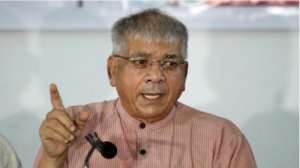
Prakash Ambedkar’s Strong Warning: India Could Face a ‘Blood Revolution’ If the Constitution Is Not Protected
Vanchit Bahujan Aghadi leader Prakash Ambedkar has expressed concern over what he described as growing threats to constitutional ideals, accusing the RSS and BJP of prioritising political power over the principles of the Constitution.
MUMBAI: A strong political warning about the future of India’s democracy and constitutional values has come from Vanchit Bahujan Aghadi (VBA) leader Prakash Ambedkar. He has warned that the country could face a “blood revolution” if the Constitution is not protected and its fundamental ideals are allowed to weaken. His remarks have once again brought the debate over constitutional values, democratic institutions, political power and social equality into the national political discussion.
Prakash Ambedkar described the situation as unfortunate, expressing concern that the ideals on which the Constitution was built were under threat. In his criticism, he accused the Rashtriya Swayamsevak Sangh (RSS) and the Bharatiya Janata Party (BJP) of doing everything possible to remain in power.
The remarks are significant because the Constitution is not merely a legal document that establishes how the country is governed. It is also the foundation of India’s democratic system, defining the relationship between citizens and the state and establishing principles such as justice, liberty, equality and fraternity.
The phrase “blood revolution” is particularly strong and has attracted attention because it reflects the seriousness of the warning being made. It should be understood as a political statement expressing concern about the consequences of weakening constitutional safeguards, rather than as confirmation that any violent event is planned or inevitable.
His comments also raise a wider question: how can a democracy protect its constitutional principles when political disagreements become increasingly intense? The debate is not limited to one political party or one leader. It concerns the role of democratic institutions, the rights of citizens and the responsibility of those who hold public office.
Prakash Ambedkar Warns About the Future of the Constitution
Prakash Ambedkar’s central concern, as reflected in his remarks, is the protection of the Constitution and the values associated with it. He argued that the country could face serious consequences if these principles were not safeguarded.
Calling the situation unfortunate, he expressed concern that the ideals of the Constitution were under threat. His criticism was directed towards the political approach of the RSS and the BJP, which he accused of doing everything to retain power.
The Constitution establishes the framework through which governments are elected, laws are made, institutions function and citizens exercise their rights. Its importance goes beyond the political fortunes of any particular party.
A government may change after an election, and political parties may disagree over policies and priorities. However, the basic constitutional framework is intended to provide continuity, protect citizens and ensure that political authority remains subject to established rules.
The warning by Prakash Ambedkar therefore places the spotlight on an important democratic question: should political power be treated as the ultimate objective, or should the protection of constitutional principles remain the central responsibility of every political organisation?
His statement reflects a political criticism of the present situation. The allegations concerning the RSS and BJP represent his stated position and should be understood as such. The organisations and political leaders concerned must be given the opportunity to respond to specific allegations.
Why the ‘Blood Revolution’ Remark Has Drawn Attention
The expression “blood revolution” is an unusually strong phrase in a discussion about constitutional protection. It immediately draws attention to the possible consequences of serious political and social conflict.
In the context of Prakash Ambedkar’s remarks, the phrase appears to communicate a warning that people may become deeply frustrated if they believe their democratic rights, constitutional protections and social equality are being weakened.
However, the statement should not be interpreted as an endorsement of violence. A responsible reading of the remark must distinguish between a political warning about possible instability and a call for violent action. The headline phrase is important, but it should not be separated from the wider discussion about protecting democratic values.
The Constitution provides legal and democratic mechanisms through which citizens can express disagreement, challenge decisions and demand accountability. Elections, public debate, peaceful demonstrations, legal proceedings and legislative processes are among the recognised ways through which disagreements can be addressed.
A strong democracy must provide space for criticism, including criticism of the government and powerful political organisations. At the same time, political disagreements should remain within democratic and constitutional boundaries.
The warning by Prakash Ambedkar has therefore brought attention to the importance of protecting the Constitution before political and social disagreements become more serious.
Prakash Ambedkar’s Criticism of the RSS and BJP
One of the most politically significant parts of the statement is Prakash Ambedkar’s criticism of the RSS and the BJP.
He accused them of doing everything to remain in power and argued that the ideals of the Constitution were under threat. These comments reflect his political assessment of the direction in which the country is moving.
The RSS is a major ideological organisation in India, while the BJP is a political party that has governed at the Centre and in several states. Their roles in Indian public life are different, although the relationship between the two is frequently discussed in political debates.
Criticism of the BJP and RSS has been a recurring part of opposition politics, particularly on questions concerning secularism, social equality, minority rights, federalism and the interpretation of constitutional principles.
Supporters of the BJP may reject such criticism and argue that their policies and political programmes are consistent with India’s democratic framework. Opposition leaders, meanwhile, have raised questions about the impact of certain government decisions on constitutional values.
These disagreements are part of the wider political debate in the country. They should be examined through specific policies, official decisions, parliamentary proceedings and judicial findings rather than through political slogans alone.
Prakash Ambedkar’s statement adds another voice to this debate by placing constitutional protection at the centre of his criticism.
What Does the Indian Constitution Actually Protect?
To understand the importance of the warning, it is necessary to look at the role of the Constitution in everyday life.
The Constitution of India came into force on January 26, 1950, after being adopted by the Constituent Assembly on November 26, 1949. It established India as a sovereign democratic republic and created the institutional framework through which the country is governed.
The Constitution defines the powers and responsibilities of the legislature, executive and judiciary. It also provides citizens with fundamental rights and establishes guiding principles for governance.
Its Preamble identifies important ideals, including:
- Justice: Social, economic and political justice for citizens.
- Liberty: Freedom of thought, expression, belief, faith and worship.
- Equality: Equal status and opportunity.
- Fraternity: A sense of brotherhood that protects individual dignity and national unity.
These principles are interconnected. Equality becomes difficult to achieve without liberty, while liberty cannot be fully meaningful when sections of society are denied equal opportunities.
The Constitution also establishes safeguards against arbitrary exercise of state power. Citizens can approach courts when they believe their legally protected rights have been violated, subject to the relevant constitutional and legal provisions.
This is why debates about the Constitution are important. They concern not only political institutions but also the everyday rights, freedoms and opportunities available to people.
Why Constitutional Values Matter in a Democracy
A democracy cannot be measured only by the number of elections it conducts. Elections are essential, but democratic governance also requires respect for institutions, the rule of law, civil liberties and accountability.
The Constitution provides the framework that allows these principles to function together.
For example, an elected government receives authority through the democratic process. However, that authority is not unlimited. The government must operate within the Constitution and the laws of the country.
The legislature makes laws, the executive implements them and the judiciary interprets the law and performs its constitutional role. These institutions have distinct responsibilities, and their functioning is essential to maintaining a system of checks and balances.
The protection of the Constitution also means protecting the right of citizens to question public authorities. Criticism of government policy is a normal part of democracy and should not automatically be treated as opposition to the nation.
Similarly, political parties must be able to compete, campaign and present alternative policies within the democratic framework.
The warning by Prakash Ambedkar raises the question of whether political competition is strengthening or weakening public confidence in these institutions. This is a matter that deserves careful public discussion.
Dr B.R. Ambedkar’s Vision of the Constitution
The discussion about constitutional protection is closely connected to the legacy of Dr B.R. Ambedkar, the chairman of the Constitution’s Drafting Committee and one of the most influential figures in the making of modern India.
Dr Ambedkar believed that political democracy could not survive without social democracy. His understanding of democracy went beyond elections and formal political rights. He emphasised liberty, equality and fraternity as essential principles of a democratic society.
His speeches in the Constituent Assembly continue to be discussed because they addressed the challenges that India would face after becoming a republic.
On November 25, 1949, while addressing the Constituent Assembly, Dr Ambedkar warned that democracy required commitment to constitutional methods. He argued that political and social objectives should be pursued through the available constitutional framework.
He also cautioned against excessive political hero-worship and highlighted the importance of social democracy.
His ideas remain relevant to debates about the relationship between political authority, democratic institutions and citizens’ rights.
The name Ambedkar carries particular importance in discussions about social justice and constitutional equality. Prakash Ambedkar’s remarks therefore connect a contemporary political debate with a larger conversation about the principles associated with Dr Ambedkar’s constitutional vision.
However, the views of Dr B.R. Ambedkar and the political statements of present-day leaders should not automatically be treated as identical. Historical speeches must be understood in their original context, while contemporary political remarks should be assessed on their own terms.
Liberty, Equality and Fraternity: The Foundation of Democracy
The Constitution’s commitment to liberty, equality and fraternity is central to the debate raised by Prakash Ambedkar.
Liberty protects the freedom of individuals to think, speak, believe and express themselves within the limits established by law. Without liberty, citizens may find it difficult to question decisions or participate meaningfully in public life.
Equality establishes the principle that individuals should receive equal treatment under the law and that discrimination should not determine a person’s opportunities. It is particularly important in a country with a long history of social and economic inequalities.
Fraternity encourages a sense of shared citizenship and mutual respect. It recognises that people with different languages, religions, cultures and social backgrounds belong to one constitutional community.
These values cannot function independently. A society that protects liberty but ignores equality may allow powerful groups to dominate others. A society that speaks about equality but does not protect freedom may restrict individual choices. Without fraternity, social divisions can weaken national unity.
The Constitution provides a common framework through which these principles can be pursued.
The concerns expressed by Prakash Ambedkar bring attention to the question of whether these values are being adequately protected in political and public life.
The Debate Over Secularism and Social Equality
Secularism and social equality are among the important subjects in India’s constitutional and political discussions.
India is home to people belonging to different religious communities, languages, cultures and traditions. The Constitution establishes a framework of equal citizenship and protects freedom of conscience and religion, subject to its provisions.
The principle of equality before the law is also central to the country’s democratic structure. Citizens should not be denied constitutional protection because of their background or identity.
Political debates about secularism often become intense because different parties and organisations have different interpretations of how these principles should be implemented.
Opposition leaders have at times accused the government and its ideological supporters of weakening secular values. The BJP and its supporters have disputed many such criticisms and presented their own interpretation of national identity, governance and constitutional commitments.
These competing political positions should be examined through evidence and specific decisions.
The broader question remains important: how can a diverse country ensure that every citizen feels equally protected by the Constitution?
The concerns raised by Prakash Ambedkar place this question back in the spotlight.
The Role of Democratic Institutions in Protecting the Constitution
The protection of the Constitution is not the responsibility of one political party, one leader or one institution alone.
Parliament plays an important role in debating and passing laws. State legislatures make decisions within their constitutional responsibilities. The executive is responsible for implementing laws and policies, while the judiciary performs its constitutional function of interpreting laws and resolving disputes.
Independent institutions, constitutional authorities, the media and civil society also contribute to public accountability in different ways.
These institutions must be able to perform their responsibilities according to law. Their credibility depends on transparency, fairness, independence within their constitutional mandates and public confidence.
Citizens also have an important role. They can participate in elections, follow public affairs, ask questions, raise concerns and use legal remedies when necessary.
A strong Constitution does not protect itself automatically. Its effectiveness depends on the people and institutions responsible for respecting and implementing it.
That is why political statements about constitutional threats should encourage public examination of institutional performance rather than simply deepen political divisions.
Why Political Accountability Is Important
Political power in a democracy comes with responsibility.
Governments are expected to explain their decisions, answer questions from elected representatives and remain accountable to citizens. Opposition parties have the responsibility to scrutinise government actions and present alternative policies.
The public also has the right to examine whether promises made during elections are being fulfilled.
Accountability becomes particularly important when decisions affect fundamental rights, public institutions, social welfare, education, employment, freedom of expression or the rights of vulnerable communities.
The Constitution establishes the framework within which such accountability can operate.
Prakash Ambedkar’s criticism of the RSS and BJP is part of this political process. His accusation that they are doing everything to remain in power should be reported as his allegation, not as an independently established fact.
At the same time, political organisations in a democracy should be prepared to respond to criticism with facts, explanations and public debate.
The purpose of political accountability should be to strengthen democratic governance and ensure that public authority is exercised responsibly.
The Importance of the Opposition in a Parliamentary Democracy
An effective opposition is an important part of a parliamentary democracy.
The role of opposition parties is not limited to criticising the government. They are expected to examine legislation, question administrative decisions, highlight public concerns and offer alternative approaches to national and state issues.
Opposition leaders can bring attention to subjects that may otherwise receive limited public discussion.
However, opposition politics also carries responsibilities. Claims should be supported by evidence, public statements should be accurately represented and criticism should remain within democratic boundaries.
Similarly, a ruling party must recognise that criticism is a legitimate part of public life. A disagreement with the government should not automatically be treated as hostility towards the country.
The Constitution protects the democratic framework within which both the ruling side and the opposition operate.
The statement by Prakash Ambedkar is another example of how constitutional questions remain part of political competition and public debate.
What Does Constitution Day Mean for India?
November 26 is observed as Constitution Day, also known as Samvidhan Divas, to commemorate the adoption of the Constitution by the Constituent Assembly on November 26, 1949.
The Constitution came into effect on January 26, 1950. The two dates therefore have different historical significance: November 26 marks its adoption, while January 26 marks the beginning of its operation.
Constitution Day provides an opportunity to remember the work of the Constituent Assembly and reflect on the principles that guide India’s democratic system.
It is also a time to discuss the responsibilities of citizens, public representatives and government institutions.
The day is particularly important for students and young people, who may be learning about fundamental rights, duties, constitutional institutions and the history of India’s democratic development.
The debate raised by Prakash Ambedkar is relevant to this broader reflection because it focuses on whether the principles of the Constitution are being protected in practice.
Observing Constitution Day should involve more than formal ceremonies. It should encourage citizens to understand the document, know their rights and recognise the importance of democratic responsibilities.
Why Young Citizens Must Understand the Constitution
Young citizens will shape the country’s future through their participation in education, employment, public service, business, politics and social life.
Understanding the Constitution can help them become more informed participants in democracy.
Students should know that the Constitution establishes fundamental rights and defines the structure of public institutions. They should also understand that rights operate within a legal framework and that citizens have responsibilities towards society and the country.
Knowledge of the Constitution can help young people evaluate political claims, understand public policy and distinguish between verified information and misinformation.
It can also encourage respectful discussion between people who hold different political views.
The importance of constitutional education becomes greater when political debates become polarised. People who understand the democratic framework are better placed to examine claims and participate in discussions without relying only on slogans.
The warning by Prakash Ambedkar may therefore be viewed as an opportunity to encourage a wider conversation about constitutional awareness among young people.
Can Political Disagreements Be Resolved Through Constitutional Methods?
Political disagreement is normal in a democracy. Different parties may have different views about economic policy, education, employment, social welfare, national security and the role of government.
The Constitution provides a framework through which these disagreements can be addressed.
Citizens can vote for candidates and parties that represent their views. Elected representatives can raise concerns in legislatures. Courts can examine legal disputes within their jurisdiction. Peaceful public demonstrations and lawful forms of expression allow citizens to communicate their demands.
The existence of these mechanisms is an important feature of constitutional democracy.
Dr B.R. Ambedkar also emphasised the importance of constitutional methods in his Constituent Assembly address of November 25, 1949. His remarks are frequently discussed in connection with the responsibilities of citizens and political organisations in a democratic system.
In the present political environment, it is important that strong warnings about constitutional threats lead to democratic participation, lawful public debate and institutional accountability.
The phrase “blood revolution” may attract attention, but the protection of democratic values requires peaceful and constitutional engagement.
Why the Public Needs Facts, Not Just Political Slogans
Political statements often use strong language to communicate urgency and mobilise public opinion. Such language can become a major part of political debate, especially when it concerns the future of democratic institutions.
However, citizens need facts to understand the issues behind these statements.
When a leader claims that constitutional values are under threat, the public should be able to examine the specific decisions, policies or developments being criticised.
Similarly, when political organisations reject allegations, their responses should be considered alongside the available evidence.
Responsible public discussion requires accurate reporting, access to official information and a willingness to examine different viewpoints.
The statement by Prakash Ambedkar should therefore be understood in its political context. His criticism of the RSS and BJP is significant as an expression of his position, but individual allegations must be assessed separately.
A healthy democracy benefits when political claims are examined carefully rather than accepted or rejected without discussion.
What Lies Ahead for the Constitutional Debate?
The debate over the Constitution is likely to remain an important part of Indian politics because it touches on the basic principles of governance and citizenship.
Questions about the independence and functioning of institutions, freedom of expression, equality, social justice, federalism and the rights of citizens will continue to attract political and public attention.
The ruling party, opposition parties, state governments, constitutional authorities and citizens all have roles in ensuring that the democratic framework functions effectively.
The Constitution can be amended through the procedures it establishes, but the process must follow the applicable constitutional requirements. Its basic structure has also been recognised by the Supreme Court as a limit on Parliament’s amending power.
This means constitutional change and constitutional protection are both subjects governed by legal principles and institutional processes.
The warning issued by Prakash Ambedkar adds urgency to the political conversation. Whether people agree with his assessment or not, the wider questions about democratic accountability and constitutional values deserve serious examination.
POLICE VARTHA: Protecting Constitutional Values Is a Democratic Responsibility
At POLICE VARTHA, we believe that public awareness and responsible journalism are essential to a healthy democracy. Political statements, constitutional debates and decisions affecting citizens deserve accurate reporting and informed public discussion.
The Constitution provides the foundation for India’s democratic institutions and protects important principles such as justice, liberty, equality and fraternity. Its significance goes beyond political disagreements and remains relevant to every citizen.
Prakash Ambedkar’s warning about a possible “blood revolution” has brought renewed attention to the importance of constitutional protection. His allegations against the RSS and BJP should be understood as his political position, while the wider debate should be examined through facts, public records and democratic discussion.
POLICE VARTHA will continue to bring readers important updates on political developments, public safety, governance and issues affecting citizens across Maharashtra and India.
For more breaking news and updates, visit POLICE VARTHA.
Frequently Asked Questions (FAQs)
1. What did Prakash Ambedkar say about the Constitution?
Prakash Ambedkar warned that the country could face a “blood revolution” if the Constitution was not protected. He expressed concern that constitutional ideals were under threat.
2. Why did Prakash Ambedkar mention a possible blood revolution?
He used the phrase as a strong political warning about the possible consequences of weakening constitutional principles. It should not be presented as a confirmed prediction or an endorsement of violence.
3. Which organisations did Prakash Ambedkar criticise?
He criticised the Rashtriya Swayamsevak Sangh (RSS) and the Bharatiya Janata Party (BJP), accusing them of doing everything to remain in power.
4. What is the main concern raised in his statement?
The central concern is the protection of constitutional ideals and the future of democratic values, including justice, liberty, equality and fraternity.
5. Who is Prakash Ambedkar?
Prakash Ambedkar is a political leader associated with the Vanchit Bahujan Aghadi (VBA). He is also the grandson of Dr B.R. Ambedkar.
6. When was the Constitution of India adopted?
The Constituent Assembly adopted the Constitution on November 26, 1949. It came into effect on January 26, 1950.
7. Why is November 26 important?
November 26 is observed as Constitution Day, also known as Samvidhan Divas, to mark the adoption of the Indian Constitution by the Constituent Assembly.
8. What are the main values highlighted in the Preamble?
The Preamble highlights justice, liberty, equality and fraternity as key ideals of the Indian constitutional framework.
9. What role did Dr B.R. Ambedkar play in making the Constitution?
Dr B.R. Ambedkar chaired the Drafting Committee of the Constituent Assembly and played a central role in preparing the draft Constitution.
10. Why is protecting the Constitution important?
The Constitution establishes the country’s democratic framework, defines government powers, protects fundamental rights and provides the legal foundation for accountability and equality.
Disclaimer: This article reports the political remarks and allegations attributed to Prakash Ambedkar in the supplied news summary. The criticism of the RSS and BJP represents his stated political position and is not presented as an independently established finding. The phrase “blood revolution” is reported as a warning and should not be interpreted as a confirmed prediction or an endorsement of violence.