

Pune Court Attack: 7 Shocking Details About the Brutal Assault Outside Shivajinagar Court
A violent assault outside Pune's busy Shivajinagar District and Sessions Court has raised serious questions about security around judicial premises.

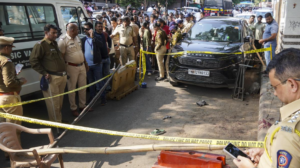
Shocking Pune Court Attack: Murder Accused’s Hand Severed Outside Shivajinagar Court, Police Detain Suspects
A violent assault outside Pune’s busy Shivajinagar District and Sessions Court has raised serious questions about security around judicial premises. A man facing trial in a 2025 murder case was critically injured after armed assailants allegedly chased and attacked him with sharp weapons. Police are investigating a possible revenge motive linked to the earlier murder.
Pune Court Attack: Violent Assault Outside Shivajinagar Court
A shocking incident outside the Shivajinagar District and Sessions Court in Pune has raised concerns about public safety and security around judicial premises. A man facing charges in a murder case was brutally attacked by a group of armed assailants on November 25, 2026. The assault reportedly took place in broad daylight, close to Gate No. 4 of the court complex, leaving the victim with critical injuries, including the reported severing of a hand near the wrist.
The incident has drawn attention because it occurred outside an important court complex where lawyers, litigants, witnesses, court staff and members of the public visit every day. The alleged attackers reportedly arrived on two-wheelers, chased the victim and assaulted him with sharp weapons. Firearms were also reportedly involved, and police recovered weapons and other material from the scene.
The victim was identified in published reports as Mandar Maruti Kiwale, who was facing trial in connection with the 2025 murder of Shubham Subhash Chavan in Pune’s Katraj area. Kiwale had reportedly been released from prison shortly before the incident and had visited the court for proceedings in the murder case.
The Pune court attack has prompted a police investigation into the identity of the attackers, the planning behind the assault and the possible connection with the earlier murder case. Investigators are examining whether the violence was motivated by revenge or an existing dispute between the families and individuals connected to the earlier case.
The incident has also triggered renewed questions about security arrangements outside court buildings. The presence of weapons, the alleged chase and the severity of the injuries have raised concerns about how such an attack could occur in an area regularly visited by members of the public.
When and Where Did the Pune Court Attack Take Place?
According to published reports, the incident occurred at approximately 1 p.m. on Wednesday, November 25, 2026, outside the Shivajinagar District and Sessions Court in Pune.
The attack was reported near Gate No. 4, opposite the Family Court. This is a busy area where lawyers, litigants and other visitors regularly move in and out of the court premises.
The victim was reportedly returning after attending proceedings connected with the murder case in which he was an accused. As he left the court premises, a group of men allegedly approached him and launched an attack.
Initial reports described a group of approximately six attackers, while later reports gave varying accounts of the number of people involved. The assailants were reportedly travelling on two-wheelers and allegedly chased the victim before attacking him with sharp-edged weapons.
The Pune court attack caused panic among people in the surrounding area. The incident took place in a public location, and the presence of armed attackers reportedly created fear among people who were nearby.
The attackers escaped after the assault, prompting police teams to reach the location and begin an investigation. Officers secured the area and collected material that could help establish the sequence of events.
The exact movements of the attackers, the route used to approach the victim and the escape route are important parts of the ongoing investigation.
Who Is the Victim, Mandar Kiwale?
The injured man was identified as Mandar Maruti Kiwale, who was facing charges in connection with the murder of Shubham Subhash Chavan in April 2025.
Kiwale had been arrested in connection with that earlier murder case and had remained in custody before reportedly receiving bail from the Bombay High Court shortly before the court attack.
According to reports, he had been released from Yerawada Central Prison only a few days before the assault. He had visited the Shivajinagar court for proceedings connected with the pending murder case.
The Pune court attack therefore involved a person who was already part of an ongoing criminal trial. However, the fact that Kiwale was facing a murder charge does not mean he had been convicted in that case. His legal status must be distinguished from the allegations being investigated in the new assault.
The police are examining whether the attack was directly connected to the earlier murder or whether another dispute may have contributed to the violence.
The victim sustained severe injuries to his hands, head and other parts of his body. Reports stated that one hand was severed near the wrist, while the other also suffered serious injuries. He was rushed to Sassoon General Hospital for treatment.
His medical condition was described as critical in reports following the incident. Doctors reportedly treated him for significant blood loss and serious injuries, including fractures.
The medical team has been working to stabilise his condition. The full extent of his injuries and his subsequent recovery will depend on medical updates from the hospital.
How the Attack Unfolded Outside the Court
According to the information reported by news organisations, the attackers allegedly approached Kiwale as he was leaving the court premises after attending proceedings.
The group reportedly used two-wheelers to reach the area. As the victim came out near Gate No. 4, the assailants allegedly attacked him and chased him along a nearby road.
Some reports stated that firearms were used or that shots were fired during the incident. Later reporting described a bullet grazing the victim’s back, while the most serious injuries were reportedly caused by sharp weapons.
During the chase, the attackers allegedly caught up with Kiwale near the road close to the Civil Court Metro station. They then attacked him repeatedly with sharp-edged weapons, causing severe injuries to his hands and head.
The assault was reportedly witnessed by people in the area. The incident caused panic among pedestrians, lawyers, litigants and other visitors.
The Pune court attack has also drawn attention because it allegedly continued beyond the immediate entrance of the court complex. The reported chase through a busy public area created further concern about the safety of people who happened to be nearby.
After the assault, the attackers reportedly fled on two-wheelers. Police teams subsequently reached the scene and began collecting evidence.
Investigators will need to reconstruct the full sequence of events using CCTV footage, witness accounts, forensic material and other available evidence. The precise role of each suspected participant will also need to be established.
One Hand Severed, Other Injuries Reported
The most disturbing detail of the Pune court attack was the severity of the injuries suffered by Kiwale.
Reports stated that his hand was severed near the wrist during the assault. His other hand also suffered serious injuries. He reportedly sustained deep cuts to the back of his head and injuries to other parts of his body.
The victim was taken to Sassoon General Hospital, where doctors treated him for serious trauma and blood loss.
Hospital-related reports indicated that doctors found fractures at the back of his skull and other injuries. A bullet was also reported to have grazed his back, although the most serious wounds were associated with the sharp-weapon assault.
Medical staff reportedly worked to stabilise his condition. Treatment involved specialist teams, including orthopaedic and plastic surgery departments.
The seriousness of the injuries makes this more than an ordinary street assault. The victim required urgent medical attention, and reports described his condition as critical in the immediate aftermath.
The Pune court attack also raises a wider concern about the use of weapons in public places. When an assault involves firearms and sharp weapons, people nearby can be exposed to danger even if they are not the intended targets.
The medical condition of the victim should be followed through official hospital statements or verified police updates. Unconfirmed claims about recovery or further deterioration should not be treated as established facts.
Police Recover Two Pistols and Other Material
Following the incident, police teams reached the location and secured the area for investigation.
Published reports stated that officers recovered two pistols, a magazine and spent cartridges from the scene. The recovery of these items has become an important part of the investigation.
Forensic experts were reportedly involved in examining the location and collecting evidence. Police will need to determine whether the recovered firearms were used during the assault and whether any shots were fired.
Initial reports said it was not immediately clear whether the firearms had been discharged. Subsequent reporting described a bullet grazing the victim, indicating that investigators were examining possible firearm use as well as the sharp-weapon injuries.
The Pune court attack investigation will require forensic examination of the recovered weapons and ammunition. Police may also examine fingerprints, other trace evidence and any available CCTV recordings.
A recovered magazine or spent cartridge can help investigators understand the circumstances of an alleged shooting. However, the significance of each item must be established through forensic analysis and the wider evidence collected.
Investigators are also expected to examine whether the attackers brought the weapons specifically for the assault and how they managed to enter and leave the area.
The findings from the forensic examination may help police establish the sequence of events and strengthen the investigation.
Police Detain Suspects as Investigation Intensifies
The Pune Police launched an extensive search operation after the attack.
Reports published on November 26 stated that several suspects had been detained or apprehended in connection with the incident. However, the exact numbers differed across news reports: some described five suspects being detained, while others reported six people detained and seven suspects identified.
Police reportedly traced the suspects through teams deployed across different areas. A search operation also involved coordination with Pune Rural Police.
One report stated that five suspects were intercepted near Daund after a pursuit along the Pune-Solapur highway. Another report described detentions from areas including Deccan and Ambegaon Pathar, as well as Daund.
These reports may reflect different stages of the police operation. The exact number of people formally arrested, detained or still being questioned should be confirmed through the latest official police statement.
The Pune court attack investigation is focused on identifying every person who allegedly participated in the assault and determining their individual roles.
Police are also examining who may have planned the attack, who allegedly arranged the weapons and vehicles, and whether anyone provided information about the victim’s movements or court appearance.
An arrest or detention does not establish guilt. Investigators must collect evidence and establish the role of each person through the legal process.
Was the Attack Motivated by Revenge?
One of the central questions in the Pune court attack investigation is whether the assault was motivated by revenge connected to the 2025 murder of Shubham Chavan.
Kiwale was facing charges in that murder case. Police have reportedly been examining the possibility that the attack was a retaliatory act linked to the earlier incident.
Later reports stated that the brother of Shubham Chavan was suspected of being the alleged mastermind behind the assault. This remains an investigative allegation and should not be treated as a final finding.
The earlier murder reportedly involved a dispute connected to land and money in the Katraj area. Investigators are examining whether the dispute continued after the murder and whether it led to the attack outside the court.
If police establish a connection between the two incidents, the investigation may reveal a chain of events involving personal enmity, alleged revenge and violence.
However, the motive must be established through evidence. Police will need to examine communication records, witness statements, the alleged planning of the assault and the connections between the suspects and the people involved in the earlier case.
The Pune court attack also highlights the danger of taking the law into one’s own hands. Even when a person is accused of a serious crime, the justice system must determine guilt through a fair trial. Violence outside a court cannot replace legal proceedings.
Background: The 2025 Murder Case in Katraj
The attack on Kiwale is reportedly connected to a murder case registered in 2025 at Ambegaon Police Station.
The victim in that earlier case was Shubham Subhash Chavan, who was reportedly killed in April 2025 following a dispute linked to a plot of land in Santosh Nagar, Katraj.
Reports stated that the dispute concerned a small plot of land and escalated after disagreements over possession and construction activity.
According to details published about the earlier case, a complaint was filed after Chavan was allegedly assaulted with wooden objects and sustained fatal injuries.
Police subsequently arrested four people in connection with the murder, including Mandar Kiwale and other accused.
The case proceeded through the judicial system, and Kiwale remained in custody before receiving bail shortly before the November 2026 attack.
The Pune court attack has brought the earlier murder case back into public attention because investigators suspect that the two incidents may be connected.
It is important to maintain a clear distinction between the two cases. The 2025 murder is a separate criminal matter, and the November 2026 assault is another incident requiring its own investigation.
The allegations in both matters must be established through evidence and judicial proceedings. A person facing charges in one case does not lose the right to protection under the law.
Kiwale Had Reportedly Been Released on Bail Days Before the Attack
Another important detail is the timing of Kiwale’s release from prison.
Reports stated that he had been granted bail by the Bombay High Court shortly before the attack. He had reportedly spent time in judicial custody in connection with the 2025 murder case.
Published reports gave November 18 as the date on which the High Court granted bail, while some later accounts referred to his release from prison around November 21. The exact date of the bail order and the date of his actual release are separate details and should not be confused.
The reported bail conditions included requirements relating to his attendance at Ambegaon Police Station and restrictions on entering certain police station limits, subject to specified exceptions.
The Pune court attack took place when Kiwale had come to court for proceedings in the pending murder case.
His recent release from prison has become relevant to the investigation because police are examining whether the attackers knew about his movements and deliberately targeted him outside the court.
Investigators may examine whether the attack was planned in advance, whether the accused knew about the scheduled court hearing and whether the victim’s movements were monitored.
The bail order itself is a judicial decision in the earlier case. It should not be interpreted as a finding of guilt or innocence. The trial in that matter remains separate from the investigation into the assault.
Eyewitness Accounts and Public Reaction
The incident reportedly took place in front of several people, including lawyers, court visitors and pedestrians.
Some eyewitness accounts published after the incident described the attackers threatening people while escaping. Reports also raised concerns that several bystanders recorded the incident on their mobile phones rather than immediately helping the injured man.
These accounts have generated public discussion about the responsibilities of witnesses during emergencies.
An unexpected violent incident can leave people frightened and uncertain about how to respond. However, when it is safe to do so, members of the public can assist by alerting emergency services, contacting police and helping ensure that an injured person receives medical attention.
The Pune court attack also highlights the importance of preserving video evidence. Recordings made by people at the scene may help investigators establish the timing, movements and appearance of the attackers.
Anyone possessing relevant footage should share it with the investigating authorities rather than circulate unverified claims or disturbing material online.
The identity of people appearing in a video should not be assumed without police verification. Incorrect identification can harm innocent individuals and affect the investigation.
Security Concerns Around Pune Court Complex
The incident has raised serious questions about security outside the Shivajinagar court complex.
Courts are important public institutions. Every day, people visit them for hearings, legal consultations, filing procedures, witness appearances and other official work.
A violent assault outside a court can create fear among lawyers, judges, litigants, witnesses, court staff and visitors.
Following the Pune court attack, lawyers and members of the legal community reportedly called for stronger security measures around the premises.
Suggestions raised in published reports included more thorough checks of people entering court premises and improved CCTV coverage.
The demand for enhanced security is particularly important because court complexes often have multiple access points and large numbers of visitors. Security arrangements must balance public access with the need to prevent dangerous objects and unauthorised individuals from entering restricted areas.
Authorities may need to review the placement of security personnel, the monitoring of entry and exit points, surveillance coverage and coordination between police and court administration.
The incident also raises the question of how the safety of individuals involved in sensitive criminal cases can be assessed when they attend court proceedings.
The Pune court attack should prompt a careful security review, without affecting the right of the public to access judicial institutions.
Why CCTV Surveillance Is Important in Court Areas
CCTV systems can play an important role in monitoring public spaces and assisting investigations.
In a case such as the Pune court attack, recordings from cameras near court gates, surrounding roads, parking areas and nearby public transport facilities may help establish how the attackers arrived and left.
Investigators may also examine footage from nearby shops, offices, residential buildings and traffic cameras.
The value of CCTV evidence depends on camera placement, recording quality, correct time settings and whether the footage is available when required.
A security review may therefore consider whether existing cameras cover vulnerable points and whether recordings are retained for an adequate period.
However, CCTV alone cannot prevent every crime. Surveillance must be supported by trained security personnel, effective access management, emergency response arrangements and coordination with local police.
The reported attack has shown why security around busy public institutions needs regular assessment.
The Role of Police in Preventing Retaliatory Violence
The possibility of revenge being the motive makes the investigation particularly sensitive.
When serious criminal cases involve disputes between individuals or families, tensions can continue even after arrests and court proceedings begin.
Police may need to assess whether threats have been made, whether any person is at risk of retaliatory violence and whether additional preventive measures are required.
The Pune court attack also raises questions about the safety of people who are accused in serious cases and are required to attend court.
The justice system requires accused persons to appear for proceedings and comply with court directions. Their safety must be protected while the cases against them are handled through lawful procedures.
At the same time, police must investigate any threats or attacks against victims, witnesses, accused persons or other people connected to a criminal case.
Preventive policing, intelligence gathering and timely action on complaints can help reduce the risk of further violence.
What Happens Next in the Pune Court Attack Investigation?
The investigation is expected to focus on several important areas.
First, police will need to establish the identity and individual role of each suspected attacker. The reported detentions are an important development, but investigators must determine who allegedly planned, participated in or assisted the assault.
Second, forensic examination of the recovered firearms, ammunition and other material may help establish whether shots were fired and how the weapons were used.
Third, CCTV footage and eyewitness accounts may help reconstruct the movements of the suspects before, during and after the incident.
Fourth, investigators will examine the possible motive, including the alleged connection with the 2025 murder case involving Shubham Chavan.
Fifth, police may examine whether anyone provided information about Kiwale’s court appearance or movements.
The Pune court attack investigation will also need to establish whether other people were involved in planning the assault or helping the attackers escape.
Any further arrests, charges or official statements should be reported after verification. The investigation remains distinct from the earlier murder trial.
What the Incident Means for Lawyers and Court Visitors
The assault has created concern among people who regularly visit the Shivajinagar court complex.
Lawyers and litigants often move through the premises according to hearing schedules. Witnesses and accused persons may also attend proceedings at different times of the day.
A violent incident near a court entrance can affect confidence in the safety of the entire complex.
The Pune court attack has brought attention to the need for clear emergency procedures. Security personnel should be able to respond quickly to reports of violence, while visitors should know how to contact police or emergency services.
Court authorities and police may also need to review how visitors are screened and how potentially vulnerable people can be protected when attending sensitive proceedings.
Any security improvements should be based on a professional assessment of the premises, visitor movement and potential risks.
A Serious Reminder That Violence Cannot Replace Justice
The incident is disturbing not only because of the injuries suffered by the victim but also because it allegedly occurred outside a place dedicated to the administration of justice.
A court is where allegations are examined, evidence is presented and legal decisions are made. No individual or group has the right to impose punishment through violence.
Even when someone faces serious criminal charges, the law requires that the matter be decided through a fair trial. Retaliatory attacks can endanger innocent people, disrupt public institutions and undermine confidence in the justice system.
The Pune court attack serves as a reminder that disputes and criminal allegations must be addressed through lawful procedures rather than personal revenge.
The police must investigate the assault thoroughly, identify all those responsible and present evidence through the appropriate legal process.
At the same time, the security of court premises must remain a priority so that lawyers, litigants, witnesses, court staff and members of the public can attend proceedings without fear.
POLICE VARTHA: Responsible Coverage of Crime and Public Safety
At POLICE VARTHA, we aim to keep readers informed about important developments involving crime, police investigations, public safety and law enforcement across Mumbai, Pune and Maharashtra.
The incident outside the Shivajinagar court complex highlights the importance of public safety and the need for effective security around judicial institutions. Such cases must be reported carefully, with a clear distinction between police allegations, investigative findings and facts established by a court.
POLICE VARTHA believes that responsible journalism should inform the public without spreading unverified claims or declaring anyone guilty before the legal process is complete.
We will continue to follow verified developments in the Pune court attack investigation, including further police action, medical updates and any official information about the alleged motive.
Readers can visit the POLICE VARTHA website for more updates on crime, police action and important developments from Maharashtra.
Conclusion: Pune Court Attack Raises Urgent Questions About Security
The violent assault outside Pune’s Shivajinagar District and Sessions Court has raised serious concerns about the safety of people visiting judicial premises.
Mandar Kiwale, who was facing charges in a 2025 murder case, was reportedly attacked by armed assailants shortly after attending court proceedings. The assault left him with critical injuries, including the reported severing of a hand near the wrist.
Police recovered firearms and other material from the scene and launched a search operation. Subsequent reports stated that several suspects had been detained, although the reported numbers differed. Investigators are examining whether the attack was connected to the earlier murder case and whether revenge was the motive.
The Pune court attack is now an important test of the police investigation and the security arrangements around one of the city’s major court complexes.
Authorities must establish the full sequence of events, determine the role of every suspect and take appropriate legal action based on evidence. A thorough review of court security is also necessary to reduce the possibility of similar incidents.
Justice must be delivered through the legal system, not through violence. The safety of people attending court proceedings must remain a priority.
Frequently Asked Questions (FAQs)
1. What happened in the Pune court attack?
A man facing charges in a murder case was allegedly chased and attacked with sharp weapons outside Pune’s Shivajinagar District and Sessions Court on November 25, 2026. He suffered critical injuries, including the reported severing of a hand.
2. Where did the attack take place?
The incident took place near Gate No. 4 of the Shivajinagar District and Sessions Court, opposite the Family Court in Pune.
3. Who was attacked?
The victim was identified as Mandar Maruti Kiwale, who was facing trial in connection with the 2025 murder of Shubham Subhash Chavan.
4. Why was Mandar Kiwale at the court?
He had reportedly visited the court for proceedings connected with the pending murder case.
5. What weapons were recovered by police?
Published reports stated that police recovered two pistols, a magazine and spent cartridges from the scene.
6. Were suspects detained in the case?
Yes. Reports published on November 26 stated that several suspects had been detained or apprehended. The reported number varied across news organisations, so the latest official police confirmation should be followed.
7. Was the attack connected to the 2025 murder case?
Police are investigating a possible connection with the earlier murder of Shubham Chavan. A revenge motive has been reported as a line of investigation, but the allegations must be established through evidence.
8. What was the condition of the victim?
Reports following the incident described Kiwale’s condition as critical. He was taken to Sassoon General Hospital for treatment of serious injuries.
9. Why has the incident raised security concerns?
The assault reportedly occurred outside a busy court complex during the afternoon, raising concerns about the safety of lawyers, litigants, witnesses and visitors.
10. What happens next?
Police are investigating the motive, examining forensic evidence and CCTV footage, and establishing the roles of the suspected attackers. Further details should be confirmed through official updates.
Editorial Note: This article is based on published reports available on November 26, 2026. Details concerning the number of suspects detained, the exact sequence of events and the alleged motive may change as the police investigation progresses. The accused in the earlier murder case and the suspects in the court assault are entitled to due process.